     |
 |
. . . česky . . . deutsch . . . english . . . español . . . français . . . italiano . . . русский . . .
|
|
|
|
| 2016-09-24 The "Atari ColdFire Project reloaded" can now be found on http://firebee.org. |
|
Ever since we brought the new website "firebee.org" online in the summer of 2015, "acp.atari.org" was not kept up-to-date by us anymore. First we thought we could keep running a kind of technical "developer-blog" on "acp.atari.org", but that turned out to be unnecessary. All technical information, for which that site was a true treasure trove, was or will be worked into "firebee.org". For this reason we will probably not update anything anymore over the next few years here on "acp.atari.org", except maybe small improvements, or the completion of some translations. The pages themselves will, however, remain online as long as possible. On the one hand, they really contain a large amount of chronologically ordered knowledge and can also be of historical interest, since all contents from the first beginnings of the ACPs (between 2002 and 2006) are available. On the other hand, having a "decentralized" infrastructure is never a bad thing, and that way we always have a "backup-website" at our disposal. We want to thank atari.org again for the positive cooperation, which has now already gone on for over a decade. All current information and news about the "Atari ColdFire Project", as well as the Open Hardware product "FireBee", are available on
http://firebee.org
|
| 2015-08-26 FireBee Series 2 - Now open for pre-orders |
|
As promised, we would like to inform you today about the upcoming production of the next batch of FireBee computers. As they have been sold out since 2014, but requests for more units were repeatedly made, we decided to produce another series. In order to pre-finance it completely, we would like to get 50 fixed pre-orders, and have 20 of those to make a down-payment of 200,- Euros. As soon as this number of pre-orders and advance payments has been reached, production will begin. Building the boards will take approximately 12 weeks after that. Ideally, those boards will still be shipped in 2015, if enough orders are made in the upcoming weeks. Of course the FireBees of the 2nd series can also be bought without pre-orders after production has been completed. But every fixed pre-order allows us to begin production sooner! Therefore, this would be a good time now to place an order, if you have already been thinking about getting a FireBee. The production will be taking place at a Swiss assembling company. The good news is that we could lower the price to 560,- Euros per board. The bad news is that, originally, we had planned to surprise you with a massively reduced price of 460,-. But the cost reductions in computer hardware were completely nullified by the Swiss Franc exchange rate. After the Swiss National Bank lifted the minimum exchange rate with the Euro at the beginning of this year, the Swiss Franc soared up massively. As a consequence, the FireBee costs 560,- Euros again. Only Atari-friends within Switzerland can enjoy a deeply discounted FireBee. For everyone else, we were still able to provide at least a small price reduction. As for the board itself, we decided - after giving it lots of consideration - to produce it 1:1 like the first series. There are a number of reasons for this:
Fixed, binding pre-orders can now be made. Either the classical way, by sending an email to "acpinfo atari org", or by using the new online order form on firebee.org. If you want to order a mini-case for your FireBee, please specify the preferred color as well.
|
| 2015-08-23 AHCC v5.2 |
|
A new version of AHCC, the GPL/LGPL Pure C compatible compiler/assembler for all Atari environments is available. As always there is as well a ColdFire Binary distribution provided at Henk Robbers website as well. News and improvements of the shell, the compiler, assembler, libraries an the calc are described at the changelog.
|
| 2015-08-15 Firebee.org goes online |
|
For a long time we had wishes that could not be realized with our old web site acp.atari.org. Many worldwide FireBee contributors came up with many good ideas also. Among them primarily that we should have a web site that is really usable for multilingual users and have editing by several editors and translators. A further important point is, that the Atari Coldfire Project got too widespread, that the information needs to be structured in kind of a Wiki format. We would like to have space for downloads and have a comprehensive support area. Furthermore we would like to present our products to be quickly accessible and more appealing. We would like a kind of online shop and even to present (external) software. Additionally to present the news in concise format and overall we like to be able to expand with adding new chapters and much more. Unfortunately it took us longer than expected to get where we wanted to be with firebee.org before it could go online before now. Although the back end was already coded for a long time, the front end or what the user saw the general lay out was also ready just not all the content was in place until now. About 2 months ago we with the special thanks to the help of the now again publishing German print magazine ST-Computer, decided to work with full focus on it, and we were able to complete the current site. We already outlined the future basic structure with our self coded Content Management System. There shall be a larger portion of structured information, recent software, and interaction with the worldwide FireBee users. For example in the support area we have produced the information from the German language new TOS World Wiki, investigated it for accuracy, and added the new developments of the last few years and subsequently translated everything. Now we can offer you the most important recent downloads for the FireBee in the Flash components, Operating Systems and Development Environments. A further world premiere is that we now can offer the complete layout Data for KiCAD which are now Open Source, for download. FireBee.org shall rise. Beside German, English, French, Italian and Spanish, more languages will follow. Especially the support area we will fill continuously with background information and answers to many Frequently Asked Questions. Later in the the download area there will be a database with software that is working on the FireBee in an easy to use format with references to various (external) programs and links. As always our project is based heavily on user participation. Those who would like to write articles, or like to highlight a specific capability of the FireBee, or who has extensive background to a particular ability, and those who can translate or proofread, please send in your texts and contact us if you would like to contribute. We are especially proud about the fact that the site was programmed so that it works on all Atari web browsers. Optimizations for the rendering with Highwire, CAB or Netsurf as well as being constantly improved. Special Thanks to the about 10 people who invested a lot of time the last couple of weeks. Especially the translators and proofreaders which was difficult at times. Especially to all for contributing with this initial launch of the new site. With the launching of this new site with extensively more information on the FireBee we will also be informing you on how to preorder the 2nd FireBee series in the coming days. We hope that this new site is more informative and easier to navigate for improved communications with you, the user.
|
| 2015-08-07 MIPS |
|
In an internal developer discussion, mostly between Olivier Landemarre, Roger Burrows and Markus Fröschle, the ACP developers recently debated how Freescale came up with a speed of 401 MIPS for the 266 MHz Coldfire processor. After speculating about MIPS, VAX and Dhrystones the developers agree only that they do not agree. Nonetheless, there is some fascinating material for end users. In the course of this discussion the Dhrystone 2.1 benchmark was recompiled using GCC 4.6.4. We cannot keep the test results from you as, in spite of everything, they give a good comparison of the FireBee with EmuTOS (100% ColdFire native), FireTOS with cf68klib, Aranym (without JIT), an original Atari Falcon and TT, as well as a CT60. We know you tech nerds appreciate such a thing! Have a nice summer!
|
| 2015-06-21 Zoom inside the FireBee |
|
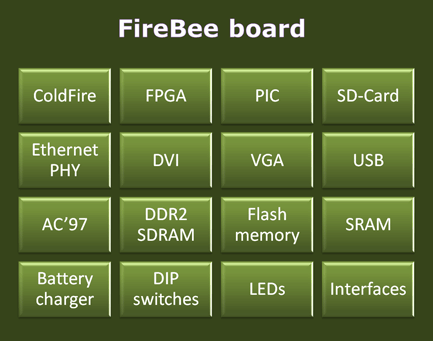
In the previous articles, we zoomed inside the main components of the FireBee: ColdFire, FPGA and PIC. Today we are going to zoom out, and discover the other new devices present on the board.
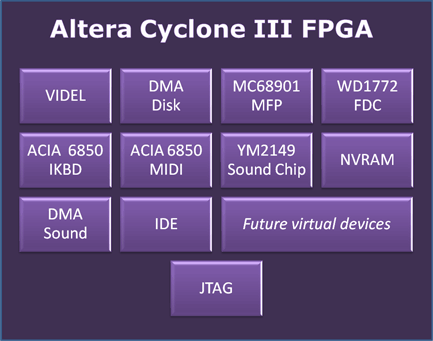
Definitely, the FireBee is a modern computer. Even though its main goal is to emulate a fast Falcon, the FireBee hardware is in no way related to the original Falcon chips. All the FireBee components can be used either to emulate original Atari hardware, or in native mode for optimal performance. This will allow future developments to unleash the real power of the FireBee. You can see below the list of the main FireBee components.
|
| 2015-03-14 AtariICQ 0.176 - Chat software |
|
In the month of October 2012, Joakim Högberg had delivered a "pre-beta" version. Although the situation hasn't changed a lot, the software development has continued, and a new official version of the ICQ client is now available.
The 0.176 version fixes several errors encountered, among others, in the memory management, overlay and shortcuts. AtariICQ is a program written in GFA -Basic with GBE from Lonny Pursell and runs on Atari Classic and Firebee (FireTOS, FreeMiNT). Since the 0.173 version, AtariICQ became freeware. The full list of changes and the download are available on the Atari ICQ website:
AtarICQ
|
| 2015-03-02 Linear Blue icon set v.1.2b for Teradesk |
|
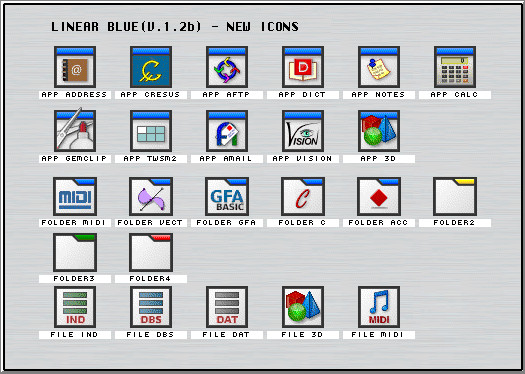
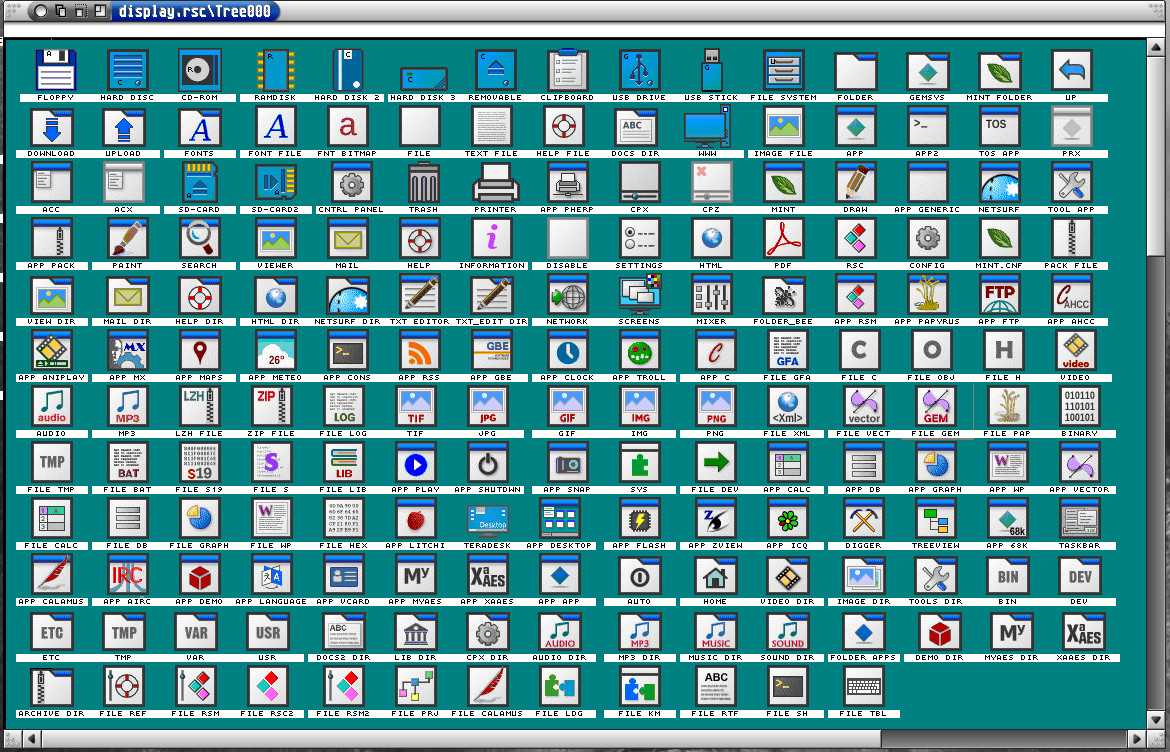
Version 1.2b of the 48pts 256 color Linear Blue icon set for Teradesk 4.06 is available for download. The updated set includes 24 new entries for a total number of 202 icons.
The desktop.inf configuration file for the FireBee setup is also up-to-date and most of the new icons are already set.
|
| 2015-02-07 New GBE Release |
|
This update addresses several installation problems reported by users. It's now much easier to install, as everything needed for coding and compiling is included in one archive. The default installation takes care of all the paths and commands for building 68K and Firebee binaries. Bugs have been fixed in nearly all the components. See the included documentation for details.
Installation instructions: http://userpages.bright.net/~gfabasic/html/gbesetup.htm
Hopefully this helps get more users up and coding sooner on their Bees.
|
| 2015-01-04 Askin gradients for XaAES |
|
Philippe Noble recently released Askin, a new set of gradients and widjets for XaAES, with the aim to give the FireBee and other FreeMiNT platforms supporting TC video modes, a nice and modern look. The Askin gradients were created to match the "Linear.48" sets of icons, but they should work well with most sets of icons.
As the informations available on the gradient format were limited and incomplete, Philippe had to find out by trial and error how to achieve the best looking results, with the support of the community and developers. A preview image and the latest version of the Askin gradients package is available at Philippe Web page: https://sites.google.com/site/emaappsarch/news/xaaesgradientsupdateaskin12 In addition, to help other users to create their own gradients, Philippe wrote an handy howto guide available at: http://www.philippeworld.net/ftp/Apps/howto.txt As the gradients source files are in *.C Language, they need to be converted in the *.grd format before they can be imported in XaAES. A "Creating gradient - files" guide for AHCC (readme.txt), written by the FreeMiNT team, along with the sources of the XaAES default gradients, is downloadable at: http://www.philippeworld.net/ftp/Apps/xgt2.zip
|
| 2014-12-11 EasyMiNT 1.90b |
|
Marc-Anton Kehr just made a new version of EasyMiNT that should run on firebee now.
He had some additions to ST support too but those are in alpha stage. Two things are not working until now on the firebee:
Please be careful, this is an early beta version!! Furthermore he has compiled a version from E-Nick, the EasyMiNT Network Configurator with Coldfire support. You can get this on maankes homepage, too. http://atari.st-katharina-apotheke.de Many thanks go to the developers who are working just for Freemint, especially Lonny Pursell, Vincent Riviere and Helmut Karlowski. Have fun!
|
| 2014-12-09 FreeMiNT patches, EHCI USB driver, NFS Server & Netkit ftp client |
|
FreeMiNT patches, EHCI USB driver
The FreeMiNT team, thanks to the contribution of Vincent Riviere, addressed a few issues affecting the FEC and NFS drivers. A bug in the FEC driver caused the NFS server and ping with packet with sizes > 1500 to fail on the FireBee. This bug was the source of abnormal slowness and timeouts. Most applications will benefit a speed increase in data transfer over the net. The FireBee NFC client (NFS.XFS) is now fully functional and allow to connect to a remote NFS server (the mount_nfs command line tool is also required). The fselect() timeout was also improved. After this fix, most applications (Vim, for istance) will benefit a faster output to the terminal window (in Vim for MiNT, the slow terminal updating was a long standing issue). Thanks to the work of David Galvez, the EHCI USB driver is now working for USB PCI cards which use the same USB chip as the FireBee the NEC µPD720101. Although not related yet to the FireBee computer, this is one of the most expected features by the owners of TOS clones and is worth to be mentioned here. Currently only the Milan computer is supported. Hades, Falcon CT6x/CTPCI and FireBee require either some fixing / workaround in the PCI implementation or the XHDI interface. FreeMiNT 1.19.CUR for the FireBee packaged by Vincent Riviere: http://vincent.riviere.free.fr/soft/m68k-atari-mint/archives/mint/freemint/ The full FreeMiNT package, updated daily is as usual available at the FreeMiNT page: www.freemint.org
nfs-server is a command line Network File System Server for the MiNT OS. It allows to set on the FireBee a NFS Server to share files over a Local Area Network. http://vincent.riviere.free.fr/soft/m68k-atari-mint/archives/mint/nfs-server/
Netkit is a free basic command line ftp client built for the MiNT OS. Like all the packages build by Vincent Riviere, the binaries are available for Coldfire, 68000 and 68020-060 CPUs. http://vincent.riviere.free.fr/soft/m68k-atari-mint/archives/mint/netkit-ftp/
|
| 2014-12-05 MyAES 0.96 |
|
Olivier Landemarre recently released a major upgrade of MyAES for the FreeMiNT kernel. This new release took almost 2 years in development and testing. The list of new features and improvements is impressive:
|
| 2014-11-06 Teradesk 4.06 released |
|
Djordje Vukovic has released version 4.06 of the Teradesk desktop. This update adds a menu option for case-insensitive directory sorting, an handy option for directories crowded with LFN files. download : tera406b.zip Please note that Nationalized RSC versions up to 4.05 are not compatible with this new release of Teradesk. As usual up-to-date French, German, Italian and Russian nationalized archives will be available via the Kurobox ftp server: ftp://kurobox.serveftp.net:3021/utilities/desktops/
|
| 2014-11-03 Linear Blue, a new set of icons in 48 points for Teradesk 4.05 |
|
Lodovico Zanier has released a new icon set in 48 pts and 256 colors, available for download. This icon set is derived from the previous set "Linear Grey", it uses the same basic shapes and, at the same time, takes advantage of the full range of colors of the NVDI palette. This gives to the Firebee owners, a real opportunity to enhance theirs desktops with a touch of modern and fresh color. The icons from this set resume those available on the Linear Grey v1.1 set and the configuration files 'teradesk.inf' are consistent with each other. Users wishing to switch to the new blue set need only to replace their old files cicons.rsc 'Linear Grey' located in the Teradesk folder.
|
| 2014-10-21 Updated GFA Compiler package |
|
The GFABASIC compiler package has been updated. This includes a stable linker and the first public release of the interpreter for the FireBee. FireBee owners can now enjoy the instant satisfaction of the Run button in GBE. Also a very nasty string handling bug was fixed in the interpreter for both CPU types. See the documentation for more details. Get it here: http://userpages.bright.net/~gfabasic/files/gfa_comp.zip
|
| 2014-09-14 New version 1.1 of the Linear Grey icon set for Teradesk |
|
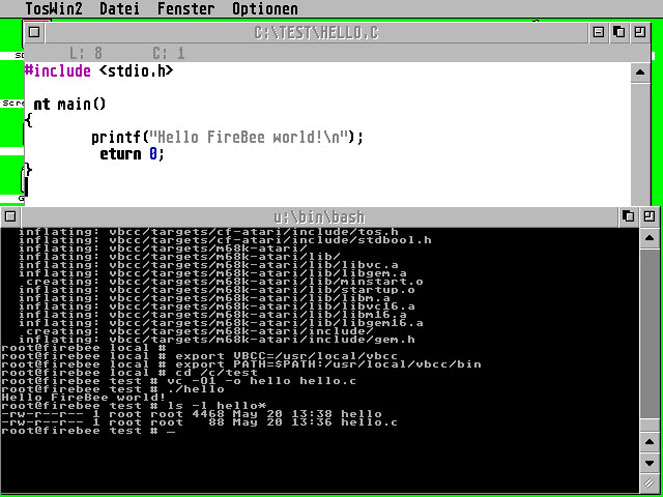
A new version of the 48pts Linear Grey icon set for Teradesk 4.05 is available for download. This release represents a major upgrade of the icon set created by Lodovico Zanier. The number of icons is now up to 178 with 25 new entries. In addition, some commonly used icons have been updated either to improve the overall look or to meet the requests made by the users.
|
| 2014-03-30 New version of Litchi FTP |
|
The wellknown FTP client "Litchi" is available as version 1.3 now. Rajah Lone spent some nights to include the support of secure FTP connections with SSL/TLS.
Currently only under MiNT/MiNTNet, Litchi uses the LDG library "POLARSSL.LDG" and can access secure ftp servers with FTPES (explicit SSL) and FTPS (implicit SSL) protocols. Both protocols can be used with encrypted password (authentication only) or encryption of the entire file transfer (inclusive data port). The email clients Troll and Meg were updated with a few little bugfixes, too. Please find the new versions, the archive "POLARSSL.LDG" for SSL functions and many other programs on Rajahs website; like always in french, english and german language for 68k-Ataris and the FireBee (CFv4e).
|
| 2014-03-24 Teradesk 4.05 Russian translation |
|
Dima Sobolev recently updated to v.4.05 his Russian translation of Teradesk.
Rsc file hyp guide kurobox ftp
|

| 2014-03-17 New public FireTOS BETA Version |
|
A new FireTOS BETA Version is now available which offers new functionality and some bugfixes. Since the operating system's last version (summer 2013), Didier Méquignon has improved FireTOS in several areas: USB, IDE, SD-Cards, System Clock Generator, and NVRAM/IKBD support. As with previous versions, this public BETA version can be written to the flash-ROM of the FireBee using FLASH060.PRG under FireTOS, or FLASH_CF.PRG under EmuTOS.
Details on the improvements:
|
| 2014-03-02 Atariuptodate Relaunch |
|
The Atari Up-to-Date list is a versiontracker and software database for all Atari 16/32 bit compatible systems. Matthias Jaap, Atari user and long-time editor of the last german Atari Magazine "ST-Computer" relaunched his "Atari Up To Date List". For those who don´t know the magazine or atariuptodate, it was first a printed list inside the magazine which listed all the new programs within the last month since the last magazine. Matthias never gave up with atariuptodate, and kept it online and working. Thousands of programs are categorized, what means a real overview about former and still deliverable Atari titles. Additionally links to all producers or former producers are online. This means the best source for historical investigations about producers, lables, developers or companies, as a real up to date database of all new software titles! The list of new programs of 2013 is already quite impressive.
Matthias Jaap worked on a relaunch for some months and included several thousand more applications. To a recent total of 6500+ programs. The focus indeed is version tracking of 16/32 bit programs. And the best about it: there is an own FireBee category now! So the long term demand of several FireBee users - to have a public software list with applications for the FireBee - is now fulfilled externally by a very well known site! Now as well completely in English language. Additionally Matthias Jaap joined the ACP and will care about high quality news messages for the public.
|
| 2014-02-23 EmuTOS 0.9.2 has just been released. |
|
This time, the FireBee has been particularly considered!
Roger Burrows has greatly improved the mass-storage support, including: - support for SD-Card - support for the external 2"1/2 IDE connector - overall improvements on IDE and CompactFlash Note that EmuTOS adds the SD-Card partitions after the CompactFlash ones. Typically, the CompactFlash is C:, and the SD-Card is D: (unlike FireTOS where the SD-Card is A:). You *can* hot swap several SD-Cards. In other words, while EmuTOS is running, you can remove your SD-Card and insert another one. Then you can refresh the windows with Esc, just like floppies. AFAIK, FireTOS has no such feature. Also, now you can power off your FireBee by software, from the desktop's File menu. Get EmuTOS 0.9.2 there: EmuTOS Download emutos-firebee-0.9.2.zip, then flash emutosfb.s19 with your preferred tool. Enjoy!
|
| 2014-02-19 Meg 1.4 - now with SSL/TLS support |
|
Rajah Lone released version 1.4 of Meg (Mail exept Gossip).
The program for automatic check of multiple mailboxes now
supports secure connections with SSL/TLS (POP3S and POP3 with STLS),
additionally with verification of server certificates.
Like Troll, Meg uses the LDG library "POLARSSL.LDG" and currently SSL/TLS works only with MiNT/MiNTNet. Meg 1.4 and the archive "POLARSSL.ZIP" can be found at Rajahs website, like always for 68* Ataris and ColdFire in english, french and german language.
|
| 2014-02-04 Troll 1.7: First email client for FireBee/Atari with SSL/TLS |
|
Rajah Lone has done an incredible work and he made it:
Troll 1.7 now supports secure email connections (POP3S, IMAP4S and SMTPS)
with protocols STARTTLS, SSL or TLS, additionally with verification of
server certificates.
This milestone for email communication on FireBee/Atari computers was possible
by using a LDG library "POLARSSL.LDG".
The IMAP4 functions were improved, also there were some bugfixes. Currently, SSL functions are only available with MiNT+MiNTNet. SSL needs a powerful Atari (~1 MB RAM for POLARSSL.LDG only), but of course this is no problem for FireBee ;-) Anyway, without SSL, Troll 1.7 still works on "smaller" Ataris (like before). Important: The LDG files for SSL functions and for compressed backups (archives "POLARSSL.LDG" and "DEFLATE.LDG") are no longer included in folder "GOODIES". Please download these archives separately. You can download Troll 1.7 (english, french, italian and german version) and the additional files on Rajah Lones website.
|
| 2014-01-28 New icons and an update for TeraDesk |
|
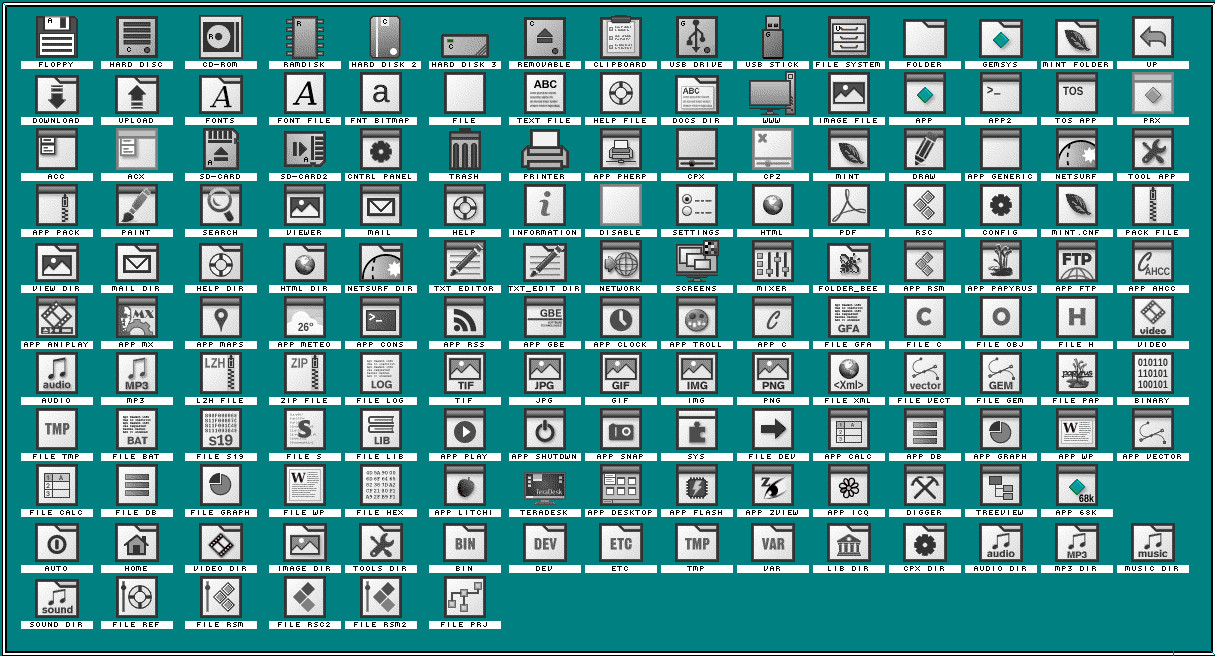
Fresh icons for modern Atari environments: Lodovico Zanier has created his own minimalistic icon set. "Linear Grey" is a mostly greyscale icon set with occasional color pixels created for the open-source TeraDesk and fast Atari-compatible computers.
The set includes 158 icons covering drive and folder icons, symbols for certain file formats as well as app-specific ones. The 48x48 icons also offer more detail than smaller ones. A new TeraDesk version is also available, Djordje Vukovic has released version 4.05: - fixes a bug which could have prevented using drive "Z" - improves icon arrangement on desktop and in windows On TeraDesk website, links to translated files are perhaps not updated yet (linked to previous version 4.04). Anyway, you can find these files (german, french, italian and russian) as always on kurobox FTP server.
|
| 2014-01-26 HypView and PH vCard |
|
HypView is a hypertext viewer by Philipp Donzé and was created to replace the popular ST-Guide. The source code was released in 2006 and has now been compiled for the FireBee's ColdFire CPU by Vincent Rivière.
Binaries are available for 68000, 68020-060 and ColdFire on his website. HypView was already running on the FireBee before, but not as a native ColdFire application. The native build was delayed due to assembler code in HypView. PH vCard: vCards are digital business cards and some internet users attach their contact data to their emails as a vCard. Using the new vCard Viewer by Probe House Software, these files can now be displayed properly on a FireBee. vCards are simple ASCII files and can be opened by any text editor. PH vCard reads these files and displays them as a formatted list with subsections. As with Probe House Software's other applications, builds for 68000, 68020-60 and Coldfire are available. Other apps by PH Software include a Google Maps viewer and a weather forecast program.
|
| 2013-12-24 Samba, OpenSSH, MiNTLib: New and updates programs & tools for MiNT |
|
Christmas for MiNT users either means a christmas tree in ASCII or freshly ported and updated Unix applications. One of the best sites for such programs is Vincent Rivière's homepage. Recently, he released and updated some MiNT programs, libraries and cross development tools. Developers can download MiNTLib CVS-20131219, Readline 6.2 and OpenSSL 1.0.1e. Readline provides functions for applications that allow users to edit command lines as they are typed in and remember previously entered command lines. The Readline lib is used in the updated version 3.6.21 of the Samba networking software. The smbclient now supports command-line history and tab completion. Unfortunately, the "Too many open files" issue still exists due to kernel limitations. OpenSSH 6.4p1 is using the recent MiNTLib and OpenSSL libraries. For the first time, OpenSSH has been compiled for the FireBee's Coldfire CPU. Fixed in this release are connection problems of the SSH client with Linux servers. Last but not least, the Coreutils, an app collection for editing files and documents was updated.
|
| 2013-12-13 Vincent Rivière compiled a whole software suite for the FireBee |
|
The GCC had to work extra hours for Vincent Rivière's compilation marathon. Most of the 40+ programs are now compiled for 68000, 68020-60 and ColdFire and will run at full speed. While most of the apps are made for a commandline environment, some use a graphical interface. Among the text-based applications are Unix standard programs such as Bash, Make, Vim and Samba. Rivière used more recent versions for his port. Only one compilation attempt was unsuccessful: ST-Guide replacement HypView contains assembler code. Other notable compiled apps include Atari emulator Hatari which was ported a while ago, the text editor qed and ego shooter Doom. Even developers who have no use for these ported tools should take a look at the archives, since modified configuration and make files were used and might be used as a template for other apps.
|
| 2013-11-28 For GFA developers: New release of the GFA Compiler |
|
While the company GFA failed to properly modernize and clean up their basic for the then-new generation of Atari computers, there have always been developers ready to introduce new patches to make GFA-Basic more compatible. The most modern and comprehensive patch is done by Lonny Pursell: He has developed a GFA Editor and patched the library, compiler and linker. Out now is an update for the compiler. GFA developers have a wide selection of patches and alternative libraries. Without patches, compiled GFA programs will not run on modern Atari-compatible systems. Lonny's patches will allow you to compile programs compatible with 68k-based systems as well as the FireBee. The GFA compiler r22 fixes an obscure bug where End, Edit and Stop would fail to generate assembler if they were the first line of a subroutine. Download is available from Lonny's site and includes compiler, linker and library for 68k and Coldfire systems.
|
| 2013-11-25 New EmuTOS snapshot supports FireBee's SD card |
|
EmuTOS has matured into much more than a simple TOS replacement for emulators: Thanks to Roger Burrows, the open source operating system is now supporting the Firebee's SD card slot. EmuTOS supports multiple partitions but unlike FireTOS will not treat the SD card as drive A. SD card drive letters are added after CompactFlash ones. In this early implementation, the "media change" dectection isn't supported. FireBee owners using this build should therefore avoid swapping the SD card while the computer is running. A fix will be added soon. Other changes in the EmuTOS build 2013-11-21:
|
| 2013-11-23 GCC now available for the Firebee |
|
Mikro (Miro Kropáček) has compiled a GCC (Gnu Compiler Collection) package for the Firebee. GCC is one of the most popular tools for cross-platform development and compiles C and C++ code to native Coldfire programs. The package contains important libraries and tools, all compiled for the Firebee's Coldfire CPU. GCC may be used to develop applications for other CPU architectures (68000, 68020-60). Ports of GCC existed previously but were compiled for the 68000 CPU and generated programs for the 68k CPU by default. First programs such as bench.app were successfully compiled using the new GCC 4.6.4. Compile times may improve in the future through optimisations in the operating system. GCC 4.6.4 is available here. Alternatives for C developers on the Firebee are AHCC (Pure C compatible) and vbcc.
|
| 2013-09-20 vbcc available for the FireBee! |
|
Thanks to the great cooperation with the external developer Frank Wille we are now able to present the vbcc compiler for the FireBee. vbcc is an optimizing ANSI-C-compiler available for quite a few platforms featuring a great part of the C99 standard ISO/IEC 9899:1999. vbcc being available for any projects you can think of, is often used by demo coders. The sources can be applied freely for any non-commercial ambitions.
Due to a generous donation Frank Wille could be provided with a FireBee some months ago. Ole Loots added a full flegded FreeMiNT distribution with all available development tools, and Medusa Computer Systems dropped in with a new and fully up to date second FireBee. By the begin of summer and after huge amounts of freely given working hours Frank Wille and Dr. Volker Barthelmann could show off as well with their working version of the ColdFire back-end as with numerous improvements for the general Atari versions for GEM and MiNT. Now Frank Wille did a beta version of vbcc which is natively running on the FireBee. The compiler could be compiled by itself for the ColdFire, and is able to produce either ColdFire or Atari-68k optimized code. After AHCC and the patched GFA Basic vbcc is the third development platform for the FireBee. Many thanks go to Frank Wille who now maintains the MiNT and general Atari versions beside the Amiga version. The full package contains vbcc itself, the linker vlink and the assembler vasm. The compiler generates fast and well optimized 8 to 64 bit programs. It is very nice to see the new GEM libraries successfully tested on smaller projects. The use of vbcc is totally at you own risk, and we want to warn you that there still might exist bugs in this software. The developers are looking forward to receive feedback, ideas or bug reports regarding the new FireBee beta version.
|
| 2013-07-05 EmuTOS 0.9.1 |
|
EmuTOS 0.9.1 has just been released. The main features useful for the FireBee are:
EmuTOS 0.9.1 also fixes a stack overflow bug which prevented EmuTOS 0.9.0 to run xaloader.prg from desktop with FreeMiNT and GEM=ROM. Get EmuTOS 0.9.1 there: http://sourceforge.net/projects/emutos/files/emutos/0.9.1/ Download emutos-firebee-0.9.1.zip, then flash emutosfb.s19 with your preferred tool. Enjoy!
|
| 2013-07-01 New official Aniplayer Version published |
|
This weekend - for the first time since 2004 - a new version of the multimedia player Aniplayer by Didier Méquignon got published. Aniplayer can be described as the most known player for Atari systems. Beside many news for Clones, upgrade cards etc. there is especially one feature of high interrest for the FireBee: the MPEG audio decoding uses now the Coldfire MAC instructions. This means nothing else than MPEGs can be played with low system load (even in the background) by Aniplayer. Have fun with the now official version 2.23 of Aniplayer!
|
| 2013-06-28 New public FireTOS BETA-Version |
|
Today we are presenting a new BETA version of our Operating System. Like always Didier Mequignon put much time into the further development and improved the TOS at the following points:
All the other new features that we described above legitimate a release, even if the ST Ram is still inside the 512 megs main memory. For many features, like the USB keyboard fixes you already waited wishfully! Don´t forget that it is about a BETA-version. An official release wil be available at Didiers site - as before - as soon as on hand. Flash the new TOS with FLASH060.PRG directly from the TOS desktop (some developers recommend to not do it from within MiNT). Have fun at testing! We are happy to receive some feedback at our mailinglist.
|
| 2013-05-03 Icons Set 2.0 for Thing! and TeraDesk |
|
The Icons set 2.0 for Thing! and TeraDesk, is a major upgrade over the set 1 (for Thing! only) bundled with the FireBee setup. Although most of the basic icons from the set 1 are unchanged, the total number of icons is almost doubled with the inclusion of new apps, folders and file types. The Thing! and TeraDesk sets share most of the icons, with some variations specific to the desktop requirements. The set 2 for the Thing! contains 294 icons (mainly in 32x32x16/2 colors), while the Tera Desktop set has 258 icons (all in 32x32x16/2 colors). Both archives include the configuration files, with most of the new icons already assigned. The desktop.inf file for TeraDesk offer a basic configuration for the FireBee (similar to Thing!). Be aware that upon replacing this file all your desktop customisations will be lost. The use of the NVDI palette is highly recommanded. With the classic GEM palette most icons will look sightly darker. FireBee users willing to upgrade, are advised to backup first their current icons sets and configuration files (for the Thing! desktop: icons.rsc & icons.inf; for the Tera desktop: cicons.rsc, icons.rsc and desktop.inf).
Download the Icons set 2 for the Thing! desktop Bear in mind that these sets are optimized for the FireBee and, due to their size, are not intended for use (as they are) on low end TOS computers.
"Linear Grey" (v. 0.9 alpha) icons set for TeraDeskThe "Linear Grey" is a minimalistic styled 256 colors (NVDI palette) icons set for TeraDesk. Although originaly designed as a style test case, it evolved into a basic icons set for the Tera desktop. It contains 59 original icons in the classic 32x32 format, in 256, 16 and 2 colors variants. A desktop.inf file is also included, with a basic configuration for the FireBee. The use of the NVDI palette is mandatory. With the standard GEM palette, most icons will appear with false colors. Be aware that this is a preliminary alpha release and some additional touch up might still be needed. FireBee users willing to test this set, are advised to backup first their current icons set and configuration file (i.e. cicons.rsc, icons.rsc and desktop.inf).
Download the Linear Grey set (v. 0.9 alpha).
|
| 2013-04-24 Zoom inside the PIC |
|
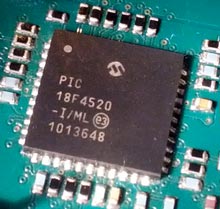
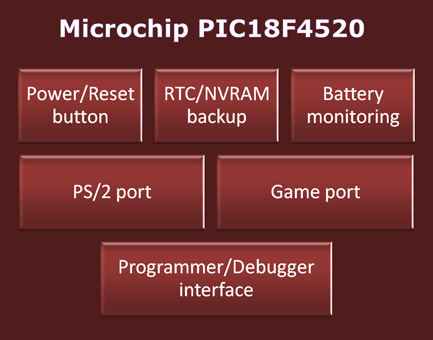
In the previous "Zoom inside" articles, we described the two main programmable components of the FireBee board: the ColdFire and the FPGA. But there is a third one, which acts as conductor: the PIC. PIC means "Peripheral Interface Controller". It is a family of microcontrollers from the Microchip company. PICs are very compact and low cost programmable components. They embed a basic CPU, but also a dedicated flash ROM, a few RAM and several I/O ports. They can be programmed either in assembly or C language. The FireBee's PIC is a Microchip PIC18F4520. Its software can be upgraded using an external hardware programmer (or simply by software, in the future). The PIC is responsible of several important tasks, so it never switches off. The FireBee's blue LED slowly blinks to indicate that the PIC is running.
|
| 2013-03-07 Several New Applications |
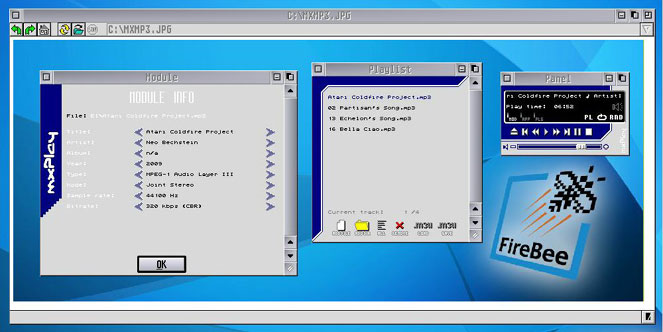
MPEG-1 Decoder for mxPlayThe main Headline for todays news could have been "MP3 decoding for the FireBee". And indeed it is a little sensation! The new mxPlayer which was recently released, is already a great MOD player. As it got an nice API, further audio plug-ins can always be done by external developers. Quickly after the release many people asked about MP3 support. MiKROs statement a few days later "here it is", ... MPG_CF.MXP, so the name of the MPG Audio plug in for the FireBee, is based on "mpg123". There was a plan first, to use MAD but its API is not very user friendly. So it became mpg123, what means that other functionality that is already present in mpg123 can easily be implemented into mxPlay by further coders. Already working are decoding of MPEG-1 Layer I, II and III. Beside an never officially released Aniplayer BETA, this new version "mxPlay 2.1" plus its plugin MPG_CF.MXP is now the first MP3 player at the FireBee.
New HighwireHighwire, the Atari only Web Browser got recompiled for V4e. Even if it always worked in the 68k version, the small improvements are nice, and the speed increased and made Highwire more usable for day to day tasks. The developer m0n0 who already brought us the great Netsurf browser is responsible for that Highwire as well, and continues to care about all FireBee networking needs with this release. Get Highwire for V4e at his web site.
New FTP-client, KK-Commander, fVDISnap, Meg, Crésus, Joe - HTML Editor, ...Rajah Lone an external developer is unstopable. He continues improving and recompiling several user programs. Last Week there was a new Litchi and JOE release. This 1.2C version of the great FTP-client got several improvements. Joe version 1.5 is an nice HTML-Editor, that is available now for Coldfire as well. As well we got Meg at the 3rd of March, a mailbox checker and spamfilter. KK Commander is an Total Commander mock up, and fVDI Snap a new snapshot application that is now working at non fVDI-systems as well. Have a look at Rajahs site, and grab the new cool programs.
FireBee FreeMiNT setup for ARAnyMSeveral users were very enthusiastic about Jo Even Skarsteins FreeMiNT setup for the FireBee . The easyness and totally GEM dedication (means no Unix Stuff at all) of the setup became interesting for others without FireBee as well. So after "Vanilla MiNT" - a kind of FireBee FreeMiNT Setup spin-off - a very easy to use setup for your other Atari hardware, popped up, now a external developer cared about an 1:1 implementation of our FireBee setup for ARAnyM, the virtual machines, which exist for several host systems. The MiNT setup is identical to what you get with the FireBee, except the fact that binaries were exchanged with the ones for Aranym. Some GEM applications are not able to work, as they require real hardware. That setup is available as well as an disc image, for immediate usage. First feedback went very well, and it seems ProToS´ initiative was just in time, to support ARAnyM users.
zView 1.0Another application that got several improvements and bug fixes by Mr. Miro Kropacek is zView. This program - which can be considered as "the" recent image and PDF viewer at the Atari platform - was initially, in the year 2005, done by Zorro. MiKRO who compiled us already the first FireBee version of this great application, has now done several improvements. New functionality concern PDF zoom levels and better preferences for displaying (or not) non-image files in the overview browser, as showing hidden UNIX files. The documentation and RSCs got updated by Sascha Uhlig. Bug fixes were done regarding, AV-Protocol, PNG and GEM(X)IMG filters, Umlauts in PDF navigation list, scaling of the full screen mode (no more colour lines at full screen image bottoms!), as TOS and MagiC compatibility, and much more. zView can be considered as mature and is rock solid. Thanks to MiKRO one of the best tools at our FireBees. The version 1.0 got just released.
|
| 2013-03-01 More Sound, improved EmuTOS and GFA Library, TeraDesk translations |
|
mxPlay 2At 20th of February "mxPlay 2" a module (MOD music) player was released. mxPlay was coded by MiKRO of Mystic Bytes to enable all FireBee and Falcon CT6x computers to play any (!) available MOD format. This audiomedia player for Ataris comes with drag&drop, support for long names, a modern GUI, including 10 skins, playlist, plugin based API and much more. An outstanding new feature is that now 32 channels are available when playing ""XMs" or "S3Ms" on your FireBees! It is an open project. Grab mxPlay for your FireBee at their Sourceforge page.
You can get MOD music files (modules) from Fading Twilight, for example. It's music from all Atari musicians around the World. SAP modules can be downloaded from the Atari Sap Musik Archiv.
New EmuTOS 0.9.0The EmuTOS team released a new version of their Open Source Operating System. This new distribution improves the overall support of Atari hardware. A FireBee version was released as well. Please remember that the FireBee version is ColdFire native (i.e. no workarounds for missing M68K instructions) and does not support the additional hardware available in the FireBees. The main features useful for the FireBee are: Support for CompactFlash cards without partition table and Improved File Selector. You can flash EmuTOS (emutosfb.s19) into your FireBee ROM with the FLASH060.PRG utility. EmuTOS is available at the project's page.
Updated GFA-BASIC Library releasedLonny Pursell improved GFA-BASIC even more with the help of some GFA coders. In the library the Binding for GDOS got recoded to match the official Atari documentation. And the change for the compiler is: "Reverted test for missing CASE statements". Get this latest version at Lonnys website.
TeraDesk 4.04 translationsOver the last few days most of the translations for TeraDesk 4.04 were released. The archives are downloadable respectively at:
German RSC & ST Guide Be aware that the new resource files (desktop.rsc) are compatible only with the official TeraDesk 4.04 distribution.
|

| 2013-01-31 TeraDesk 4.04 released! |
|
Djordje Vukovic has recently released a new version of the Tera Deskop, the lightweight desktop already available in the current Setup distribution for the FireBee and other FreeMiNT based distributions. The new 4.04 version is basically a bug fixing release with no new features. The TeraDesk archive includes also an optimized ColdFire version (desk_cf.prg). The FireBee users willing to upgrade their current FreeMiNT setup, will have to rename the desk_cf.prg in desktop.prg, and leave untouched their current settings and icons files (i.e. teradesk.inf and cicons.rsc/icons.rsc). The up-to-date nationalized versions of TeraDesk will be available shortly, including an updated French translation (thanks to the work of an ad hoc team) and a brand new Italian archive. The nationalized versions (German, French, Italian, Russian and Greek) will be downloadable through the TeraDesk web page or directly from the kurobox ftp server and the web pages of the respective authors. You can download TeraDesk at the usual web page: http://solair.eunet.rs/~vdjole/teradesk.htm
|
| 2013-01-26 GFA at the FireBee |
|
Thanks to the hard work of Lonny Pursell GFA-Basic is now technically mature for the FireBee. GBE - the GFA Basic Editor - is now rebuilt with the latest library for the Coldfire, several bugs (like RECALL) are fixend and some heavy rework happened like for the "Test drop-down menue". GFA is now that well developed that a simple recompilation assures that programs that didn´t work yet, will immediatly be usable at the FireBee. Lonny released the new and improved version at 24th of January. Very impressive is the work of Rajah Lone who, since a few weeks, is recompiling his GFA applications on his brand new FireBee. And most of them are running perfectly now! For example Litchi can be considered as the best FTP-Client for the Bee, DGEM a DungeonMaster Clone, Cresus a very good Bank Account Manager, and much more.
|
| 2013-01-11 What are you actually doing all along? |
|
Before explaining what the 2013 will bring and what innovations will be available for the FireBee, we'll try to summarize what was happened in the last 10 weeks. The professional league of the ACP development team has achived major improvements in some key areas, which shall simplify future external contributions. Our "youngest" fellow campaigner, Markus Fröschle, after weeks of hard work, ported the BaS (our BasicSystem for board initialisation) from the commercial Codewarrior to the free GCC, with the active support from Vincent Rivière. Also, Wolfgang Förster has fully rewritten into clean VHDL the existing FPGA configuration, so that future contributions and optimizations will be possible in the more structured and comprehensible VHDL. This new configuration will be tested in the upcoming weeks, and if things work as anticipated, the next step will be the implementation of a Blitter, similar to the one already available inside the Suska project. After this, we hope that a few part-time VHDL coders will pop up to support us. Vincent Rivière has fought for two weeks a FreeMiNT bug, and get nearly no sleep. Thereby it was a matter of TeraDesk that crashed at start with a bus error, when the newest XaAES was used. This bug is now blessedly corrected. It is currently available a complete new built of the FreeMiNT kernel that runs perfectly on FireTOS and EmuTOS. Didier Mequignon started to transfer the ST-RAM addresses from the 512 MB FastRAM to the RAM of the FPGA. Thereby the ST-RAM can be adressed independently from the FastRAM, like on Falcon and without any software tricks. This was a long time requested feature by several developers, therewith some software can be brought to full running. It will run directly through the FireTOS. Medusa has tested a vast number of keyboards. The dearly request by the project coordination was for an inexpensive USB keyboard for the upcoming complete packages, without keys belonging to alien Operating Systems. A really difficult task at present time! But now we have a low priced keyboard, which moreover is available in several language layouts (UK, U.S., UK, ES, FR, CZ), and works 100% on the FireBee. A further scheduling that took a huge amount of time, was to find a solution for an inexpensive power supply, which could be used worldwide. As more and more customers have problems or feel uncertain to find a proper AC/DC adapter locally, we'd like to offer, in future, power supplies for the entire world directly from Switzerland. They shall naturally work with all power sources and plug types and, at the same time, despite of our small batches, not boost up the costs too much. This leads us directly to an update regarding the USB keyboard bugs. There are currently two of them. For the first one, after many days of testing, we found out that by simply switching the language to French or German via the FireTOS CPX -even if the keyboard was in another language layout- almost all keyboards could be listed as error free. For the second, the "shift-key-works-like-caps-lock-bug" happening in some case, we couldn't track down its cause until last December, when was made available an internal FireTOS which outputs keyboard scancodes to the serial console. A solution came within reach and is currently under test by the team. Another application error was identified by Miro Kropácek. Indeed it was quite often reported by users that the supplied zView didn't display fonts in PDFs. This is -as we know now- easy-to-solve at user level. It is just required to create a temporary folder somewhere. This "tmp" folder has to be declared into the MiNT config file as Environment Variable with the syntax "setenv TMPDIR c:/path/to/file/tmp". Than PDFs can be viewed in all their splendor again, and comparatively faster, even with antialiasing. Since the nice company, with which you can send money, informs us by email quite intermittently when someone bought a FireBee, a few users had to wait a real long time for their new computers. Sorry again about that! The solution is; even if you buy a FireBee directly from Medusacomputer.com, at the same time send an email to acpinfo at atari dot org. Also, this "parsimony" with emails led to a deviation between the actual and the nominal status of the inventory of the mini cases. Many hours of work were spent to update the inventory. But all this led to the awareness that we are going to order a new series of mini cases, to have all the colours again available. No sooner said than done! A new batch of cases will be soon available - very likely by the end of the first quater - in the already well known 4 colours, as well as in the 4 Blue/Black or Magenta/Black combinations. Two small optimizations of the case were developed as well. In Vienna we designed a small fitting panel for future SATA converters, which can be fastened with a single screw inside the upper part of the case. Also, we have built a small clip with which the Speaker can simply be suspended. The clip will soon be produced with a 3D-printer and will serve as an optional replacement of the internal hotglued speakers for the already delivered mini cases. Work progressed also for the implementation of our firebee.org page - one of our never ending stories. The technical implementation with NetBSD is nearly finished. We got, through some support from Slovenia, an own free server with fiberchannel connection. We are not really expecting such load on the page, but who knows, it won't do any harm either to be ready to all possibilities. The appearance, the graphic is mainly designed in Southern-Germany, with the content, which shall be preferably clear as informative, still being tweaked. A further field were all the small questions that are so seldom discussed. It is now available a small GEM application that make it possible to switch between different AESs, thanks to Oliviere Landemarre. If the tests are successfull, "SELGEM" will be published along with the next official FreeMINT setup. Sadly, we have not been that successful regarding network printing. We've tried to include the lpd from MiNT98 into the recent FreeMiNT, what worked only partially. Indeed its already printing directly, but every printjob of our (Test-)Milan has to be started manually. Thanfully Marc Anton Kehr came to our aid, and bothered to recompile lpd 5.1. Unfortunately we are missing a library from back than, that we as well couldn't obtain (and which presumably would have to be rebuilt for the FireBee in any case). So Mannke recompiled the free and more recent lprng. Here we are right now and we do not get along with configuring the filters yet. In the meantime some external news on network printing appeared. ProbeHouse Software wrote an lpd client that can print directly to lpd servers that are available over the network. These can be either other computers with Linux, Win or Mac OS X, or printers with included lpd servers or the so called printservers (which are as well implemented into many recent routers) which do understand that protocoll. The client was successfully tested, and who is not afraid of the configuration process can already print over an lpd server inside his LAN. In ideal case we can, at a later stage, let our lpnr run directly on the FireBee as a Server and print over PH Easy Remote Print directly to all printers on the network without detour over an external server or printserver. In Rome was accomplished a major update of our icon sets. For every new application that got recompiled or newly written for our FireBees in the second half of the year there are now unique icons. A total of 286 icons with 256 assignments (Thing icon set), in 16 colours. It was ensured to keep the set consistent with the well known Atari standards, as well as good distinctive features for easy of use. The set will be published along with the upcoming official FreeMiNT setup, currently being heavily worked in Norway. It will be available for desktops Thing! and TeraDesk. In late October was published "grfX2" for V4e. It is a very popular Pixel-Painting application originally from the Amiga. Independently from the ACP also exists an experimental version for the CT6x. The FireBee version required a considerable amount of development work to be completed. The result is also a patch of SDL that can be obtained, along the application itself, from m0n0. Another quite pleasant point is an external one. Indeed the Netsurf team has adjusted their daily builds from the latest sources to include as well the automatic build of the Atari versions. They are not as optimized as m0n0s versions, but sometimes they give a preview of the optimizations and the ongoing developments of the browser. We can only appeal for using, testing and giving the Netsurf team some feedback about this test versions. Even with bugreports and similar activities. In every case this represents a nice touch of acceptance by the Netsurf browser towards the Atari community! One further "external point" is Freescale. We intensely tried for teasing out a little bit more of them beyond the "we are under an ARM offensive" statement, what just succeeded middling. This concern has built a very good firewall around hisselve, and who isn't a global player cannot really get through. Our special thanks goes to Genesi who supported us actively and granted without hesitation as generous the same relieve to us as they granted to the NATAMI project (which has kindly made the contact) a few years earlier. To fully understand how widespread a project like the ACP is, now we'd like to make another internal announcement. Inside our development forum, where in the meantime 65 people are orbiting, finding any attachements like testversions, documentation or pictures is becoming more and more painful, as it is already a 4-digit number. m0n0 without further ado has written an own plugin for PHPBB which provides a comprehensive and very good search function for attachements. Finally a very pleasent announcement. Douglas Little has provided the sourcecode of Apex Media to the ACP! For those who don not know Apex Media, it is an mature and extensive formerly commercial application for editing photos in artistic sense, Video grabbing, morphing, doing animations and much more. Apex Media currently runs only on the original Falcon, since it makes an extensive use of the DSP. There are now considerations from our side to further develope Apex Media to make possible to run it on all GEM high end machines like FireBees, Milans and Hades. Obviously, this will not be an easy and quick undertaking, but thanks to the support of Douglas, it would be now in general possible. And most important the sources as secured! Last but not least we'd like again to point out that the ACP is a non-commercial and open project. Who is willing to work with us and is ready to take (joint) responsibility, or simply eager to support us in some areas, shall contact us at any time. Especially VHDL developers are needed furthermore. But also any other support will be useful! Most important is that you want to join us in the medium term and continuously, to contribute to the further advance of the Atari platform. Happy 2013!
|
| 2012-11-10 Zoom inside the FPGA |
|
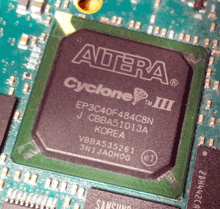
You know that the FireBee has two main chips: the ColdFire (detailed in previous "Zoom inside" article), and the FPGA. Today we are going to show you how much familiar components live in the FPGA, and how this is possible. FPGA means "Field-programmable gate array". It is an electronic component containing many logical gates, reprogrammable at will, using the VHDL programming language. This way, it is possible to implement very complex well-known chips simply by reconfiguring the FPGA. This technique is extremely powerful, for example the Suska project is able to implement the whole ST hardware on an FPGA. On the FireBee board, we have an Altera Cyclone III FPGA. It is a very powerful chip, containing about 40000 logic elements. Most of the pins of the many FireBee connectors are directly connected to it. As a result, the behavior of the FireBee hardware can be adjusted simply by reconfiguring the FPGA. This operation can be done via software. The FireBee board is built using only modern electronic components. All the classic Atari components are implemented inside the FPGA, just like real Falcon hardware. Many FPGA virtual components of the FireBee come from the Suska project, while others (such as VIDEL) are new ones.
And of course, the FPGA is not limited to Atari hardware. It could be used to implement any kind of hardware, already existing chips or custom ones. Combined with the ColdFire power, this makes the FireBee a choice platform for hardware hackers. You can get more information about the Cyclone III on Altera's website: cyclone3
|
| 2012-10-26 Hatari running on the FireBee |
|
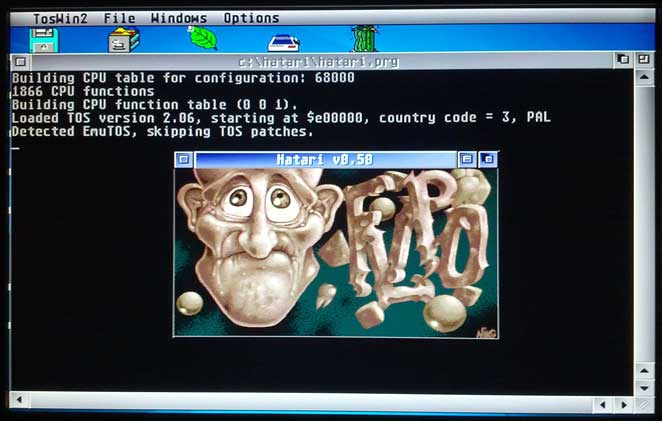
You certainly know Hatari, the famous ST/Falcon emulator running on modern computers. But did you know that in 2004, the Hatari team released a binary of Hatari 0.50 able to run on Atari machines? It was possible because Hatari uses the SDL library as an operating system independent layer. And as you seen in the previous news, SDL is already available for ColdFire. Since all the requirements were met, Vincent Rivière has recompiled Hatari 0.50 for ColdFire. That version is rather old and supports only ST emulation, but it is a proof of concept. SDL applications have the ability to run either in full screen or in a GEM window, this also applies to Hatari. In full screen, there are still bugs due to the FireBee's VIDEL but it is pretty fast. In a GEM window, it is very slow, but it works. You can get Vincent's Hatari build there: http://vincent.riviere.free.fr/soft/m68k-atari-mint/archives/mint/hatari/ Remember that the goal of the FireBee is to run old software natively, without hardware emulation - because the FireBee already has Atari hardware. But the ability to run a full software emulator like Hatari on the FireBee at decent speed in full screen demonstrates the versatility of our machine. See below Hatari running the Flip-O-Demo in a GEM window on the FireBee.
|
| 2012-10-19 GFABASIC comes to the FireBee |
|
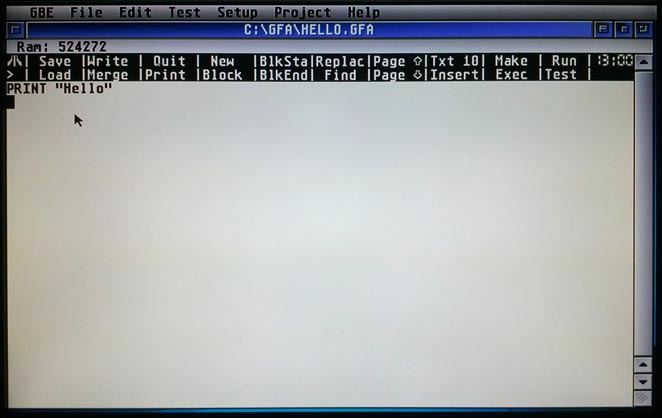
Lonny Pursell has recoded portions of his revised GFA package so that it is FireTOS compatible. Its now possible to build GFA programs for the FireBee simply by recompiling the source code with a new Library. AtarIRC and Atari VNC have been recompiled for the FireBee and successfully tested. Additionally, Joakim Högberg has released a test build of his ICQ client AtarICQ. Neither, Lonny or Joakim have a FireBee and must rely on the Atari community to test the programs.
Items mentioned and where to get them:
|
| 2012-10-19 LDG, SDL and PmDoom |
|
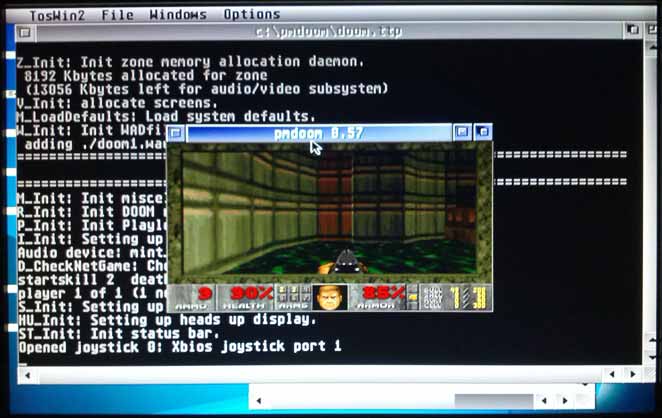
Vincent Rivière and Olivier Landemarre have finished porting the LDG-DEV package to ColdFire. As a result, programs using LDG libraries can now be built for ColdFire. Also, LDG libraries themselves can be recompiled for ColdFire. Previous tests with LDG for ColdFire were already done, but now the changes are committed into the official repository. Consequently, Vincent has bundled the LDG development libraries with his GCC cross-tools. http://vincent.riviere.free.fr/soft/m68k-atari-mint/ Similar progress happened to SDL, the well-known cross-platform library for building games. It had been ported to Atari machines by Patrice Mandin several years ago, and Patrice even included full ColdFire support. Among other things, SDL requires LDG. As a result, Vincent has also bundled the SDL libraries with his GCC cross-tools. This is a major step forward to help developers building their games using SDL, including for ColdFire. And finally, since the 2 above libraries were available, Vincent has also rebuit Patrice's PmDoom for ColdFire, as a proof of concept. As expected, it was just a matter of recompilation. You can get it there: http://vincent.riviere.free.fr/soft/m68k-atari-mint/archives/mint/pmdoom/ This PmDoom binary is 100% ColdFire and can run with both FireTOS and EmuTOS on the FireBee. There are still keyboard bugs in SDL, and VIDEL trouble on the FireBee, but they are unrelated to PmDoom itself which will be a perfect test case for fixing those issues. See below PmDoom running with FireTOS and XaAES.
|
| 2012-10-04 FreeMiNT and AHCC |
|
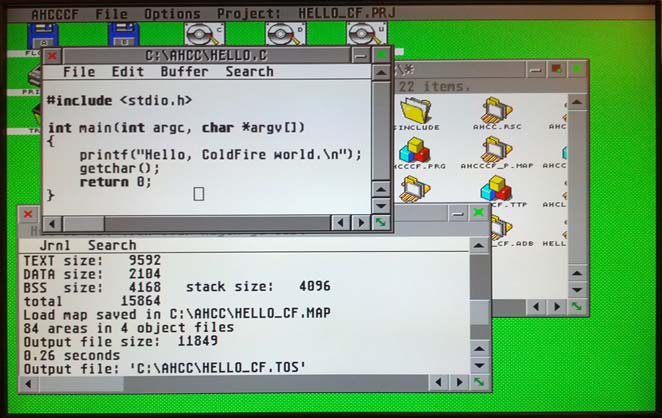
Vincent Rivière has patched FreeMiNT to run on EmuTOS for ColdFire. Years ago, Didier Méquignon and Olivier Landemarre had patched FreeMiNT to run on FireTOS on ColdFire evaluation boards. Then Vincent patched the assembler files for ColdFire to be as efficient as possible on FireTOS, but staying compatible with its 68060 emulation. Now Vincent has fully patched FreeMiNT to be compatible with native ColdFire environments. As a result, mintv4e.prg can now run on both FireTOS and EmuTOS. You can get the new mintv4e.prg in the trunk archiv archive. Remember, EmuTOS does not provide 68000 emulation, so only 100% ColdFire programs will run on FreeMiNT over EmuTOS. This is a good test to check that a binary is really 100% ColdFire. ColdFire kernel modules shipped with the official FreeMiNT setup for the FireBee are compatible with both FireTOS and EmuTOS, except the network driver fec.xif which currently uses FireTOS specific features. The good news is that XaAES works perfectly with the EmuTOS VDI which is limited to 640x480x16 colors. In the same time, Henk Robbers has published AHCC 4.13 (then 4.14), an update of his famous C compiler. This version fixes all the remaining bugs about ColdFire. As a result, AHCC can perfectly run on EmuTOS for ColdFire, with or without FreeMiNT. And best of all, it still produces executables compatible with both 68020+ and ColdFire. As usual, you can get AHCC on Henk's home page. See below a picture showing AHCC running on XaAES, FreeMiNT and EmuTOS on the FireBee.
|
| 2012-09-01 Developer-Machines got Shipped |
|
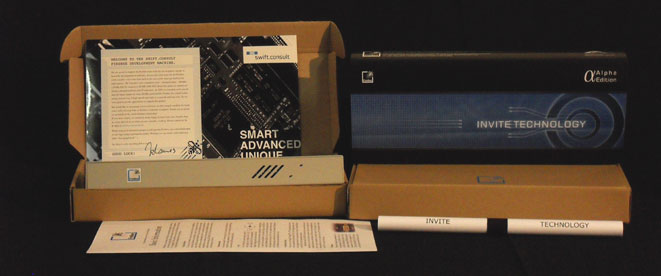
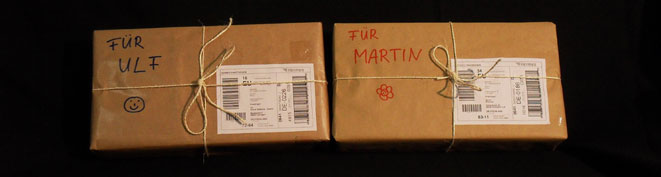
Today we have been able to ship, free of charge, two development machines to two famous and eminent Atari-programmers. One computer was provided directly by Medusa. But special thanks goes to swift.consult who have completely sponsored a computer lasting available for developers, including a case. This one can now be loaned directly by us for 1 to 4 months to Atari-developers for concrete projects. Both machines will now stay for some time with Ulf Dunkel from Invers for a first feasibility study regarding the adaptation of Calamus, as with Martin Elsässer for the possible improvement of the already running ACSPro. For a further development machine the German language area community already started pooling. About 300 Euros would be missing for a further development machine. Who likes to join in with a donation shall please contact us. We wish both developers to have a nice time!
|
| 2012-08-08 Elansar - the first purchase gaming title for the FireBee gets shipped |
|
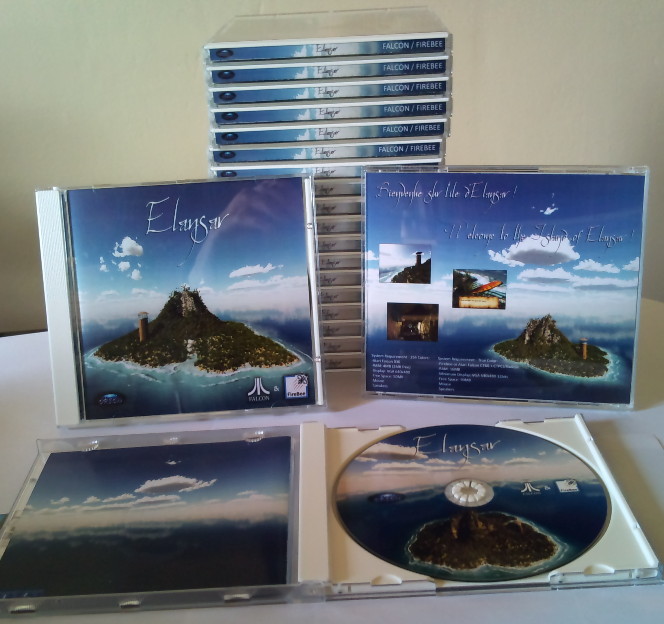
Today we like to report about an especial interresting development. The game Elansar gets shipped. It is a "Point & Klick" adventure. Elansar is now completed for Falcon and FireBee and the delivery starts. Peculiarity for the FireBee (and CTPCI-Falcons) - there are high quality 32 bit graphics. Additionally the developer paid special attention to very good sounds within the game. Elansar can be played in English, French and Geraman language. The CD contains all 3 language variants as the game version for original Falcons as the FreBee.
Even if Elansar is a project which was created in spare time - the developer wrote for more than two years on it - the presentation is very professional. The game requires a FireBee with 640 x 480 display (Elansar gets played in fullscreen mode), speakers and 90MB harddisc space. Several hours of gaming-fun are assured for those who like enigmas in "Myst-style". The CD with both versions can be purchased for Euro 15, what corellates merely with an acceptance for the developer than a real allowance. We are very glad about the arrival of a brand-new game for Atari Falcons and the FireBee, and we hope several other external developers will follow suit. Especially we are pleased about the fact that the first publication of the game contains an - improved - FireBee version. This means it is not only the first purchase gaming title that is availaible for the FireBee, but it is also the first new game release ever for the FireBee!
|
| 2012-08-03 Official Shipping start of the FireBee Mini Case! |
|
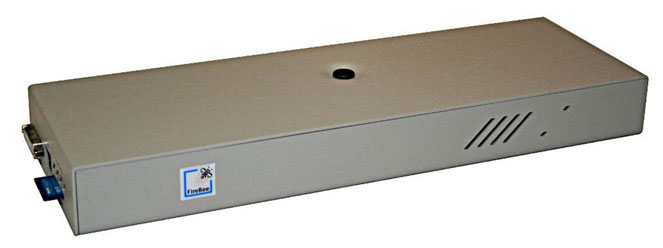
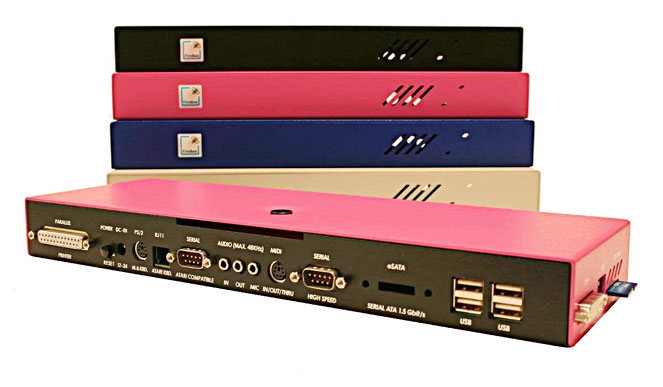
It has taken quite a long time, but now they are available: the custom-made special cases for FireBee. The cases in question are aluminium cases which are kept as small as possible in size and at the bottom of which the Firebee motherboard is tightly screwed on. Six bolts which are carrying the board and 4 removable D-Sub distance bolts serve this purpose. The lid has 2 parallel clamps for mounting a 2 1/2'' hard disk drive, which might reach a height of up to 9mm. In it there is room for an IDE-notebook hard disk drive or for an SSD up to currently 128 Gb. The clamps serve as a stabilising component for retaining the form of the upper part of the case. The lid is fixed with only one shapely knurled screw on top of the case through 2 distance bolts (on top of each other) with the lower part of the case and with 2 UNC bolts sideways on the DVI. Consequently, removing the lid is really simple can be done in next to no time. Inside the case there are two blue LEDs for "Power On" and for access to HDD, resp. for the compact-flash card. The Compact Flash slot, which we recommend because its mechanic-free style, can reach a storage capacity of 128 GB. This results in a total storage capacity of currently 256 GB - a range that ATARI users might hardly need. The case is delivered with a 16 GB Compact-Flash-Card by default. It contains our pre-installed FreeMint Open Source Multitasking System. From our point of view, these 16 GB, which are quite a lot for ATARI, present the most reasonable cost-performance ratio of compact flash fards at the moment. Inside the case there is also a loudspeaker and a parallel printer connector, as required by the community. Furthermore, inside there is a battery for half an hour off the line use, which can be extended on demand. Provision for SATA or /and eSATA use has been made. After an additional ground coating the case has been varnished both inside and outside. As required it is available in four different colours. ATARI grey with black lettering for users who want to have the same look as their original ATARI keyboard. Pink or noble dark blue as modern versions with white lettering and at last, classic black with blue lettering. On the front side there is a milled recess for the 3D label with the FireBee logo. On the back side there is a small slit for DIY'ers who want to have an intern connection with a flat ribbon cable outside the case. As an extra each case is equipped with a set of four black rubber feet which can be attached underneath the case to increase slip resistance and airing if required. Medusa Computer Systems guarantees fanless use within all technical specifications up to a room temperature of 38 degrees C, if the case lies flat on the table or up to 45 degrees C room temperature if the case stands vertically. With full load it might happen that the outside of the case turns hand hot - up to 40 degrees C, since aluminium acts as a heat exchanger. We should like to point out that the complete case has been produced as a custom built model in Vienna /Austria by a small family-run enterprise. Design and drawings have been released as Creative Commons BY-NC-SA.
The package as described includes the following :
Export from Switzerland. Customers who order within Switzerland, resp. people who have already received their FireBee and now only need a case, may contact us for special terms. Orders can be made with immediate effect under "acpinfo at atari dot org". Delivery already begun. Those of you who have previously decided on a special colour variant are kindly requested to state this colour in your orders.
|
| 2012-07-13 Probe House Software release ColdFire software |
|
Probe House Software (wongck on atari-forum.com) has released ColdFire-versions of the new and very cool programs.
Download here: https://sites.google.com/site/probehouse/download/phsw-Atari-software-downloads
|
| 2012-07-06 Arkanoid running on the FireBee |
|
The well known Klapauzius has patched his first game for the FireBee Arkanoid was chosen because it's a relatively simple game to patch, and while the result is not 100% perfect the game plays exactly like on the ST. As always with Klaz' game patches, the game can be run from MiNT and also exits cleanly. There are some issues to be ironed out, and not all monitors will be able to handle the ST low resolution. The biggest problem so far seems to be the way FireTOS handles the VBL interrupt and the timers.
|
| 2012-06-17 Photoline |
|
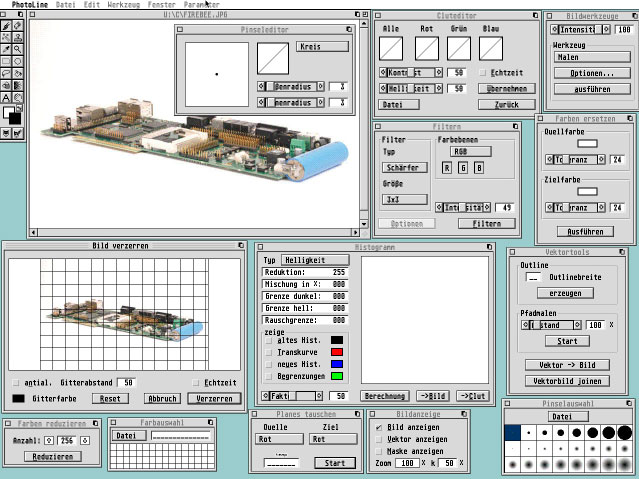
Fortune brought it to light. The latest version of Photoline for classic Ataris. Gerhard Huber of the company "Computerinsel" endowed us immediatly with the appropriate key for the professional retouche tool. With this key the version 2.30 can be activated and personalized. Cheekily we reeled an aditional kickshaw. "Within the next two months, everybody who is ordering Photoline at the German website (at http://www.pl32.de ), and filling in "ACP" at the bottom of the site is getting 5 Euros discount - one licence for 54 Euros instead of 59." This golden opportunity should be used capacious! Show the Computerinsel "we are alive". Other products of the brothers Gerhard and Martin Huber were/are professional scanner drivers, graphiccards and much more.
Summarised again: Computerinsel gave us the professional imagemanipulation and vector graphics software Photoline as present to the Atari community! Aditionally there is a rabate for all of these who buy a recent licence for Mac or PC at http://www.pl32.de until including the 20th of July, and who fill in "ACP" when ordering. Who knows else this might bring? Now it's up to everyone to show there is a demand for the Atari platform to continue on. PhotoLine Version 2.30 Registriernummer: 645762849 kindly provided by: Gerhard Huber support at pl32 dot de - http://www.pl32.de Computerinsel GmbH, Zur Limestherme 4, 93333 Bad Gögging Amtsgericht Regensburg, HRB 5891 Geschäftsführer: Gerhard Huber, Martin Huber
|
| 2012-05-07 FireBee in Multitasking Action |
|
Today we got a 10 minute video for you that shows the recent possibilities - as limitations - of the FireBee software with latest FreeMiNT setup. This video gives a nice overview of the multitasking capabilities of the FireBee. As well you can watch some online, "multimedia" and 68k application performance in real live. Watch it online . There are some surprizes as well.
|
| 2012-05-04 Digital Cameras |
|
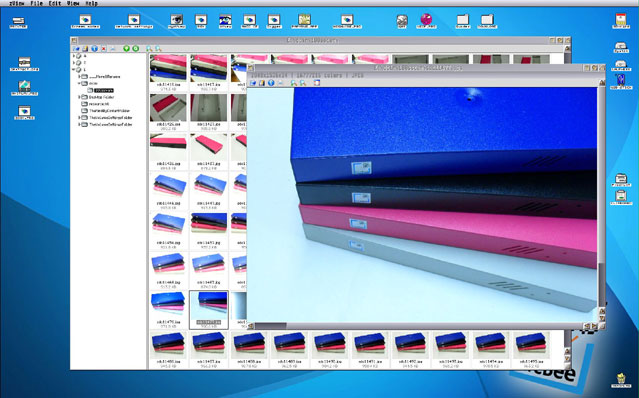
We are proud to announce that the FireBee is already compatible with digital cameras using the USB mass-storage standard. Just plug the camera, start your FireBee, then you can browse your pictures using zView. Here you can see a recent 10,2 megapixel camera used at a 1680 x 1050 desktop at 32 Bit.
You can see all small custom enclosure available colors, in this screenshot.
|
| 2012-04-13 Official FreeMiNT Setup Release |
|
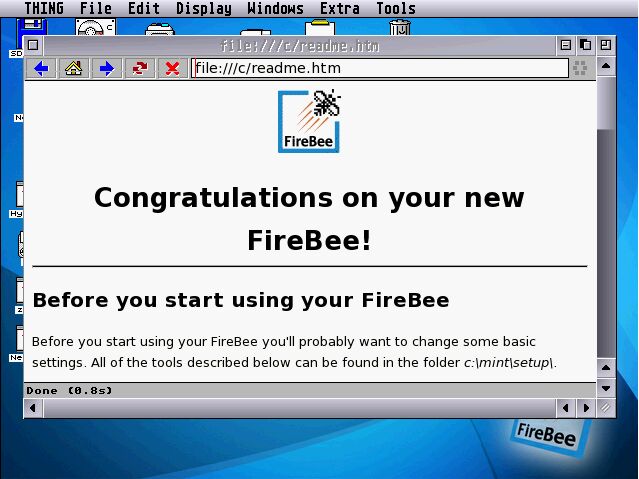
As previously announced the FireBee will be shipped with FreeMiNT pre-installed. The complete distribution is now available for download for existing FireBee owners. The distribution is more than FreeMiNT, it's a complete OS which allows you to immediately use your FireBee.
The distribution can be downloaded from http://atari.nvg.org/firebee-mint/
|
| 2012-04-11 Several new Software Releases |
|
The last few days our team was able, by some international support, to publish a few new software versions that brings us improved functionality and quality:
|
| 2012-03-27 Pexec patch patched! |
|
Compatibility improvedWe recently discovered a major reason for software incompatibility with XaAES on the FireBee. Many programs compiled with PureC would simply not work under XaAES, even though they worked fine under plain FireTOS. The reason was simple - a routine that should fix certain incompatibilities with the Coldfire CPU was not called when a program was started by XaAES. This bug has been fixed and now a lot of programs that previously did not work under XaAES are working fine.
Compatibility improved even moreBeside the fix of the PureC patch mentioned above, there is another huge innovation which will find it's way into this distribution. Compatibility with existing programs is very important to the FireBee team, and currently about 50% of the tested 68k applications are working without problems. In order to improve this situation several technologies can be utilized in the future, like a full 68000 in the FPGA and an improved replacement for the current compatibility layer CF68Klib. There is an other option which is already available - a 68k CPU emulated in software. The emulator is written by Vincent Rivière and is based on the Musashi 68k emulator. It's a brilliant piece of software that allows individual programs to run in separate, virtual 68k CPUs at a quite decent speed.The emulator is transparent to the user, everything is working as expected and emulated and non-emulated programs can interact with each other (e.g. through the AV protocol). To use this emulator you configure your desktop to open *.68k-files in the emulator program. Then change the suffix for the program you wish to emulate to "68k" and double-click. The emulator is now started, and it will automatically load and run the emulated program. You can run as many emulators as you wish concurrently. The emulator can as of now be downloaded here: http://vincent.riviere.free.fr/soft/68kemu/ This emulator won't fix all problems - the CPU is only a part of the equation. As we all know from the Falcon, some programs simply needs a real ST to work. This is also not the final compatibility solution. It is just another possibility to deal with 68k applications. Of course we are going on to improve the general 68k compatibility of the FireBee with other possibilities! This emulation can nevertheless be of interest in the meantime for some of you, and finally it's the only possibility to run 68k applications under EmuTOS which has no 68k compatibility built in.
FreeMiNT/XaAES pre-installed on the FireBeeBeside this real huge step forward, our team is working hard on the completion of the official FreeMiNT distribution for the FireBee mentioned in the previous news update. Since this preview there has been a lot of minor fixes and updates, we have also added a GEM tool for selecting and editing keyboard layouts.This distribution will be available for download when the FireBee ships.
AHCC updatedThere is as well a new version of AHCC - our favourite compiler for the FireBee. As always this is available for download on Henk Robbers' web-page.http://members.chello.nl/h.robbers/ Version 4.10 has some bugfixes as well some innovations for you. The FireBee will be shipped with AHCC pre-installed. Finally, the team has cared about several "small tasks". Some of these tasks are connected to ongoing developments, like shipping of the small cabinet, or the new product website. For new developments and future plans; we will go on, and report about them as soon as new solutions and/or products are ready for the public. And by the way, did we tell you already that the ACP would need some more VHDL developers? ;)
|
| 2012-03-10 |
|
FreeMiNT builds for ColdFire/FireBeeVincent Rivière is now offering ColdFire builds of the current FreeMiNT 1.18. This build includes the kernel, XaAES and the ethernet- and filesystem-drivers. There is also a complete sourcecode archive and a shell-script for building ColdFire binaries from the sources.http://vincent.riviere.free.fr/soft/m68k-atari-mint/archives/mint/freemint/ Any questions regarding the use of this build should be directed at the Firebee- or FreeMiNT mailinglists.
A sneak preview of the FireBee FreeMiNT setup
The FireBee will be delivered with FreeMiNT pre-installed and pre-configured on the CompactFlash card. Networking is pre-configured and use DHCP to automatically connect to your network. More details will follow, in the mean time you can take a look at this video: http://youtu.be/GfsVC6ty_dg .
ColdBoot updatedm0n0 has released a new version of his boot-manager ColdBoot. New in this version is some basic scripting capabilities. http://freeshell.de/~monokrom/geeklog/staticpages/index.php?page=ColdBoot
New NetSurfNetSurf 2.8 for GEM was released a couple of days before Christmas. The new version has numerous fixes and improvements, the most noticable is that is use the new NetSurf 2.8 core which supports frames and iframes. http://freeshell.de/~monokrom/geeklog/index.php?topic=20110219230358215
Bugfixed FPGA firmwareFredi Aschwanden found and fixed a serious problem with the MIDI interrupt line in the FPGA. This also fixed the problem with unstable Atari keyboards that some users experienced.
PICWe got a new PIC microcontroller update. The new feaures are: power off by software, as a step foreward to programming the PIC from the MCF by software! For those who already got their FireBees and do not like to buy an own PicKit or similar device; you can contact us for one that gets sent around.
HypViewOur famous Atari hypertext application got rebuilt. It´s still an 68k application, but works now fine with FireTOS/FreeMiNT/XaAES. Get the latest version from Vincents website: http://vincent.riviere.free.fr/soft/m68k-atari-mint/archives/mint/hypview/A new MyAES releaseThere is a new MyAES release with several improvements, and a built especially for the FireBee. Version 0.95 can be downloaded from Oliviere Landemarre website:http://myaes.lutece.net/
New MembersWe got a few new members from Canada as Austria. Nevertheless our call for support especially in the FPGA filds is still valid.
Cases are nearly readyThe small cases are nearly ready. Shippment will start soon. Please prepare for the payment if you have preordered. Stay tuned updates will follow.
|
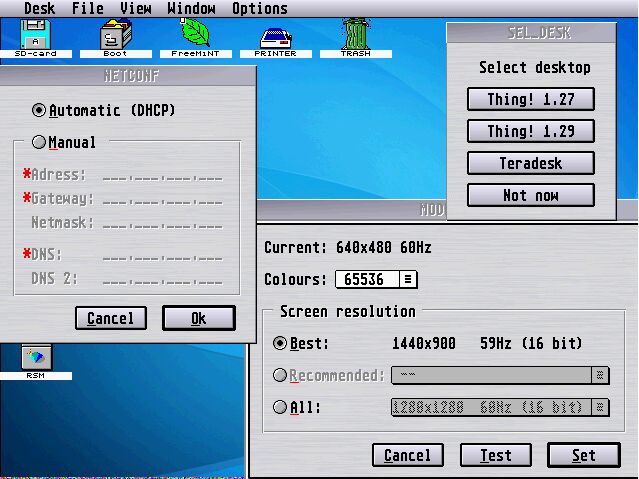
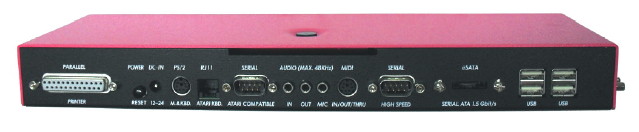
| 2011-11-15 ACP proudly presents: the quarterly report ;) |
|
-) Finished developments
-) Parts of the project that are in development
-) Further debates inside the team
-) Public perception of the FireBe -) Further Informations
MiNT Ethernet driverOne of our most important new developments is an FEC Ethernet driver for MiNT. This supports us with fully functional use of networking features via the FireBee's onboard RJ45 connector - even multitasking is working fine. As MiNT is a Posix compatible OS we now can use the wonderful world of networking. While it has been possible with FireTOS to use sFTP and STiK-Clients for some networking services via a proxy we now have the possibility to use all existing MiNTnet clients. The most spectacular feature is to directly surf the net with the browser Netsurf. Further protocols or services are now ready to use. The networking driver has been ported from FireTOS to MiNT by our team member m0n0 during a heavy month long working schedule and thus covers one of the biggest gaps. Networking with MINT is the most wanted feature of the FireBee.MyAESMyAES is finally fixed for FireBee, thanks to the team work of Vincent and Olivier. MyAES is an alternative and quite modern AES, which shows some fresh optical stuff for the world of our Atari machines. MyAES is now optimised for the FireBee, which meant several weeks of heavy programming. Some bugs caused quite intensive hunting and fixing. The cache usage that seemed impossible to do under MyAES couldn't be fixed until Olivier Landemarre teamed up with Vincent Rivière to get it done. Some smaller fixes within MiNT became necessary as well. In our opinion the results of this development are impressive ...
EnclosureThe development of our small custom enclosure is finished. All of your wished changes have been incorporated. The enclosure comes, for instance, with an additional parallel/printer connector, and with a SATA port which can be used either internally or external as eSATA. Furthermore there have been incorporated some optimisations. For example, the enclosure now comes with an internal 2 1/2" slot for hard discs. It will be produced, as requested from you, in four colours. Dark blue, grey, pink and black. The definite price will be confirmed to all advanced bookings. But to hold the price down we decided to make no further prototypes with the changes, but to order directly the first production run. The enclosures will be made in Vienna and delivered to Switzerland in the end of November.DVD drivesThere have been PACKET commands (Atapi for SCSI commands) added to the SCSIDRV of the TOS. Therefore it's now possible, with the use of the software Extendos, to use DVD's with DVD burners.USB Keyboard on MiNTBy patching the MiNT ikbd_scan routines, which on MiNT do not have the same format as on TOS, USB keyboards can now be used with MiNT as comfortable and as fast as with TOS. In the course of these patches there was also an update for the initialisation of AC' 97 via basic system (BaS).NVRAM ClockThe clock inside the NV-RAM is, since the beginning of October, now working very well on the FireBee.New FireTOSAside from the already mentioned ID interrupt routines as well as the AC'97 initialization, the PCI-BIOS got "Bus Support" added, with which the stage for using PCI Express adapters is set. The new limits are: four buses, thirty-two devices at each bus and four features per device. Moreover, all possible IDE-calls inside the boot routines after detection of SCSI devices, which could be not valid, got fixed (attention: SCSI is still not implemented). ATAPI devices got added to SCSIDRV everywhere, IDE devices in contrast were removed. These are now enabled by Inquiry commands at scanning during the boot of SCSIDRV. On the FireBee now, when the boot menu entry "TOS 4.04 for MiNT" is selected, the FEC driver for Ethernet is disabled, to allow use with the new MiNT-net FEC driver.A new FIRECONF.CPXThe control panel FIRECONF.CPX is now available in German language.zViewThe program zView, thanks to the recent work of Miro Kropáček, is now available in a version for the FireBee. That means PDF on the FireBee! zView is software for searching and viewing files from mass storage devices via an overview browser. There can be displayed and converted Bitmap and Vector files like JPGs, TIFFs, Degas, BMPs, Eureka, GIFs, IMG, NEOChrome, PNGs, TGAs, and as mentioned, PDFs. Using zView means that LDG has had to be adapted and updated, and all Codecs had to be recompiled. The upshot is a 100% ColdFire version of this (by Atari measures, comparatively young) software.
New EmuTOS VersionThere was a new release of the GPL Operating System EmuTOS. Version 0.8.6 of EmuTOS comes to us thanks to the sedulous work of Vincent Rivière, the first version with official ColdFire support. Many improvements, like usage of file systems up to 2 GB, have been added to this first release since 2010. EmuTOS is likewise (as a free alternative) preinstalled on every FireBee. The release from November the 8th 2011 is ready for operation on the FireBee.-) Parts of the project that are in development
Linux developmentGreg Ungerer has done several Linux patches that provide support of ColdFire cores and especially for the FireBee. After uClinux is up and running on the FireBee, the aim is then the adaptation of Linux-m68k. These are the first steps for complete Linux distributions (server, desktop, etc.). For more information the linux-m68k mailing list is recommended.NetSurf for FireTOSThere has been some work for Netsurf-browser on pure FireTOS (Single Tasking). This has no high priority inside the team, and shall just be mentioned for the sake of completeness.ATX power supplyAfter some discussion and consideration of the use of ATX power supplies in bigger enclosures together with the FireBee, we decided to develope our own small add-on PCB to use ATX power supplies together with an integral FireBee computer in standard enclosures. This PCB will contain a micro controller, some plugs and few components. The advantages are: the use of the FireBee in different enclosure situations is easier with no need to relocate the solder bridges, also usable with passive PCI backplanes (see below), full functionality of power and reset switches in ATX and mini-ITX enclosures, is immediately usable with no need to burn the new PIC micro controller on the FireBee (also on already delivered computers), and finally, is useful for further ATX power supply tests without ATX motherboards. This realisation has already started. The small PCB will probably be completely made within the Atari community and cost only a few Euros.Onboard PIC microcontrollerThe code for the PIC micro controller residing in the FireBee was recently under development by two people. As the electrical power supply is also operated by the PIC, we are waiting patiently for the official start of delivery, until this development is finished. Presumably there is, besides the expensive ICD-PIC-Burners, a cheap Open Source alternative that is working likewise together with the FireBee, for burning the PIC. We'll keep you informed.-) Further debates inside the team
USB-Floppy DrivesWithin the U-boot source code, which is providing the USB functionality of the FireTOS, there is already support for USB-floppy-drives, which are sadly not normal "mass-storage" devices. Thus we are of the opinion that it shouldn't be too hard to provide a driver for USB-Floppy drives.Infogrames USAWe've been witnesses of a very disturbing initiative from the current Atari IP holders, Infogrames, against several people of the non-commercial Atari community, mainly from the 8-Bit and Console fields. But fortunately after numerous complains from the community they apologized for the dissuasions and wrongful claims. Even though the - especially in that appearance - pleaded incriminations are untenable, and notwithstanding that our project was not hit at all, we hope that Infogrames will in future focus on positive coexistence with communities of all fields and their more as 40,000 members. Be it consoles, 8-Bit or 16/32-Bit. Particularly it is a matter for non-commercial initiatives, that have been partly active since 1994 - meaning 9 years earlier than Infogrames - in the Atari area. We would like to wish the affected persons further enjoyment of their Atari hobby, and want to assure them of our solidarity.Missing VHDL DevelopersInside the ACP team there are recently not enough VHDL developers. We have discussed some possibilities how to get new people on board, who can pursue in their spare time opened tasks like for example the unfinished DSP. Sadly we do not have a satisfactorily solution for this issue, and as well, no resources in this direction. We would feel happy about some support concerning this matter.CompatibilityThe compatibility between ColdFire CPU and 68k CPU until recently was mainly achieved by the freely usable CF69kLib and a few patches inside FireTOS. This is working in many cases, but not in all, and it is partially comparatively slow. From the beginning, it was clear inside the ACP team that the compatibility has to be strongly increased, to be able to let most Atari applications run. Therefore already in 2010 the development of our own compatibility layer for the FireBee was started by Medusa, and it was planned via BaS. But after the successful implementation of CF68kLib directly inside the FireTOS this development stood still for some time. Now we have decided to again go about the further development of the emulation of the missing instructions. This will be mainly realised by branch tables, but for certain instructions - that are behaving differently - like LineA, it will use a JIT-compiler. With our own completed development we expect in the medium term a highly improved compatibility and as well, increasing of the speed of programs that make plenty of use of 68k instructions, no longer present on the Coldfire. It will be realized as a library that can then be used by all Operating Systems like TOS or MiNT if required, and that it is providing the ideal speed of 68k applications on the ColdFire. For this further development the well-known developer Miro Kropáček from Bratislava could be won. Subsequent to its completition, the CF68kLib can be completely replaced by our own development. Theis work will begin in the middle of November.Flash LayoutThere have been some discussions about the layout of the internal Flash Memory, which has an amount of 8MB, inside the team. Recently there is the BaS, FPGA configuration and EmuTOS as well as FireTOS residing inside. We have now talked about how dBug - a free boot loader from Freescale - can be integrated into the system, and how all parts can work together in an optimal way. The integration of dBug benefits are, that there would be some valuably tools onboard at the disposal of developers, and that Operating Systems like Linux could be booted directly with it - allowing, for example, boot over the network. Presumably we will allow the BaS now to take over a few basic initialisations like RAM ad FPGA. Subsequently the BaS will start (or not start) one of the various compatibility layers that have been selected with the DIP-switches, and than pass to one of the Operating Systems like dBug, EmuTOS or FireTOS. This requires some modifications to dBug, but after finishing, should mean an ideal collaboration between all components and a maximum flexibility regarding Operating Systems. Even after the integration of dBug there will be some free space inside the ROM (Flash Memory) for more unforeseen developments.-) Public perception of the FireBeeThe FireBee was mentioned a couple of times outside of the Atari community in the last few months.
-) Further Informations
GEM DemoThe GEM Demo is now working complete and without any problems at the FireBee. The values for the graphics inside the FPGA are:
87 (1x), 75 (x2), 18 (x4) at a resolution of 1600 x 1200 @ 16 Bit Passive PCI BackplaneFor people who want to use their FireBee with a PCI-bus, we now have a favourable PCI backplane at our disposal. The passive backplane has four slots, is produced in Germany and will be slightly modified by us. It is tested and working very well together with the FireBee, and the price is below 20 Euros. The availability is assured.Active Radeon Graphic CardsFor people who want to use Radeon graphic cards inside their FireBees, we took a look around for recent manufacturers. At the time being it looks like we´ve found a long-term partner, who can deliver 9200 PC graphic cards for below 40 Euros. The model for 3,3 Volt PCI buses would be immediately available. However, we let produce a card for 3,3 and 5 Volt PCI Buses so that this card can be used at all Radeon-enabled Atari-systems. The specifications are: 9200 PCI card, 3,3 Volt and 5 Volt PCI bus, 256MB RAM with 128 Bit interface, GPU/RAM with 200MHZ/325MHZ, ATI Chip 215 Radeon 9200, low profile, passive cooling! The cards are available for production the upcoming years, and will be built after our orders, within 14 days from a German company. The Radeon 9200 is thereby faster than the 9250 model, which was released later. A first sample is on its way to us.3d LabelsFor the upcoming enclosures, we also have 3D lables provided free by an Atari-User. Tom Kristensen from Denmark has an advertising agency, and is working daily with his Hades Atari Clones. These labels were done with Calamus on a Hades computer!
|
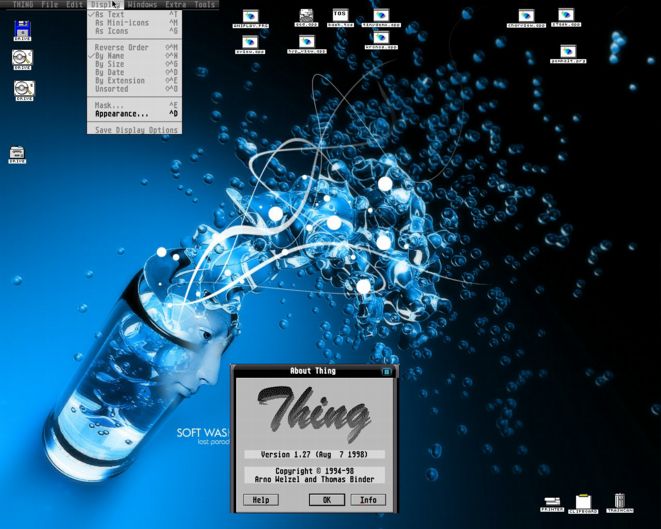
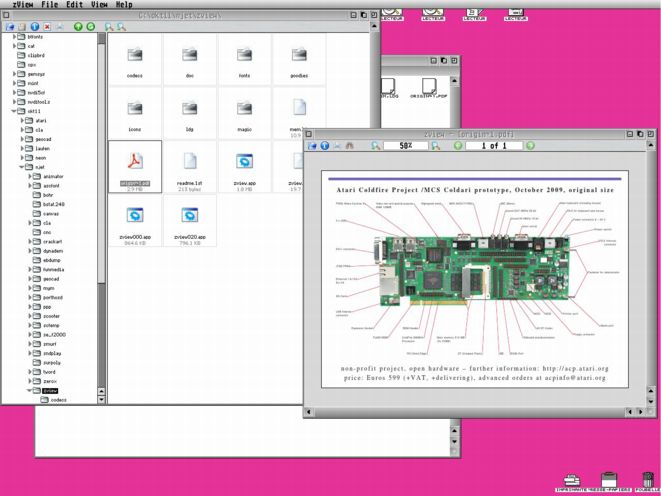
| 2011-08-23 ACP-News-August-2011 |
|
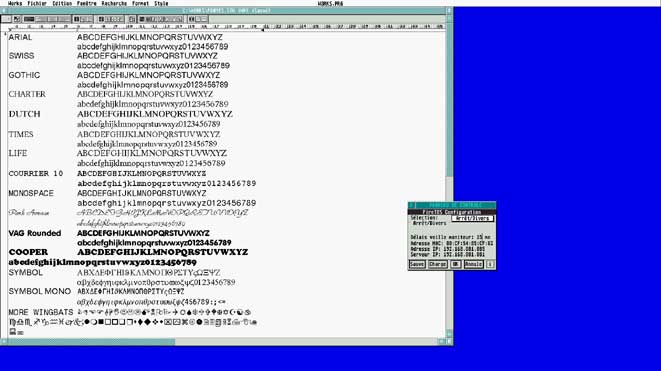
NVDI patched for the FireBeeOn the firebee now a patched NVDI can be used. This makes it possible at all programs that require NVDI (eg Texel, Artworx, Papillon), to test for the FireBee. The GDOS functions of NVDI now enable the management and use of different fonts. Theoretically, the printing functions should also be usable functions. This has not been tested yet. The hack has been tested successfully with the version 5.00, 5.01 and 5.03. Since NVDI no free software, and it is not also not to acquire new, it is not possible to offer a fully patched NVDI (legally) for download. Each user must patch its own version of NVDI. For those who shy away from using a hex editor, Ole Loots has written a patch program. Further informations and dowloads are on the german newtosworld wiki. There is also a german tutorial for it in the how NVDI edited by hand.
cURL on the FireBEEOle Loots has been ported cURL to the Firebee. CURL is a small program that allows it to transfer data from the Internet to your local computer. In combination with FreeMiNT, XaAES and bash it runs very well. Unfortunately you have to make compromises because the direct download is not (yet) possible. As a workaround Ole recommends a local proxy to set up and let it run cURL. The file is availaible for download at curlfire.zip.
GPG for AtariBernd Mueller ported GnuPG for MiNT. GnuPG is a free implementation of PGP (Pretty Good Privacy) and was designed to encrypt and decrypt files and emails as well as create and verify electronic key. Thus, the possibility of creating a modern, secure encryptionsystem to have on the Atari. Evenh ere at the moment is a little manual work is needed so that it runs reasonably well, there is currently no graphical interface to do so. You need an texteditor like QED, joe, nano, ... This sample describes ho to get it with aranym and easymint:
gpg-atari.zip
Bugfix Release of AHCCHenk Robbers has released a preliminary bugfix release which fixes some FPU related errors in the Coldfire target. Who likes to get this special AHCC, should contact him by mail http://ahcc.atari.org.
New TeammembersHeinz Schmidt and Marcel Schön has joined out team this month. Heinz and Marcel are working together to create the howto section and the documentation. Beside that, Marcel is goint to port some Linux Software.
New Betareleas of FireTOS and docs to fireconf.cpxA new public beta release of the documentation & FireTOS FireConf.CPX: On his Web site, Didier Méquignon has published a page dedicated to FireTOS FireConf.CPX. There he describes the settings that can be changed using FireConf.CPX. At it it´s possible to discover the progress he has made with FireTOS in recent months. On his site there is also the current public beta version of FireTOS of 27 July 2011 available. All the enhancements and additions as bugfixes that were described in the last ACP News, are included.
USB improvementsDidier Méquignon has recently fixed a long-standing problem with USB that prevented mass storage devices from working properly. The problem was caused by a hardware bug in the Coldfire chip itself, but could fortunately be worked around in software. As a result, it's now possible to access USB mass storage device in FireTOS and FreeMiNT. With FreeMiNT it's possible to access drives and sticks formatted with FAT16/FAT32 on a PC, which makes exchanging data with a PC or Mac easier than ever.
FreeMiNTWe have now reached an important milestone in the development of FreeMiNT for ColdFire. Vincent has patched all the assembler sources for ColdFire in the kernel, XaAES and the most important modules. Changes were made at 337 places. Everything has been committed into the official FreeMiNT CVS repository. As a result, the current kernel mintv4e.prg which can be found in the daily trunk Archiv, is fully optimized for FireTOS and its 68060 emulation. EmuTOS support will come later.
|
| May 2011 A status update |
|
The past month was characterized by a variety of work on all fronts of the project. Much of this work has been for end-users but rather uninteresting and worked in secret. Nevertheless, it is time to deliver a bigger status update and publish the milestones reached.
The New FireBee LogoThe most important recent event of recent weeks was the final decision on the FireBee logo. After a very lengthy process, the team was finally able to agree on the final appearance, so we can officially present it.
The new FireBee logo is not only our future case decoration, also serves as a brand recognition for the FireBee. We hope it will serve as sign the Atari has not just merely survived, but has continued to evolve with modern technology. We want to warmly thank all who have supported us with proposals, designs and inspirations. The new FireBee logo is a available for download as a vector graphic. color.eps color.svg black.eps black.svg
Welcome to the TeamAnother imporant item is that we would like to welcome and introduce new members to the team. Geir Øyvind Vælidalo - he was a supporter from the beginning of the project. Since he received his FireBee, he decided to join as a developer and porting to TTF GDOS for FireTOS. Jean-Pierre Feicht - a relatively unknown face and late arrival - but just at the right time - responded to a public appeal in 2010. Jean-Pierre is an independent media designer and took over as the artist of the promotional artwork and design of our new FireBee Logos. Currently, he is responsible for the implementation of firebee.org product page and will now also take on a further part of the resulting design tasks. Marc-Anton Kehr - thanks to his work with Easy-MiNT, he will be know by most Atari users. First, a new Easy-MiNT version will be prepared for use with the FireBee. He has also afreed to particiate on the long overdue implmentation of the firebee.org product page and some of the technical details. Ole Loots - actually an "external" developer who cares about the port of Netsurf browser. After delivery and the adaptation of his FireBee Netsurf, it made sense to expand to technical cooperation of OS developers and application programmers. Therefore, the two projects and ACP Netsurf port together are now a little closer. m0n0 now is advisor to the ACP, however, he has also been a very helpful in some important ways beyond the browser.
Technical progressThere has been a lot of work on FireTOS. Since the last news we have received four new updates. FireTOS now offers an improved basic USB support directly in the TOS, which makes use of mass storage devices by hot plug possible. Booting with USB devices is no longer necessary. Bugs caused by GCC problems in implementation of lwip be eliminated. (Now these nasty little bugs have now taken root in the AC'97 initialization). A very large piece of the progress was with the XHDI support. Random FireTOS crashes and incomprehensible loss of data under MiNT NEWFATFS have kept our developers busy for 15 days. After eliminating this problem, the XHDMI implementation can now be optimized. FreeMiNT has been improved to work with the FireBee. This includes, among other things, the optimization for XaAES on V4e processors. This development took more than a year to complete. The 100% optimized version of the ColdFire XaAES kernel modules also brings a great advantage for other processors. Where some parts of XaAES written for pure 68000 processors, all parts of XaAES can be compiled and optimized for each processor type (eg 68030). Internally, of course, there have been many other issues and developments in the pipline. For example, the flash layout, more GCC 4 Bugs, DVI + VGA resolutions and the sync polarity, BDOS and IDE issues, the possible offering CodeHeads GDOS+ as open source, the use of fVDI or oVDI (largely unknown), the possible implementation of a parallel port, debugging HDDriver, preparing a public program compatability list, the long overdue update of the websites, enhanced capabilities of the PIC icrocontroller, etc. In closing, we still have a very positive message. In the very far-reaching environment of the ACP, all programs of Sven Kopac, whose sources are still available under a GPL / Artistic License provided and made accessible. The binaries are now freeware. This includes for example Emailer, PPP-Connect (with CAB.OVL), Income, Alice, 2nd Chance.
|
| 2011-04-13 USB news |
|
ACP team-member David Galvez has for some time now been working on USB-support in FreeMiNT. The result of his work so far can be seen in this video:
As Download as AVI (XviD) What you see here is David's USB stack running as a kernel module in FreeMiNT on a Falcon with CT60 and EtherNat. A Mass Storage Class driver with XHDI-support has been implemented, which in plain words means that FreeMiNT can access USB drives with Atari or MS-DOS FAT16 or FAT32 filesystems, with or without VFAT (long filenames). It can also access Linux ext2 partitions, or any other filesystem that might be supported by FreeMiNT in the future. Exchanging data with mainstream computers has never been easier As the video shows the USB drives can be hotswapped, and multiple drives can be used at the same time. The USB stack has a modular design where both the class drivers (that is, drivers for the USB devices) and USB interface drivers are implemented as external modules. The correct class driver is automatically attached when a USB device is inserted. Thanks to this modular design David's work will benefit all FreeMiNT users with USB hardware.
|
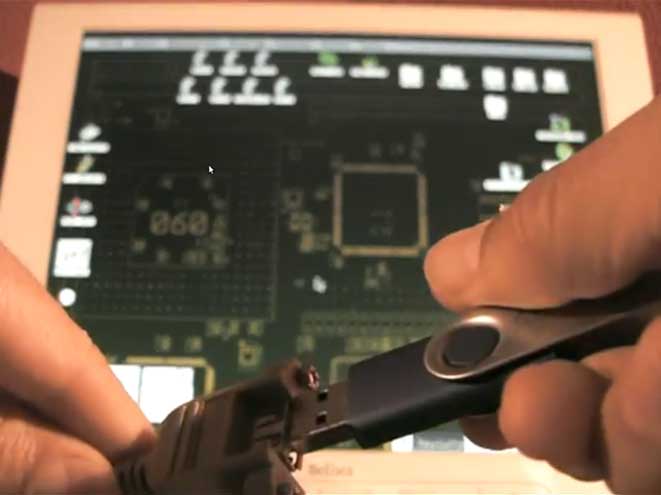
| 2011-04-06 Thing Desktop goes GPL |
|
The ACP Team is proud to announce, that the very popular desktop for Atari environments - Thing which was originally done by Arno Welzel - will be freely distributed. With the cooperation of the Thing authors we have improved the number of available Open Source desktops, which has blossomed into a long-term cooperation. Thing is, and along with jinnee, are the best existing desktops with the largest user bases, and it was not until recently a commercial product. As the sources of jinnee, according to different information sources, are lost, and hence any future development will be impossible. It initially appeared that the FireBee would be limited to the Open Source desktop TeraDesk, as far as it concerns native ColdFire versions. The authors of Thing however did support the development of the FireBee very early, and did not just agree to freeing the binary, but also publishing Thing as Open Source. In the meantime there is a version of Thing 1.29 without the registration dialogue in existence, which was built by Dirk Klemmt. The Thing developers work right now on the following approach: First all the sources (1.27, 1.27b, 1.29, 1.30) merged as far as possible, and the code will be revised. Subsequently there will be the publishing of a free version for 68k without registration or any other limitation. Some time later the sources of Thing will be published at our CVS repository at Atari-Forge. Further development by other ACP members is being considered. Even though Thing is already running fine as the pure 68k version, a native ColdFire compilation would again bring a noticeable speed increase. We are pleased about the Thing programmers and their extended cooperation, and that we can together hand the Atari community this gift today. Thing is even working at the very small Ataris and therefor turns out to be a benefit for all Atari users, even without the FireBee. Here now, for the immediate release, the public key: user "PublicACP": ochl Piie juQd Kg6h kfUW ZiTh zbBr UHbx
|
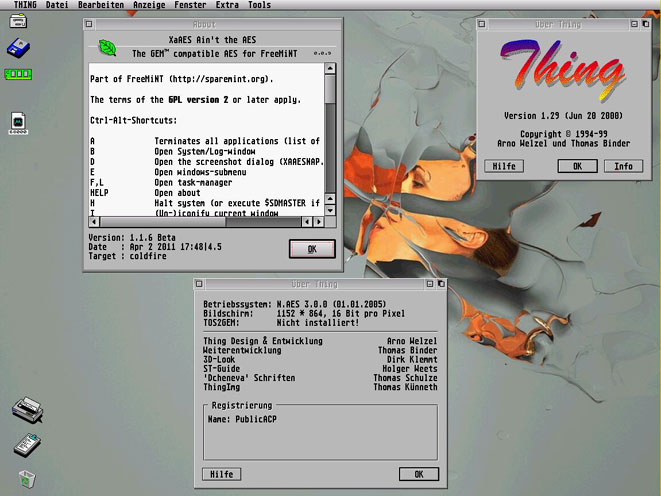
| 2011-04-04 FreeMiNT is coming to the Firebee |
|
Thanks to the work of Olivier Landemarre, Vincent Rivière and Didier Méquignon, FreeMiNT and XaAES are now running over FireTOS on the Firebee. It's far from finished, the kernel is still partially patched for ColdFire, but as the screenshot shows it is already capable of running GEM applications surprisingly well.
This shows a number of applications running under the latest XaAES. All of these applications are working as expected, and despite the relatively slow FireTOS VDI everything feels snappy. BoinkOut2 even produce sounds. ;)
|
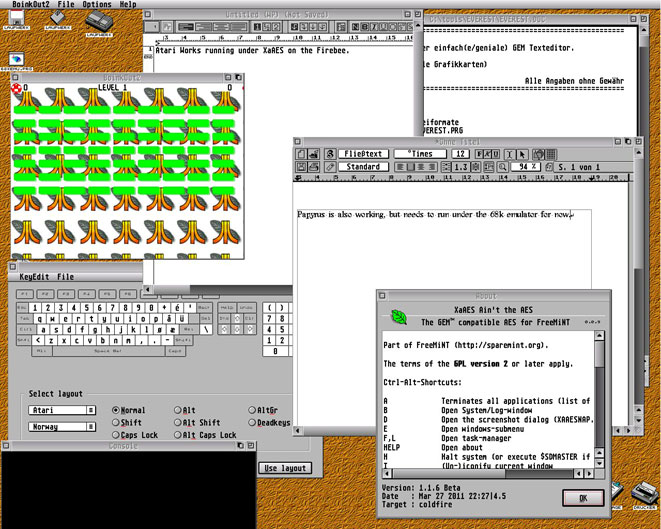
| 2011-03-10 Cooperation for using GNU/Linux |
|
The ACP is proud to announce a cooperation with Greg Ungerer to get FireBee running under GNU/Linux operating systems. Greg is a core maintainer of uClinux project and has worked for many years on Coldfire hardware. uClinux, the "Embedded Linux/Microcontroller Project", is a well known port of Linux to processors without a Memory Management Unit (MMU). Greg has taken first steps with a FireBee we sent to Australia, and was able to boot uClinux via Freescale's dBUG loader, loading system images over the ethernet port from another computer. Getting a simple uClinux configuration running on the FireBee was a straight forward job with a basic peripheral set supported. Greg will work torwards getting full Linux with MMU support running. With that in place complete desktop GNU/Linux distributions (like Debian for example) can potentially work on our hardware. The ACP highly welcomes this opportunity to work together with developers of "external" operating systems, especially Open Source ones. We will keep you informed about the progress made in using Linux at the FireBees.
|

| 2011-03-04 Hold yourselves tight! |
|
Within the last ten weeks so many things worked out that we stepped behind with releasing our news. Most of what you'll be reading now would have been worthy of getting an entry for itself just to be appreciated properly. Nonetheless we hope not to beat you down with the sheer amount of text. Enjoy reading!
Delivery of the FireBee in the end of 2010 would have been possible, but unfortunately we're still working on completing the software for the normal user. After a small inofficial enquiry on Atari-Home and via our mailing list we decided to rather wait for some months instead of releasing a product which isn't working all over, and thus might frustrate users. So we delayed the delivery for end users. People who can cope with JTAG and BDS, or who want to join the development certainly may order their machine at any time. Just drop us a mail. And now for some recent developments: Already in November we found a problem with the current supply of the USB chip on the PCI bus. This bug has taken quite a lot of manpower and debugging time but in the end could be solved in a very easy way. Every FireBee will be equipped with a 1000uF condensator connected near the accumulator. PCI is stable now although USB is not perfect due to other issues. Just before the turn of the year solutions for the USB chip (Chip errata 35, I/O access write cycles) and for the Radeon 9250, which also is sitting on the PCI bus, came up.
Another field which we cultivated was the use of different external hardware which is needed for further development, e.g. PIC programmers or BDM adapters. The latter had to work flawlessly via parallel or USB port, which needed a lot of testing in December. Two very important issues which should be compleated before delivery are the flashing software and the code for the PIC microprocessor (for the PS/2 interface and other things). The PIC coding has been taken over by Alan Hourihane who is well-known for "Eiffel". Alan ported a comprehensive amount of code (which had been built by MCS within summer and autumn) from assembly to C. Work on the PIC goes on permanently. The flashing software has been completed in the end of 2010. Didier adapted his flashing software for the CT6x in such a way that a TOS update for the FireBee ROM can be done via TOS. Additionally he adapted Xcontrol and CT60conf which both now work on the FireBee. FireTOS is working flawlessly now with different languages, boot orders and other things. The software can be downloaded from Didiers pages as GPL. Point your browsers to http://ct60conf.atari.org and http://ctpci.atari.org . FireTOS itself has undergone no lesser than five updates which were done after the last news release. Fredis SD-card driver has been implemented into FireTOS, and the BDOS limits got pushed. The SD-card driver is working without the FPGA! TOS got general networking capabilities via LWIP. Protocols such as TFTP, telnet and others are possible. Three flash parameters were added to TOS to be able to configure ethernet if the FireBee is started from BaS (base system) and not from dBUG. The ethernet MAC address can be changed from a CPX now. Further on FireTOS got basic USB capabilities, so that mass storage devices and mice can be used already! By the end of November IDE has been approved too: Now three IDE devices can be used with 32 bits data. The CF-card is implemented at 0xFFF0'0000-0xFFF0'003F just as IDE on all IDE capable 16/32 machines. An FPGA firmware update opened up the possibility to swap the IDE buses. Since mid of December FireTOS is able to use the monitors EDID list of supported resolutions and offer those to the user. TOS can on the fly change between several high resolutions. We published our first 'snippet' showing that. It can be downloaded as MPG4 or viewed as stream. This became, amongst other things, possible because of extensive work on the FPGA, which took place the whole December. The ST-resolutions were improved. "Video clock PLL" was implemented and "Pixel-Clock" is now adjustable in 1MHz Steps. Together with the BaS update this FPGA update brought the possibility to set the Video-base-addresses anywhere inside the ST-Ram. This solves all ST-compatibility issues (as far they are concerning Video). A write operation into the Video-RAM is now divided into a "Atari-" and a "ACP Video-Ram area". This FPGA update brought not only they improved video possibilities, but also the already above brought up complete Ethernet, as the new - from some future users demanded - reset/boot behaviour of the power button (0,5 sec. boot, 0,5 sec. reset, 3 sec. power off). The FPGA is now also delivering all 20 clock frequencies, which are needed at the FireBee. These frequencies became adjusted. The FireBee is now running with 264 MHz. Additionally the FPGA update also brought improved usage of the Floppy. In the meantime reading from HD-Floppies is working under FireTOS. At writing as with DDs there are still problems. Already mid of December could additionally several Floppy bugs in EmuTOS be solved. Of EmuTOS there is, since shortly after our last update, a version available that works completely without MMU. This can be useful for tests as reference or a full optimised ColdFire-System. For Atari compatibility the MMU is naturally needed. A further very interesting development we like to present today is the prototype of our small custom enclosure. The enclosure is just marginal bigger than two side by side lying 3,5" HDs. The aim was to produce the smallest possible enclosure for our PCB. For now it including some LEDs, one Speaker, space for the CF-Card, space for a 2nd battery and there for one hour full usage without external power, notches for all outer ports, as an easy to open upper component. The case can be opened by squaring a single knurled head screw, while the computer stays bolt down with the bottom part. Recently we are considering, if we embed guide rails for 2 1/2" HDs and a SATA port. The enclosure itself is fanless, and with CF-Card also free of mechanical components. It is absolutely silent.
There will be in extenso information about the enclosure in near future. Serial debugging: Now it is possible to adjust the Rsconf Boot-Choice with a CPX ( a list of 16 baud rates like as at the Flacon 030 HSMODEM), and debug with programs like KiTTY, minicom, ZOC oder Hyperterminal, via a simple null modem cable. Beginning of February a NV-RAM Test Bug was detected. Zorro has stopped his work on zDesk. After a public debate with several users, who wished the further development of the never published zDesk, the recent status of the software was published as GPL, like it was done previously with all "z-applications". The Source Code is now available at Atari-Forge. Two new versions of AHCC were published. The GPL Compiler/Assembler is now availableas Version 4.4 from Henk Robbers . There is a new Version of MyAES (0.9.3) which can be obtained at Oliviers page . Mid of January Vincent has fixes GCC, to have a usable math library with m68020-060. For Gem-View there is a patch available, which is based on the work from Guillaume Tello and which was done by Lonny Pursell. With this patch the application should work immediate at the FireBee as soon as MiNT is ported completely. Didier is working a lot recently at the AC'97. This leaded already to several possibilities, that we will present you separately. We'll say this much, MP3s can already be decoded with only the CPU, and the GSBX mixer is working as ACC including all controls at the FireBee.
A further very important point, which hopefully will delight some of you, are the user applications. Recently we are at testing and adapting HDDriver, Calamus and Netsurf. Already adapted were Doom for GEM which is running well, or as well POV Ray. A even more suspenseful point could be the following one: With the recent implementation of the cf68klib already several pure (!) 68k applications are working. Let´s go by the name of QED (3 and 5), Wdialog, ST-Guide, STING, Packman (GEM version), the Atari Mouse Accelerator, or Papyrus. As highlights here a few pictures of strictly 68k programs that work at the FireBee under FireTOS without any patches:
Last but not least two further news regarding our homepage: With Pavel Salač we have a new member in our team, who is now responsible for the translation to Czech language. Pavel has further knowledge, which will the upcoming months expand into the ACP. And the link section of our page got a huge update end of December. Look inside. Even for some Atari netheads there could be something new to recover.
|
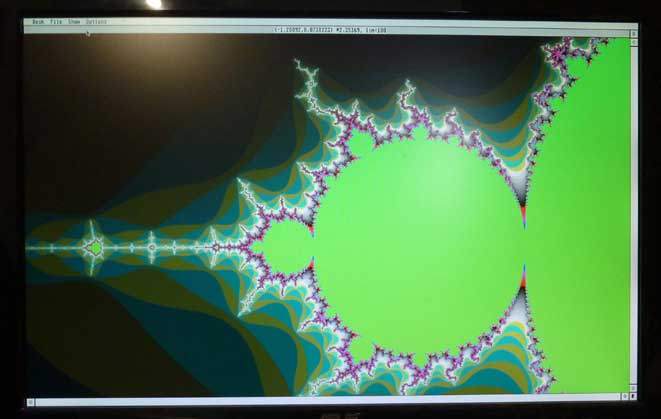
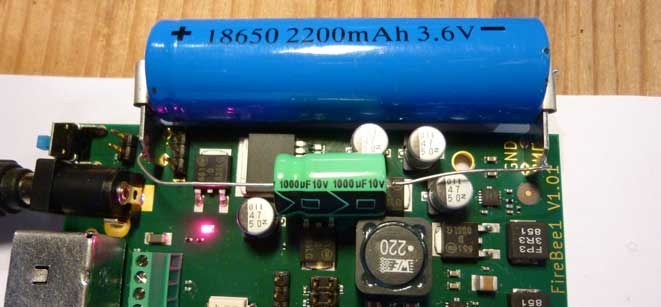
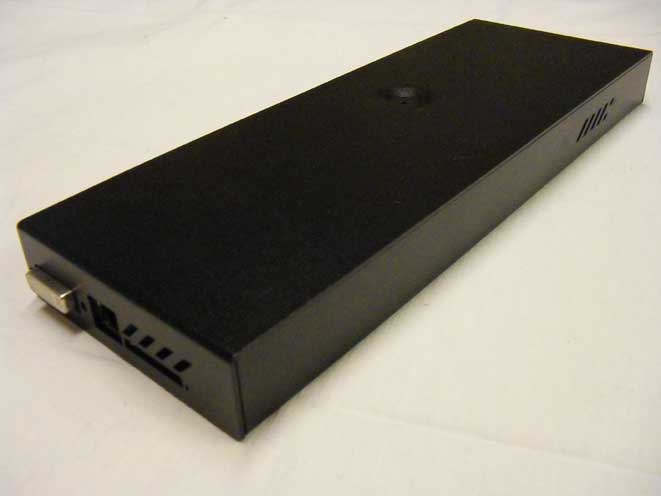
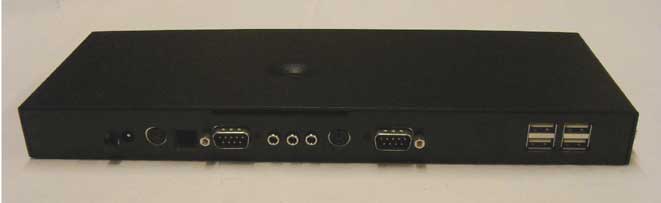
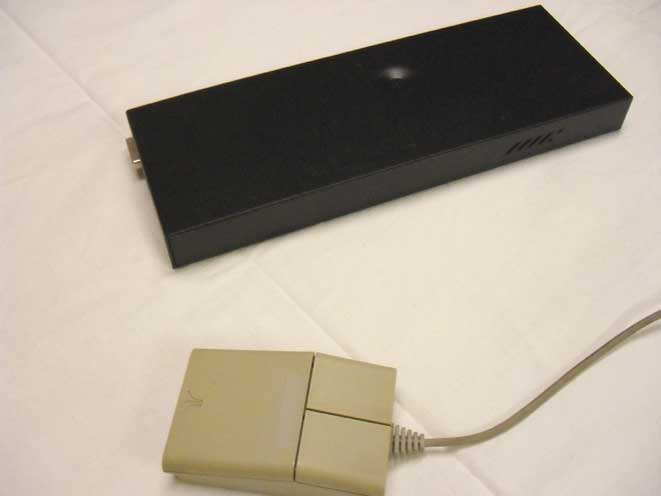
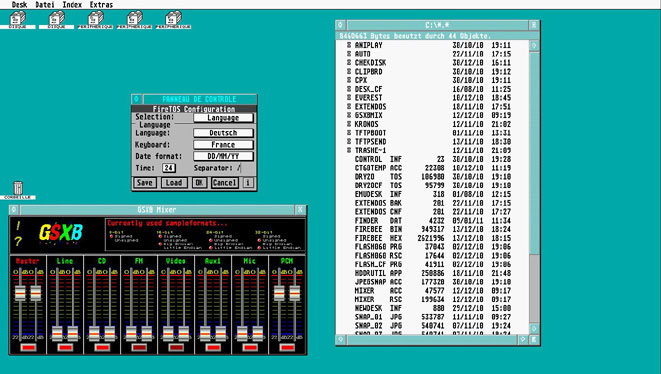
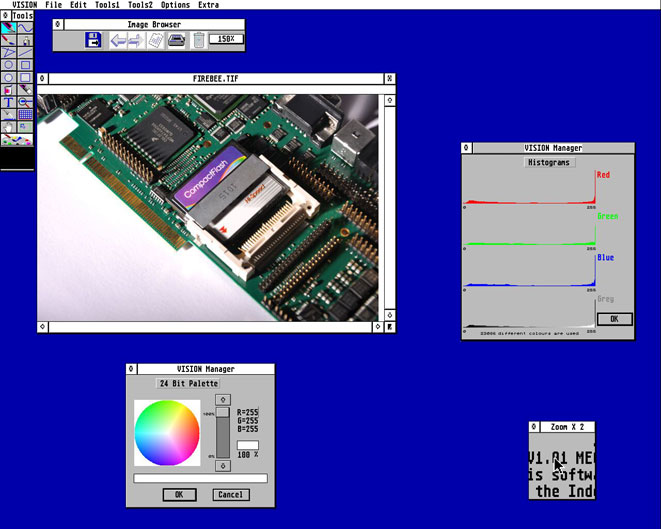
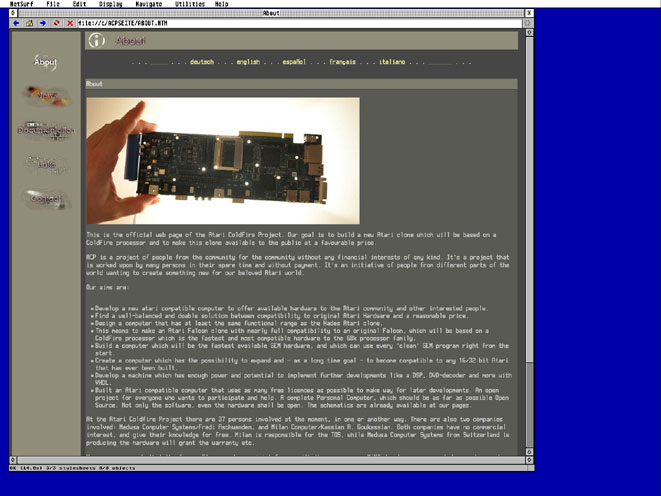
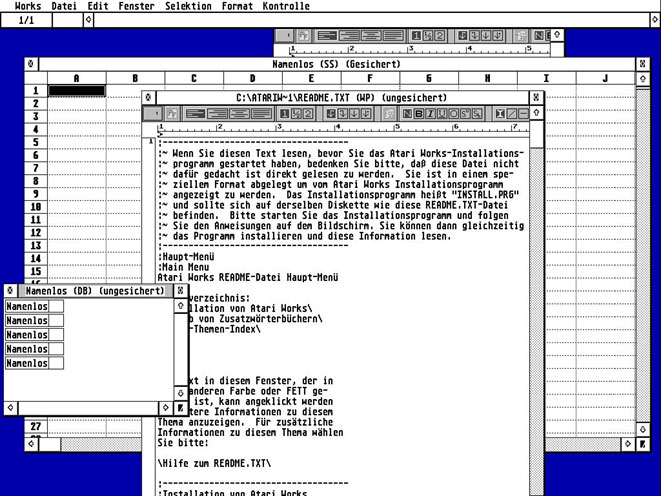
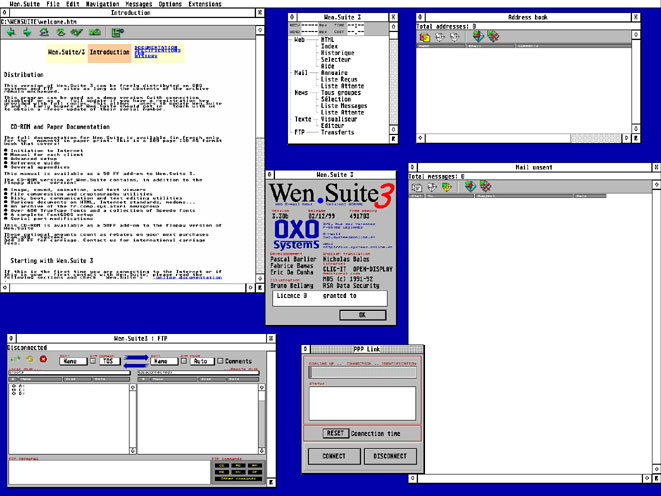
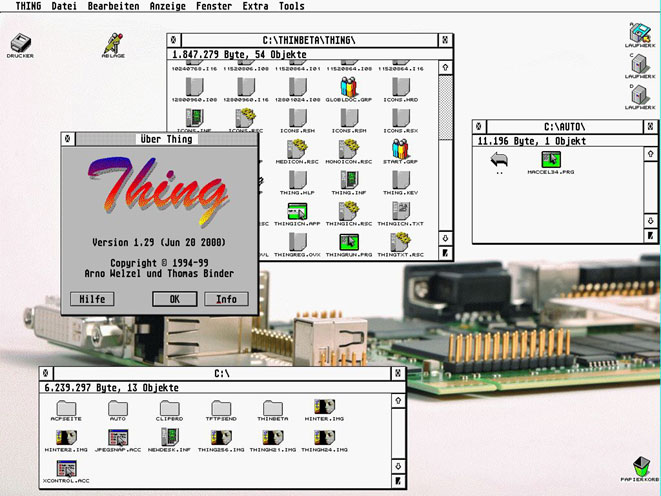
| 2010-11-18 As a lot of work has been done or even finished recently, here are some news about the latest achievements: |
|
Vincent has fixed EmuTOS to align programs and Malloc() buffers to multiple of 4-bytes. This ensures that programs always run at optimal speed. Indeed, accessing 32-bit values is a lot faster when they are aligned on 4-byte boundaries, especially on ColdFire. This was already the case with TOS and FreeMiNT. Fredi works on a problem about crashes on long-access on the IDE interface. Henk decided to work on EmuTOS' VDI improvements, e.g. allowing the VDI to use 8bpp and 16/ 24/ 32 bit modes. Didier implemented the I2C protocol into FireTOS allowing automatic monitor detection. FireTOS can be run in 1920x1080! We setup version source control at http://www.atariforge.org/gf/project/firebee where all developers are slowly uploading their work. David is doing nice progress on USB, trying to assure compatibility of his USB stack to the NETUSbee as well! Didier and Fredi have debugged the USB hardware (OHCI1 & OHCI2 interrupts) and got USB mice and keyboards working with FireTOS! Work on USB mass storage has begun now. Vincent and Fredi have implemented a bus error emulation layer, so now it's possible to run programs relying on this (e.g. for getting a list of available hardware). EmuTOS is now able to print nice error messages with a register dump when a faulty program accesses a wrong memory area. Vincent has found the cause of the infamous BaS slowdown: The cache mode was not set optimally (write-through instead of copy-back), finally EmuTOS+BaS are running at full speed! Didier is able to natively run Kronos with all tests apart from AES stuff running natively. Didier and Fredi are debugging power consumption errors on the PCI bus. Didier proved himself being a natural Atari maniac by soldering 240 wires from an unused CTPCI backplane just to give Fredi some test results! Fredi then bought some PCI slots so no further soldering should be needed for debugging the problem. There has also been improvement on development environments: EmuTOS runs AHCC without any emulation layer, and Henk expects AHCC to be able to recompile itself in CF mode! Henk started works on CF-only instruction support for better performance. Thus we have three compilers able to produce fully ColdFire compatible TOS programs. VBCC and AHCC can already be run on the FireBee, while GCC still needs to be run as cross-compiler on another machine.
|
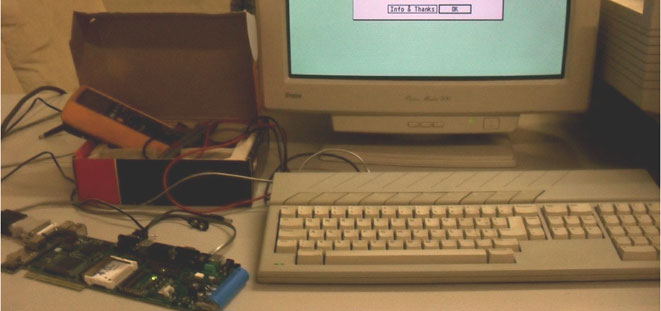
| 2010-10-16 Some News |
|
The remainder of the first series has been finished at the factory, and has arrived at Medusa Computer Systems. There have been some reactions and suggestions from the community in response to the video published by Fredi. Following up on these, the behavior of the power button is now as follows: Power up by keeping the button pressed for 0.5 seconds. Reboot by keeping the button pressed for 0.5 seconds. Power off by keeping the button pressed for 2.5 seconds. The USB driver is advancing: David Galvez has continued the work done by Didier Mequignon with the XHDI mass storage driver to the point that all partition types supported by MiNT are working well (FAT12, FAT16, FAT32, ext2). Alan Hourihane took on the responsibility of implementing PS/2 support, and is adapting Eiffel to our PIC. This means the ground work for PS/2 is now done. Henk Robbers published a new version of the AHCC Compiler, which is running natively on ColdFire. The vbcc compiler has also been ported to ColdFire by external developers. There are now targets for both TOS and MiNT on ColdFire. In the near future, there will also be a native FireBee port of vbcc. At the end of next week we will request a prototype of the Mini-Enclosures from Vienna.
|
| 2010-09-26 TOS in Russian |
|
We are proud to announce that Дима Соболев (Dima Sobolev) finished his work to translate EmuTOS to Russian. Therefore we will be able to ship the FireBee with complete Russian Operating System as also TeraDesk is available in Russian language. It is the first time an Atari Clone will be available in series production with Cyrillic alphabet and translated desktop as well as OS. We hope to make usage of Atari environments in Russia, Ukraine, etc. more interesting and even for some people possible at all. This development started inside the ACP, but took mostly place inside the EmuTOS team, and therefore the new language can of course also be used with Aranym or other environments. This is one of the examples like the project likes to improve situation for the whole Atari 16/32 scene. Please enjoy the pictures below done at two different series one board of the FireBee.
|
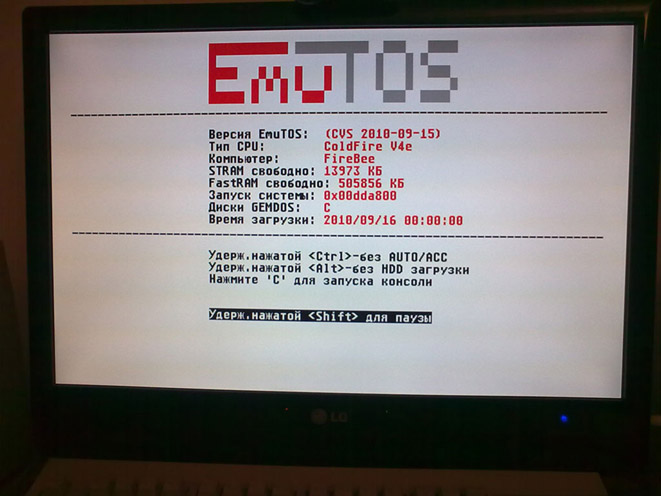
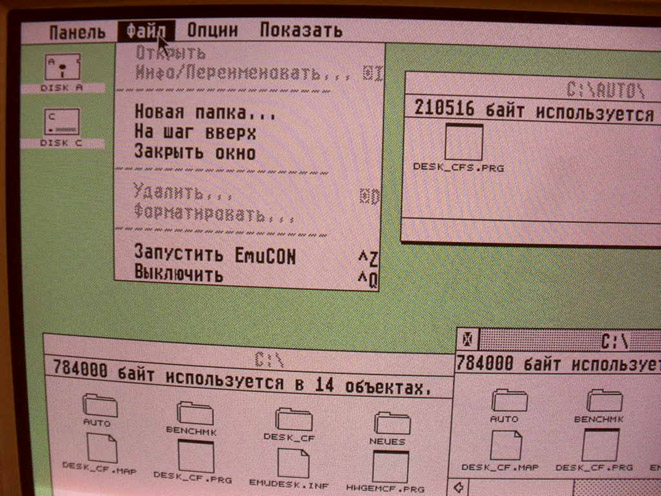
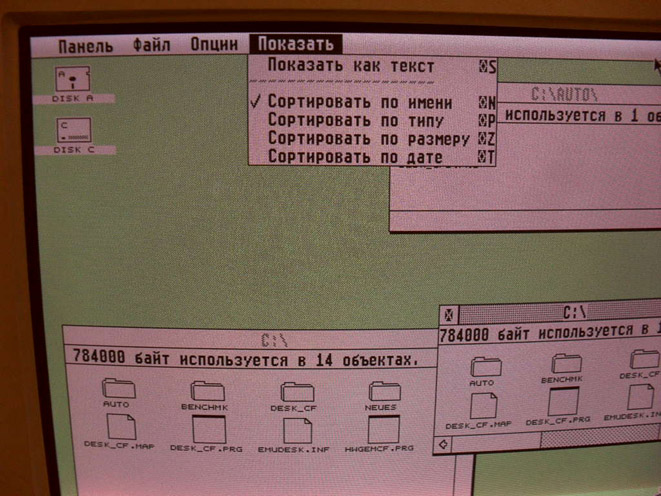
| 2010-09-16 The summer finally draws to a close, so here is the news: |
|
First the bad news; In addition to the production delays, the first 24 boards have a small fault on the PCB. KiCAD (the printed circuit board application, which we used for the PCB layout) filled an area over the Vias in an undesirable way. Therefor the PCI-Bus does not work correctly. These boards will be fixed by hand. The rest of the series will not have this fault, it has been corrected at the production level. The good news: The first boards have been sent to software developers. Due to the production delays we now have an unanticipated situation, something like a "developer series" ;) On the software side we recently work on the base system, the 68k-handler, the PIC (Real-Time Clock, PS/2, ...), the DSP in VHDL, the USB driver, the adaption of MiNT and the native ColdFire compilers. Our team has grow again. More than 50 people now contribute their knowledge and spare time, to advance the start of the FireBee and to continuous further development. The new members will be presented here soon. A new aspect of the ACP which has moved forward that we can expect real achievements, is our custom case production. This is an often asked question from future customers. And now we are ready to say, that at the end of the year the first mini custom enclosure made exclusively for the FireBee will be offered. The last positive information for today; The question of licenses for the hardware will now be concluded shortly. The schema, which has been available for more than one year freely down-loadable from our site, will be released under GPL/LGPL or a similar hardware license. The layout of the board will be released under Creative Commons BY-NC-SA. Therefor our computer can now indeed be refereed to as Open Hardware. Last but not least, we would like to present a short video in which the initial operation of the FireBee is explained:
The original can be downloaded (size: 220MB):
|
| 2010-09-07 Photos free of charge |
|
Photo 1 high resolution (CMYK, 3,3 MB)
Photo 2 high resolution (CMYK, 6,3 MB)
Photo 3 high resolution (CMYK, 5,8 MB)
Photo 4 high resolution (CMYK, 5 MB)
Photo 5 high resolution (CMYK, 3,9 MB)
|
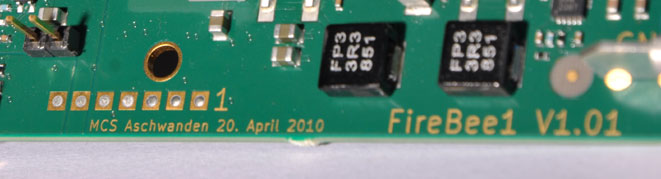
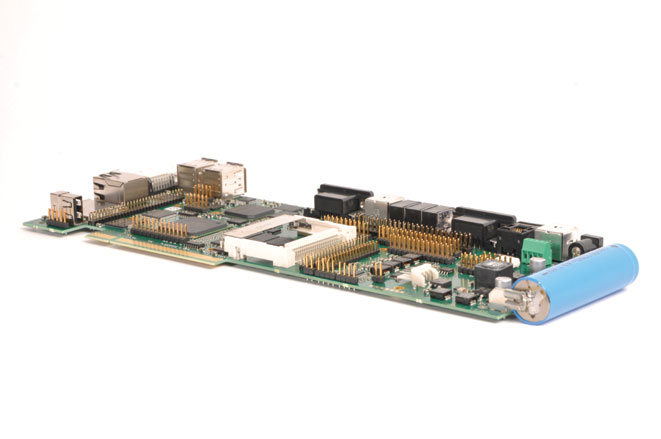
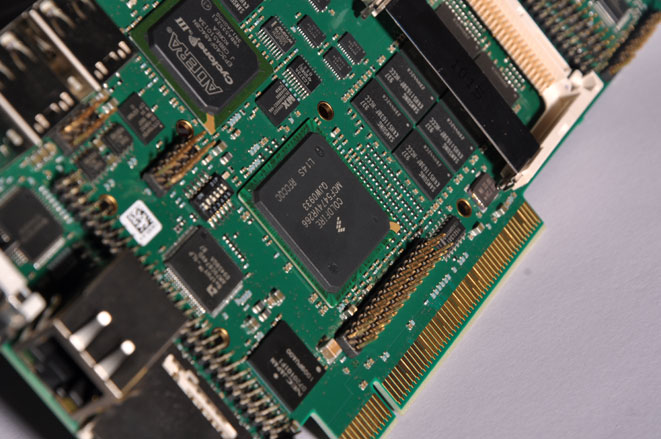
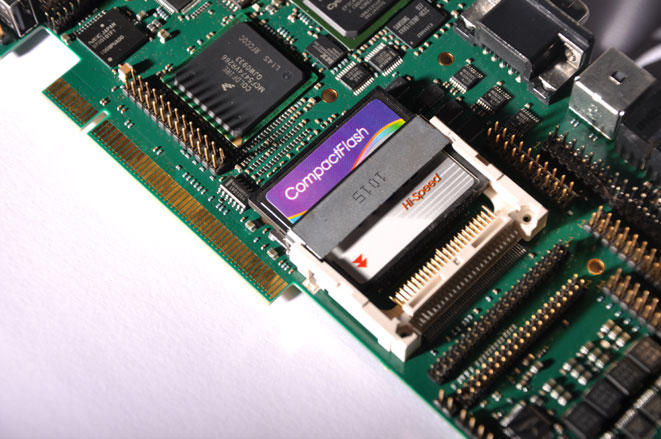
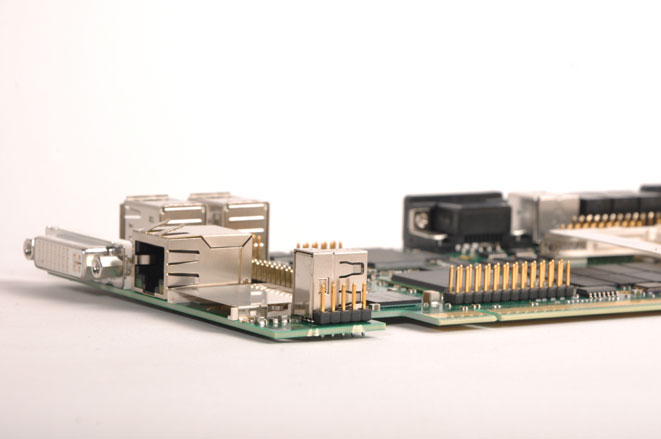
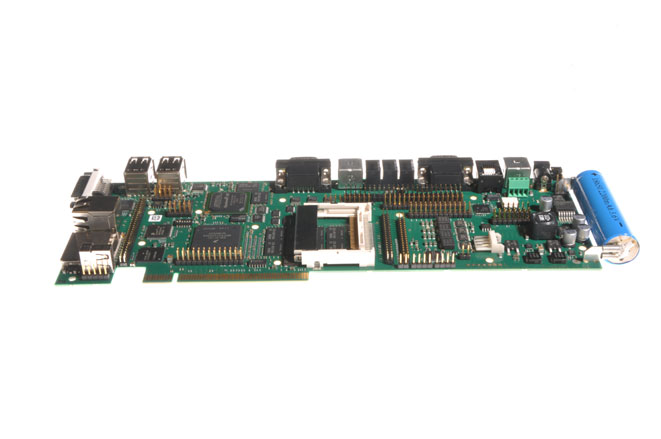
| 2010-07-09 Production Delays |
|
At the production of the first series in the first half of June, our swiss assembling company had a huge rate of rejects. They got a problem with the very close conducting paths, and had a real production failure at the PCB production. Because Fredi Aschwanden from MCS controlled the boards, we could identify the fault before the parts got assembled. So we have 24 boards working correctly, which got assembled in the last two weeks and will arrive at MCS within the next week. This one will go to developers quickly, after implementing the basic software for initializing the hardware. For the rest of the series we get full compensation. As they made a real fault at production of the first series we get the complete series without any further costs, but with a delay of 4 to 6 weeks. So the first boards for customers will not be delivered in July. None of the defect boards will leave the Factory, they will not be repaired. New PCBs will be produced by our contractor. We are glad that we chose a swiss company which is granting the normal warranty of two years to all hardware production mistakes, and will deliver without problems the complete series as agreed. The warranty of two years also counts for boards delivered to customers. As this question often occures at forums or mailing lists, we like to assure you that you get full hardware warranty for your computer, as usual in Europe. Sorry for the delay!
|
| 2010-05-30 AHCC 4 and TeraDesk |
|
On May 27th Henk Robbers published version 4 of his Pure-C compatible AHCC compiler. This is - to our knowledge - the worlds first development environment which is able to create programs that can be executed on ColdFire CPUs as well as the 68020, 030, 040, and 060 processors. As "proof of concept" Henk Robbers recompiled TeraDesk using AHCC. Therefore, TeraDesk is running ColdFire optimized at the full speed of the FireBee prototype. The same Binaries are executable on the 68020 and up. Both TeraDesk and AHCC are published as Open Source projects.
Here you see a photo from the 21st of May 2010 with TeraDesk optimized for the ColdFire V4e running on one of our prototypes.
|
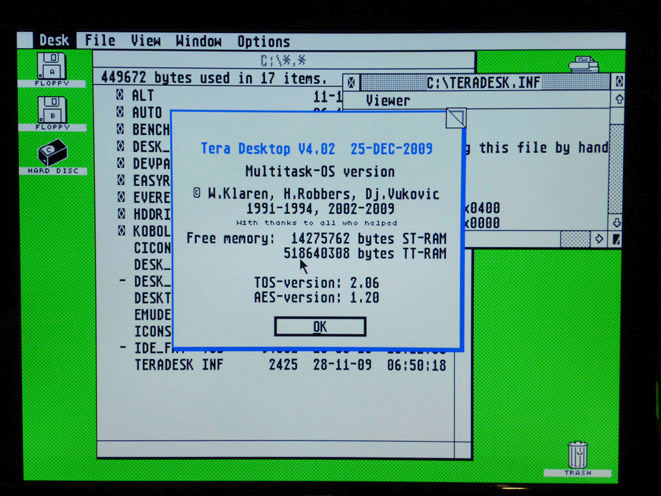
| 2010-05-17 The first FireBee series is now in production! |
|
A few weeks ago we sent the production order to our swiss manufacturing company to produce the first FireBee series. The assembling company has reported back with a positive report about the part sourcing. All parts will arrive in Switzerland by the 4th of June. Also, the multilayer PCBs will be produced by then. On the 7th of June, Medusa Computer Systems will oversee the boards and the layout on-site, directly at the assembling company one more time. Beginning on the 8th of June, the first FireBee series will be produced. Subsequently, we will need further weeks to implement the software. We will deliver to developers and pre-order persons with a high level of technical knowledge as fast as possible. All other end users will be sent their FireBee in the 2nd half of 2010. We once again, want to explicitly thank all of you, who already by August 2009, through your advance payments made the new Atari-compatible hardware possible, and thereby made the production possible as well. You showed us, that you are willing to push the development forward, together with us. The first series of FireBee computers are still available for Euro 599 directly at our site.
|
| 2010-04-22 Prototypes Update |
|
|

| 2010-03-19 Frank Naumann has passed away |
|
Today we received the sad news that our co-developer, Frank Naumann, has passed away on the 12th of March, 2010. Frank was well known for his brilliant work with FreeMiNT by almost every person inside the Atari community. He supported the Atari Coldfire Project from the beginning, and wanted to help with software porting and optimization for our new computer. The Atari community adopted the idea of Open Source mainly through the selfless accomplishments of Frank Naumann. Now others have to continue his work, what was made possible by Frank's vision. However there will be a big gap inside the small Atari community because of his incredible knowledge and his understanding of the Atari Operating System. Frank left us much too early at the very young age of 34 years. In the Atari community he has made a name for himself and he will not be forgotten, as every machine booted will still display his name well into the future. Frank will be missed by many. Also the Atari Coldfire Project has lost a team member with outstanding knowledge. Our thoughts and compassion go out to his family and his close friends.
|
| 2010-03-01 The Official Name |
|
We are proud to announce, that the community decided for a name of our computer. Firebee is from now on the official name of our hardware.
|
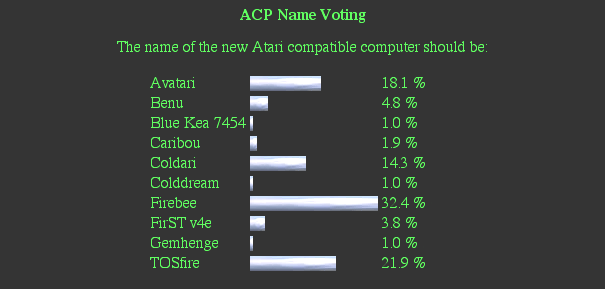
| 2010-02-23 Switch to a New Vote-System |
|
The poll system we´ve been using till now is not the best one, as several people recognised. That´s why the team decided to switch to another vote-system with an extra mailconfirmation, to make it harder for those of you who like some names so mucht to vote hundred times for it. ;) The vote for the name of our new computer is now extended to February the 28th. Please everybody vote again for your favorite name. This time you have to confirm your vote via E-mail before it will be counted. The email adresses won´t be used for anything else than the vote verification. After the vote all of them will be deleted, we do not collect them. The official name will now be published after another week of poll at 1st of March. Sorry for the inconvenience!
|
| 2010-02-11 The voting - till 20th of February |
|
It's getting serious: now you got the chance to vote one out of the 10 following proposals which arrived us through the community to find the name you would like to give the future ACP Atari compatible computer. You have exactly one vote, which you can place at your favorite name. First we will introduce all the nominations to you. Below you can vote by clicking your proper link. All votes will be counted until 23:59 o'clock on 20th of February. On February the 21st the official name under which the computer will be produced es presented. Here are your possible choices:
|
| 2010-02-10 Propositions of names |
|
ACP Team would like to say thanks to all people who joined the process of name finding. Altogether you sent 183 proposals 173 of which we couldn't take into the final list. From tomorrow on you'll find the best ten ideas at this place and have the opportunity to vote for the final name. For the most ideas which couldn't take part in the final voting there already existed brand or product names, or there had already been a copyright on the name. This really was a pity with some of the names, such as 'Leningrad' which is a ZX-Spectrum Clone, 'Colibri' being a Colibri-board or 'AINA - AINA is no Atari' being the IEEE International Conference on Advanced Invormation Networking and Applications. For documentation here are all proposals which did not reach the final voting round: @-R-E, Aarcti, Aarctic, AartiC, Aarctik, Aarctiq, Abroad, ACF 5400, ACM - Atari Coldfire Machine, ACP, ACP 1, ACP 010, ACP 474 ST, ACP 512, ACP-700, ACP 2010, ACP BEE-EATER 010, ACP BEE-EATER 2010, ACP BEE-FORTRESS 010, ACP BEE-FORTRESS 2010, ACP Cold ST, ACP Cougar, ACP Falcon Pro III, ACP Fire ST, ACP Hellfire, ACP Kea, ACP Koldbrann, ACP ONE, ACP ULTOS M 010, ACP ULTOS M 2010, ACP ULTOS 010, ACP ULTOS 2010, AINA- AINA is no Atari, Alinka, Ataconda, Atacondor, Antarctiqq, Antarcticc, Artic Lava, Artic Magma, Artic Vulcano, Arcticc, Arctiqq, ATARINA, Ataspic, Basilisk, bennu, Blizzard, Bluedream, Catari, CGM Coldfire GEM Machine, CGP Coldfire GEM Project, CCS - ColdfireComputerSystem, Cirata, CLDFRE, Colda, Coldac, Coldak, Coldarko, coldbird, coldboard, coldbox, Coldias, Coldiak, Coldibrik, Coldibriq, Coldic, Coldina, Coldinka, Colfir, Coldfirek, Cold Turkey, Colibri, Coldibri, COLTARI, Coltari Falcon, Comet v4e, Condor, Coolfusion, Cooltari, C/Fire, C-LDA, ACP Critter, Difference, Dream, Dreamfire, Eisvogel, Facepower, Falcon V4e, (acp) firebird, Firebird, (acp) firebox, FireGEM, FreeNet, Frenchfree, Fujiboard, Fujijama, Fujiyama, Gather, GemFire, GigaST, GoC - GEM on Coldfire, Goticc, Harrier, Hawk, (ATARI) HCS - HomeComputerSystem, i@Re, iceDream, Icefuji, Falcon - ColdFire Falcon compatible, iceGEM, Icehawk, Ice Kea 7454, IceTos, iDream, Incendia, I N C I T A R I, IrataC, iSpirit, Kestrel, Kolibric, Kolibrik, Kolibriq, Leningrad, LitleMouse, Malinka, MCS Newera V4e, Medusa Coldfire, Medusa Mintari, Medusa Phoenix CF, Merlin, MILAN CF, Mintari, NATARI, Nectaric, Nectaricc, Nektarik, Nectarin, Nektariq, NetCrasy, Newera, Newera ACP, Newera PCI, Newera V4e, Newera CF, NEXTOS, Nextos, Nixiek, Opening, phoenix, Pixelik, Poeticc, Poetiq, Ppoemm, Ppolarr, P-xyp, Pyro60+, Qotiq, Rainbow, Raptor, Sansan, Sierra, Spirit, Spirit v4e, ST(ultra), te ari, The fabulous Ice machine, The Love Machine, Ukeru, Vulcan, Volcano, Vulkan, Widel, Yleqotiq
|
| 2010-01-31 New developers |
|
At latest by the time we announced USB driver development more developers joined forces with ACP. Now we want to tell you who we are talking about. We are very glad about people who couldn't work with us a year ago, or who have been inactive regarding the Atari sector. People knowing the scene will already know most of the names - they speak for themselves! As members we are greeting:
|
| 2010-01-21 Our Board |
|
The following poster provides a complete overview of the board. Anyone who prints it out at A3, will get a 1:1 version of the hardware. The poster itself was first presented, in an older version, at the Eurocon in Vienna, and later at the Chaos Communication Congress (26C3) in Berlin.
Poster's full version in pdf-format (2.8 MB) Because the cost is sometimes asked about, the price is a definitive Euro 599. The hardware will be build by Medusa Computer Systems / Switzerland, who is also providing the standard warranty. It can, since mid 2009, be ordered in advance at the project website.
|
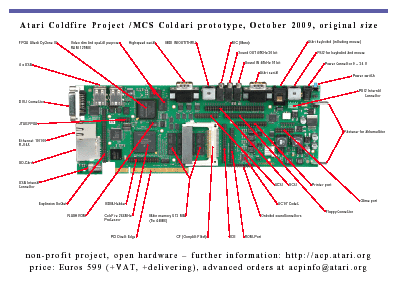
| 2010-01-07 Computer Naming |
|
We decided to let the Atari community find a name for our computer. The current codename of our project is 'Coldari' which some people don't like too much. Thus we want you to find a name for us - you, who supported us, contacted us with hints and sending good wishes within the last year. We want comprehensive debates and brainstormings on Atari-Home.de, Atari-Forum.com and on our mailing list. We ask you to send earnest ideas to 'acpinfo at atari dot org' until January 31st 2010. The team (which has grown to 37 persons up to now) will then find the best 10 propositions and check them regarding usuability. An acclamation until February 20th 2010 will then assign the definite name. Please take care about trademark rights. 'Atari 2010', 'New Falcon' or 'Microsoftkiller' would be discarded at once. On February 21st we will officially nominate the computer to its name, which you chose, and under which it will then be produced. We will nonetheless refrain from throwing a Magnum bottle of Champaigne at one of the prototypes ;) Please send numerous ideas ...
|
| 2009-12-24 Zoom inside the ColdFire |
|
As the name implies, the heart of the ACP computer will be a ColdFire microprocessor. We have chosen the model MCF5474, which is the fastest one. The ColdFire processor family is designed and produced by Freescale Semiconductor, the subsidiary of Motorola on semiconductors. The ColdFire chip is not only a CPU (like the 680x0 family was), it is actually a microcontroller. A lot of useful additional controllers are built directly into the ColdFire chip. They are directly usable on our computer, providing a very high level of integration. This is why the ColdFire is the best choice for designing a modern Atari-compatible computer.
- CPU 266 MHz The main component of the MCF5474 is a ColdFire V4e Core. It is very similar to the 680x0 CPU family, but not fully compatible. Basically, some complex or rarely used instructions and addressing modes have been removed. Thus the ColdFire CPU is more simple and cheaper than any 680x0 CPU, while being a lot faster. With an additional lightweight software layer, the ColdFire CPU can be made compatible with existing 680x0 programs. - FPU The Floating Point Unit is the mathematical coprocessor. When used, it provides a big speedup for programs using intensive math functions. The ColdFire FPU is similar to the 68881, but it has limitations in instruction set and addressing modes, like the CPU. - MMU The Memory Management Unit can be used to provide Virtual Memory or memory protection between the different processes running on an operating system. - Cache 32 KB x 2 The ColdFire cache is divided into a 32 KB instruction cache and a 32 KB data cache. The usage of the caches improves greatly the speed of the CPU, by optimizing the accesses to the external memory. - SRAM 32 KB The Static RAM is a high speed memory embedded into the ColdFire. It is required for DMA transfers, but can also be used for any other purpose when high performance is required. - EMAC unit The Enhanced Multiply-Accumulate Unit is a DSP-like unit supporting integer and fixed-point operations. It can be used to speedup some specific process such as image compression. - PCI controller The PCI bus has become the standard for extension boards in desktop computers. The ColdFire has built-in support for controlling PCI devices. This allows the usage of the hundreds of PCI boards available on the market. Of course specific drivers will have to be developed for every PCI card. - DDR-SDRAM controller The ColdFire can work with external DDR-SDRAM, for excellent performance. The ACP board has 512 MB of DDR-SDRAM built-in. - Interrupt controller The built-in interrupt controller can be compared with the MFP 68901, but a lot more flexible and powerful. It can use up to 63 interrupt sources with a specific exception vector for each source. - Timers 4 General Purpose Timers (GPT) and 2 Slice Timers (SLT) are available. They are comparable to the Timers A/B/C/D of the MFP 68901, but more configurable. - High Speed RS-232 controller The built-in Programmable Serial Controller (PSC) can be configured as a RS-232 interface for high-speed transfers, including at 115200 bps. - Ethernet 10/100 controller A standard Ethernet controller is built directly into the processor. This allows an instant connexion to the local network and Internet. - BDM / JTAG interfaces These debug interfaces can be used with hardware debuggers or external software for monitoring the CPU activity or flashing the EEPROMS. As you have seen, the ColdFire MCF5474 chip contains an incredible list of useful components, and there are even more. The full documentation is available on the Freescale website:
|
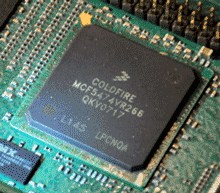
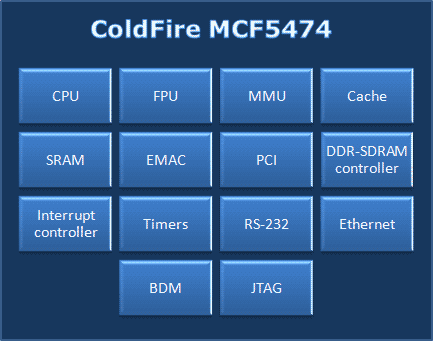
| 2009-12-11 First working GEM Application |
|
We have just enabled the floppy drive on our prototype. This means we are now able to run external ColdFire programs. Here is the first one. It's a small GEM test application displaying an alert box. The ACP computer becomes usable, this opens the door to a bunch of new test programs.
|
| 2009-11-26 SDL has been adapted to our machine |
|
By mid of november Patrice Mandin has published a new version of SDL. This 1.2.14 release is the first one containing ColdFire support in order to be able to run on our Coldari to be. We are highly delighted about this as Patrice is not associated with the Atari Coldfire Project in any way, and Simple DirectMedia Layer will be the first external application to support our computer. This support shows - although being theoretical due to lack of testing machines - that we can count on wide acceptance in programmers' circles and that our initiative is a further good way to improve the situation within the Atari 16/32 sector. We hope to see numerous cases of program optimisation within the next months, including some outside the open source area. Further information about SDL on Patrice's web pages.
|
| 2009-11-18 State of the Prototype & First simplified EmuTOS booted! |
|
Since the end of October we are working at the prototype. Following is tested an working:
|
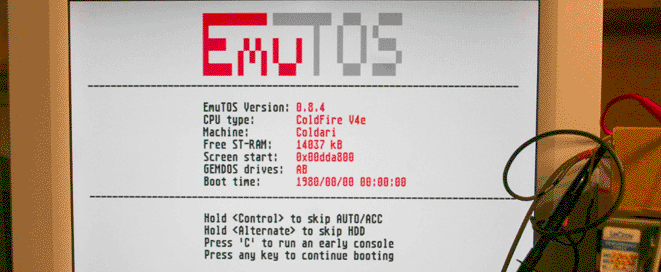
| 2009-10-27 Sound Progress |
|
Since July Didier got one AC´97 codec we are going to use at our computer, soldered to his ColdFire Evaluation-Board. Writing the complete driver consists of 3 parts. The XBIOS, MCF547X/548X driver, and AC97 codec driver. The XBIOS was comparatively easy, as there was the MagicSound (Aranym/MagiCMac), and thus is finished. It uses Linux ControlNames for the ac97_codec.c compatibility. For the progress of AC97 codec part cleaned Linux sources are used, which needs several command replacements. At the moment AC link problems with the Coldfire (writing problems, reset values in registers) are under development and in progress. The XBIOS is compatible with the MilanBlaster/GSXB software and allows to select each source: AUX (PSG on Coldari), CD, LINE, MIC, but also FM -> PC Beep and VIDEO The AC97 native list of frequency is 8000 Hz, 11025 Hz, 16000 Hz, 22050 Hz, 32000 Hz, 44100 Hz and 48000 Hz. As well the driver for the LynxEM (PCI-onboard graphic chip of the evaluationboards) is ready-made. The testing and debuging of the driver will take place in the following weeks. Now you can use the EVBs with onboard graphics and without the need for a Radeon. You can always follow Didiers progress at his page.
At this picture you see the achievement of huge work soldering a AC´97 by hand to a ColdFire Evaluationboard. Didier added a mini-jack sound output on the left between the Ethernet and RS-232 ports.
|
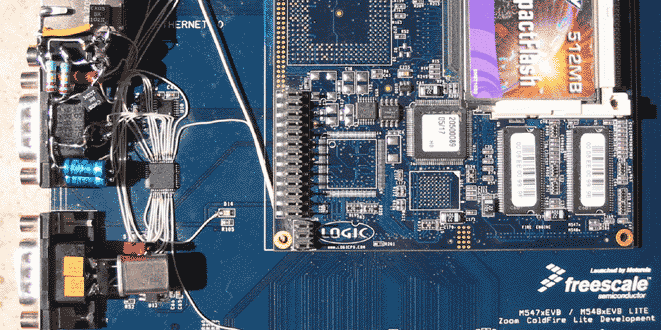
| 2009-10-08 The Prototypes arrived |
|
Picture 1 (high quality)
|
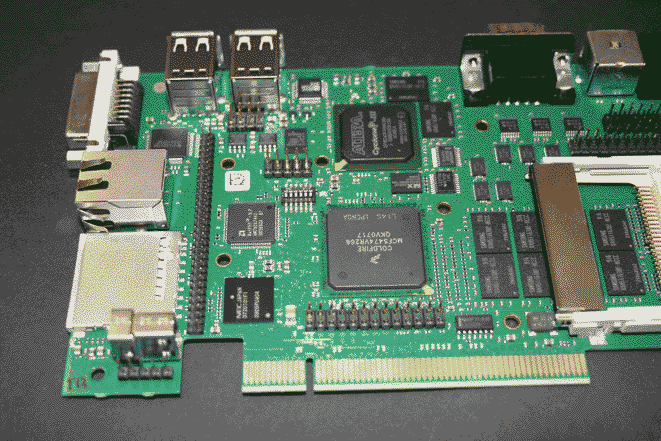
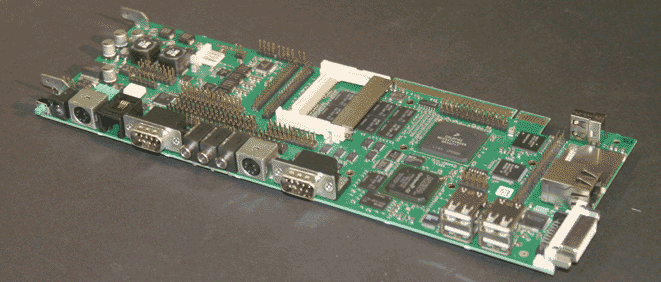
| 2009-10-05 Discount Source for ColdFire Evaluationboards |
|
Our teammember Mark established contacts to a real cheap source for ColdFire Evaluationboards. We got the possibility for at all 20 pieces of M5485 EVBs, for 125 US$ each unit to buy. Original retail price is $850. Through this it will become possible to immediatly (before our project reaches series production) start with the adaptation, and above all, the testing of software which is running at ColdFire. Developers, especially those who care about softwaretitles or who are not part of the ACP, can and shall participate in our contacts. Who wants to order a Evaluationboard for 125 Dollar, should contact us as soon as possible. At this EVBs Didiers patched FireTOS and MiNT is already running. Who want´s one? For those programmers who are not so good with hardware, Mark is offering the possibility of creation of coldfire development machines. They will consist of an M5485EVB which is one of the fastest coldfires available, Eiffel (CAN-Bus) for using PS/2 keybord and mouse, a Radeon graphiccard, CompactFlash. Also HD-Driver, FireTOS and MiNT are ready setup and configured. This ready EVB, which will be 500 US$, comes with the following features:
16MB Boot flash For detailed specifications we recommend the Freescale site for the product and the picture Didier is currently working at a driver for the LynxEM (Graphic PCI chip - which is soldered at the EVBs) and expects to finished to write in several weeks. Please contact Piku directly at http://www.atari-source.org/ or our project mailaderess acpinfo (at) atari.org
|
| 2009-09-18 USB driver development started |
|
Like several times reported, we expect the development of the USB driver to be one of the biggest tasks which is imminent to our project. Today we´d like to acquaint you with our undertaking and everything what happened till now, regarding USB. For about three month we got a new team member - Sascha Heinisch. Sascha decided after a short time within the ACP to become maintainer of the widespread USB-project for Atari. Together with David Galvez he forms a small team, which will realize the long term driver development, among supervision of the rest of the team. The team is, as a matter of course, open for further persons. Especially we would appreciate attendance of those people, who so far already did USB-programming at Atari, and who are not reachable for us within the last weeks! The long way: At present the team familiarize itself with low-level driver development as with OHCI and EHCI specifications. The chip which is used from us, is a further part which needs widespreaded vocational adjustment. Beside the preliminary stages from within the Atari community there are two leads available for us: 1) A GPL Linux-driver for the NEC µPD720101 Because the NEC is used at many PC-USB cards, and also our chip will be attached via PCI-bus, nothing get in the way of using any USB-card with NEC µPD720101 under Aranym to be able to start imediatly with driver development. 2) The since 2009-27-08 freed Amiga stack Poseidon. (The community did buyoff the stack for Aros, and this now was released under the free Aros-licence). With the programmer and former owner Chris Hodges, friendly contact is established for a while. Not least we could possibly learn something from the 8-Bit scene and use reasonable solutions from http://microusb.org/ . The ACP is prepared for a really long-term development. To make clear what that means: we expect USB-Input-Device and USB-Mass-Storage not before summer 2010. Therefore the development can take place at a level which can be kept up over a long time. Our Chip: Contrary to our first announcements - that we like to use the ISP1536, we had rapid to rearrange, because the chip is not longer delivered. Anyhow we think that 95% of our future developments will be usable for all Atari-projects with USB and will leverage the entire platform to utilization of USB. We think about EtherNat, CTLink, NetUSBee und Suska, for which alltogether no expedient USB-stack is in existance. All this projects should, with small adaptions, be able to profit from our Open Source development. Together: Who likes to take a long-term role at ACP is, as every time, called to report, and support the USB-team - even with small contributions! Together many things work much more easier, it simply is imperative that we organize us meaningful.
|
| 2009-09-03 New Pictures |
|
To satisfy your curiosity, waiting for the prototypes arrival, we got again some pictures from a paperboard with laid samples. It is about the last version, which was sent to the factory for production.
|
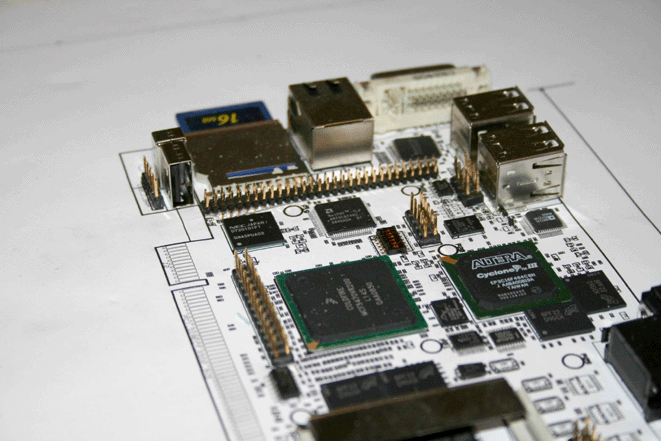
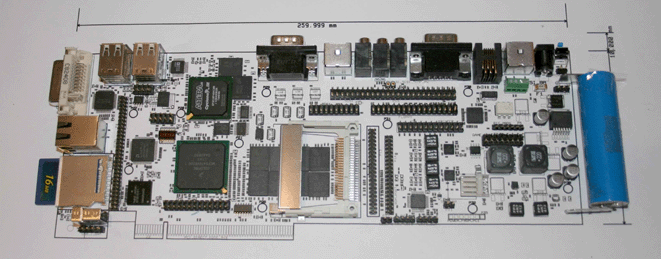
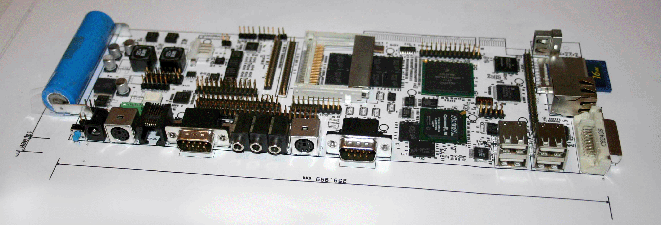
| 2009-08-27 Official Atari Coldfire Project theme song |
|
We are proud to announce the official Atari Coldfire Project theme song. Produced by Neo Bechstein in July 2009. The Voice "Atari Coldfire" is generated with STSpeech at an 1040 ST and the song was recorded with a Falcon. We like to thank him for his efforts to support our project with a song, with this status. Also we want to show you out there, that there are many possibilities to bring our project forward.
Neo Bechstein - Atari Coldfire Project.mp3 (21MB)
|
| 2009-08-06 Schema & Co. |
|
Today we got the assembly diagram and the schema for you. Below you can download our 5th revision as sent to the factory for the prototype production.
|
| 2009-08-05 Prototypes ordered |
|
At the 4th of august we ordered three prototypes of our new ColdFire Computer. It´s the revision 0.98 of our board with the redesign to a DVI-I connector and some other minor changes. The boards should arrive in around 6 weeks at Medusa Computer Systems in Switzerland. Please everyone who preordered, prepare for the advance payment. ;) Because ordering the prototypes means: the computer will be built!
|
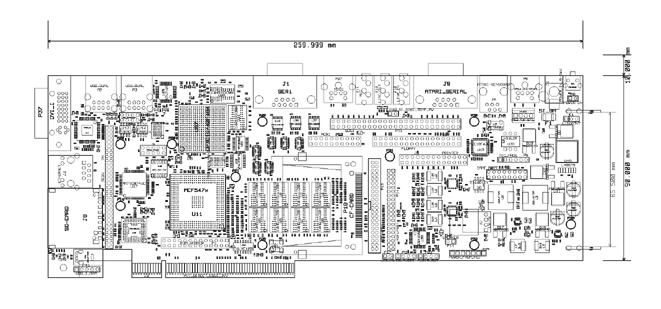
| 2009-07-28 Suska III-C available |
|
Not directly an ACP issue, but very important news is that the Suska III-C board is now available. The Suska is an Atari-ST(e) Clone, with all the modern connectors. It is produced by Wolfgang Förster who is also part of the ACP. The Suska Board was designed during more than 5 years (!) of work done mainly by Wolfgang. Every single Atari-chip was redesigned and reverse-engineered to be configurable in VHDL and to be used inside a modern FPGA. So we now have every custom chip available as open source configuration, to produce further Atari-compatible computers. Also in January Wolfgang agreed to become a member of the ACP and to support Fredi Aschwanden with developing the hardware. The ACP board as far as it depends on the FPGA, is mainly based on the free VHDL core which was developed for the Suska. So we now want to point out the fact that the Suska board is readily designed and that for the first time within the last decade we got a new and available Atari-compatible computer. The Suska is an extremely compatible replacement for our Atari ST(e)s, which might be interesting for people who like to play the old original games or demos. The Suska III-C board is now directly availaible for Euro 619,- (VAT included) from Inventronic. We like to assure you that we do not see our projects as a rivalry. In fact, the huge amount of work done for the Suska lead to a fast developement for the ACP. The Suska and the ACP board are for different needs, and we are proud that our beloved TOS compatible platform soon will get a second deliverable computer.
http://experiment-s.de/en
|
| 2009-07-20 EmuTOS "proof of concept" has been done |
|
Vincent Rivière managed to run EmuTOS on the M5484LITE evaluation board in text mode. He disabled the AES, so it boots into EmuCON, the early console. The console I/O is redirected to the ColdFire serial port. So with any terminal emulator, we can type commands and see the results. Be sure this EmuTOS version is fully ColdFire software and does not contain any 680x0 emulation. Currently EmuTOS boots instantly, the display speed is only limited by the serial port. Vincent also implemented a ramdisk to run ColdFire TOS programs. He is going to cleanly integrate the ColdFire support into the official EmuTOS CVS repository, with the help of the EmuTOS developers. So after Didier Méquignon's FireTOS (patched TOS 4.04), this is the second Atari OS running on ColdFire processors. In this picture (click on it to see the full version) you see a terminal emulator running on another computer, connected to the ColdFire board through an RS-232 cable. The file emutos2.srec, containing the EmuTOS ROM and the ramdisk data, is downloaded into the board through the Ethernet connection via the TFTP protocol. Then EmuTOS can boot and access the ramdisk through the A: drive. This OS can currently run ColdFire programs only (for example, those compiled with GCC and the ColdFire MiNTLib), an additional emulation layer for running standard 680x0 programs will be added later.
|
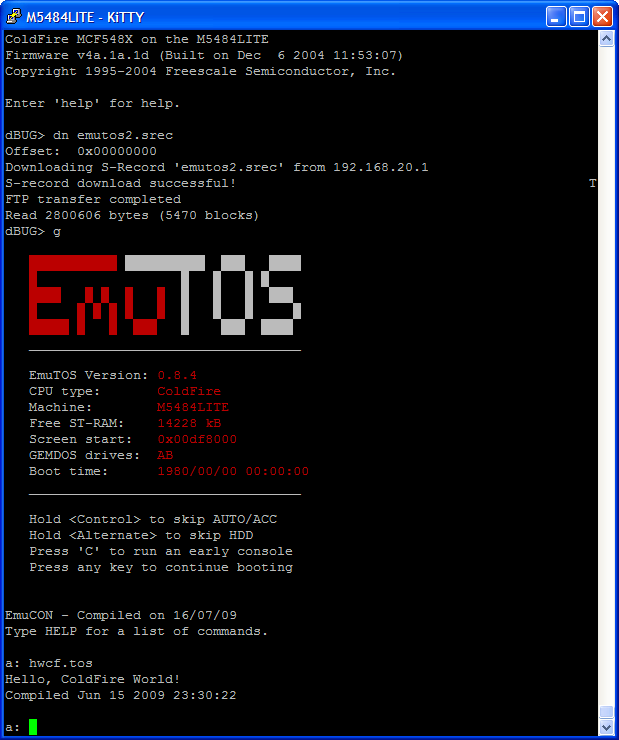
| 2009-07-12 Hardware transfers |
|
The developments are progressing continuously. Recently quite a lot of hardware transfers occurred in our team. Fredi Aschwanden got a sample of our AC'97 Codec and sent it to Didier Méquignon. Didier has connected it to his ColdFire evaluation board and is currently working on the software part. Markus Fichtenbauer is sending a NetUSBee to Sascha Heinisch. Olivier Landemarre sent his ColdFire evaluation board - which he got from Mark Duckworth - to Vincent Rivière, and we thank him a lot. Vincent also got an Eiffel adapter from Alan Hourihane, so he can use a PS/2 keyboard and a mouse with the board. From now on he will be able to do experiments on the real hardware, for a better understanding of the ColdFire internals. Moreover, he is also porting EmuTOS to ColdFire, and most of the work has already been done.
|
| 2009-06-12 Technical Background |
|
Technical Background about the planned ColdFire-Computer
|
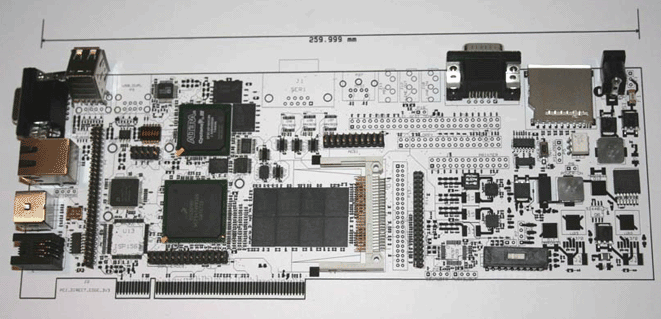
| 2009-06-07 MiNTLib ready-made for ColdFire and a new member |
|
Vincent Rivière has finished to port the MiNTLib to ColdFire, his work has been included into the official sources. First tests on M5484LITE Board show that it works perfectly on TOS. Just after that, he has published a new version of his cross compiler GCC 4.4.0 with full ColdFire support, including the MiNTLib, math and GEMLib libraries. This compiler can be used right now to produce native ColdFire TOS programs that will run at the highest speed on our new computer. The cross-compiler is available on Vincent's page. Dima Sobolev from St. Petersburg/Russia joined the ACP. Dima is well known to STeem and TeraDesk users, and he also russified TOS 2.06. So we from now on got somebody responsible for "translation english/russian & TOS localization". Dimas "work" will reinforce the Atari-Scene from "Kaliningrad" to "Vladivostok" and help russian speaking Atari users to use our latest developements. We now also got a great teammember who got high experiance with lokalization of TOS in general.
|
| 2009-05-23 TOS, MiNT and DVI |
|
Didier Méquignon has adapted Firetos (his already for CT60 use patched version of TOS 4.04) to our new hardware. He has done quite a lot of work, so we can expect to boot our new board as soon as the prototypes are availaible. This work - also an adaptation of the work already done for ColdFire - became possible because of Didiers huge experience at the M5484LITE board since 2006. Vincent Rivière is currently patching the MiNTLib to enable its recompilation for the ColdFire processor, in order to produce fully native ColdFire executables which will run at full speed on our computer. He expects his work to be finished soon. Finally Fredi Aschwanden decided after a discussion on the Atari-Home forum to upgrade the hardware to a DVI-I connector instead of the first planned VGA. Most of the preordering persons would like to see our computer equipped with VGA and DVI possibilities and are also willing to pay more to have the digital video signals. But as a majority wants VGA - which could be seen after a quick poll - we decided to use DVI-I with both signals, and have the possibility to use an adapter from DVI to VGA. The works concerning this matter already began.
|
| 2009-05-19 New development environment and a new language |
|
Besides of the hardware we cared about a new development environment during last week. The developers of vbcc agreed to adapt the MiNT and TOS target of their development environment to the V4e. Thus very soon Crosscompiling will be at our disposal on many different platforms, for example AmigaOS/MorphOS, MacOS X etc. vbcc can be compiled without any changes for each platform on which an Ansi-C compiler is in existance. The vbcc team will change the last two known errors for ColdFire and we will extensively test and send bug-reports, which then again will be worked on. Likewise vbcc will be available on the ColdFire and is the fourth development environment which will run on our computer. Today it was a great pleasure to introduce our spanish news due to further support. We now can report about our progress in five languages. A big thanks goes to Victor and David.
|
| 2009-05-12 New team member for editorial office and translation |
|
After yesterdays request for participation in the ACP, Jens Riemann contacted us and offered help. Jens will immediately assume the editorial office and translations between German and English. Further we need people speaking French and Spanish who are willing to take on a long-term role inside ACP. This would help to release developers and to push on the project.
|
| 2009-05-11 Two of the best Atari developers joined ACP |
|
Didier Méquignon is with us and and will work on the ColdFire board - as soon as his "job" at CTPCI (from powerphenix) is finished . At first he likes to work at the AC'97 codec of the board. He will also bring in his great knowledge about ColdFire in general. To be sure to understand the relevance of this news; Didier patched TOS 4 to run at a ColdFire-board, got MiNT up and running at his developementboard, wrote a driver for ATI-Radeon-cards, and got one of the two only working coldfire-systems which are in existance at the moment. And that was not all! His already done great work can be contemplated at: ctpci-e.htm Lonny Pursell also agreed to join the Atari Coldfire Project as official member. As we already reported, Lonnys aim is to get GFA-Basic ready for ColdFire. Lonnys knowledge will be a big help for the whole team and beside working closely together with the compiler team (AHCC and GCC) he will also help at some minor tasks and give advice to the developers where his competency can be helpfully. Further helping hands, especially translators and developers, are welcome every time!
|
| 2009-05-07 Simplified schematic of our new computer |
|
|
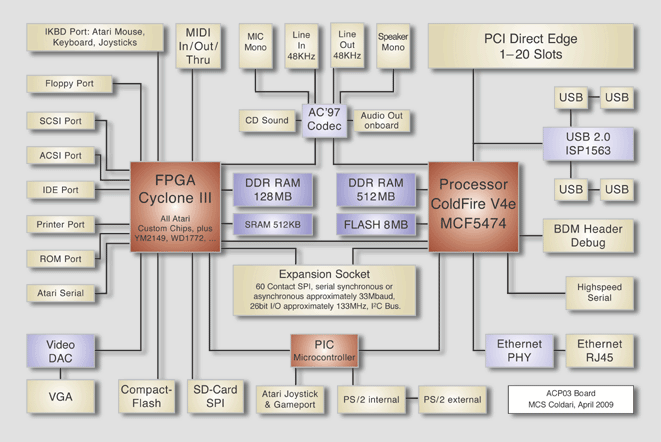
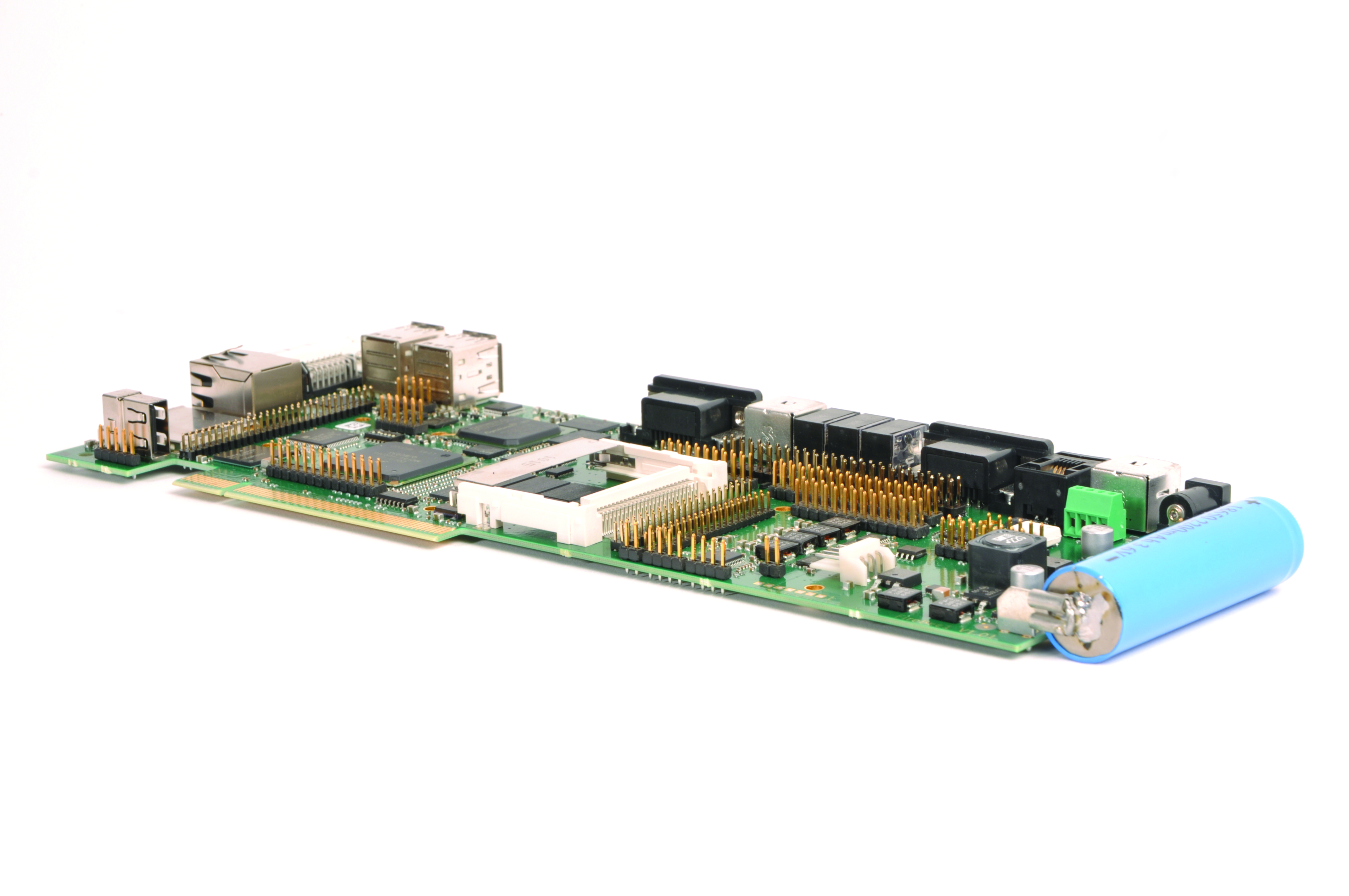
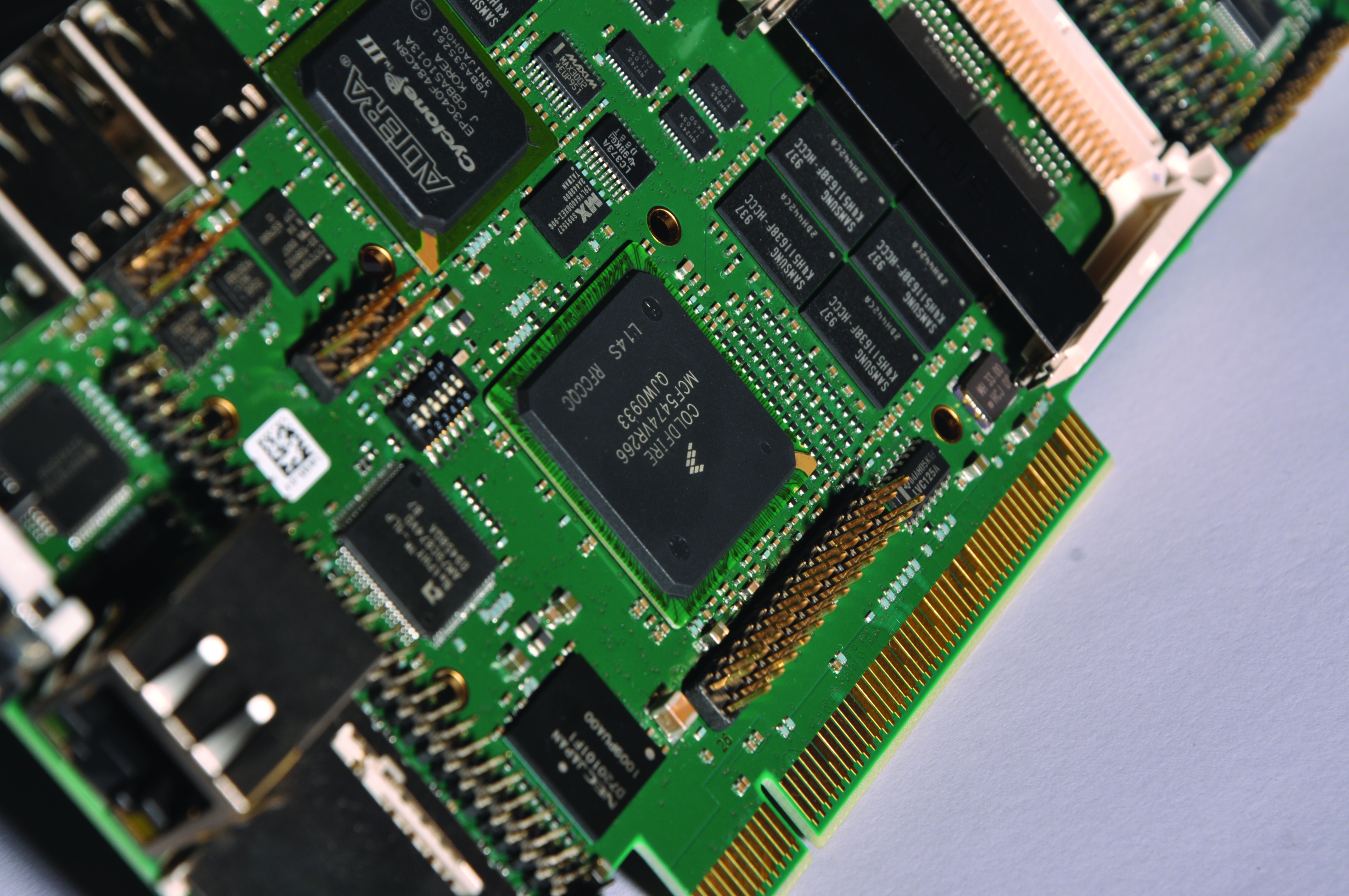

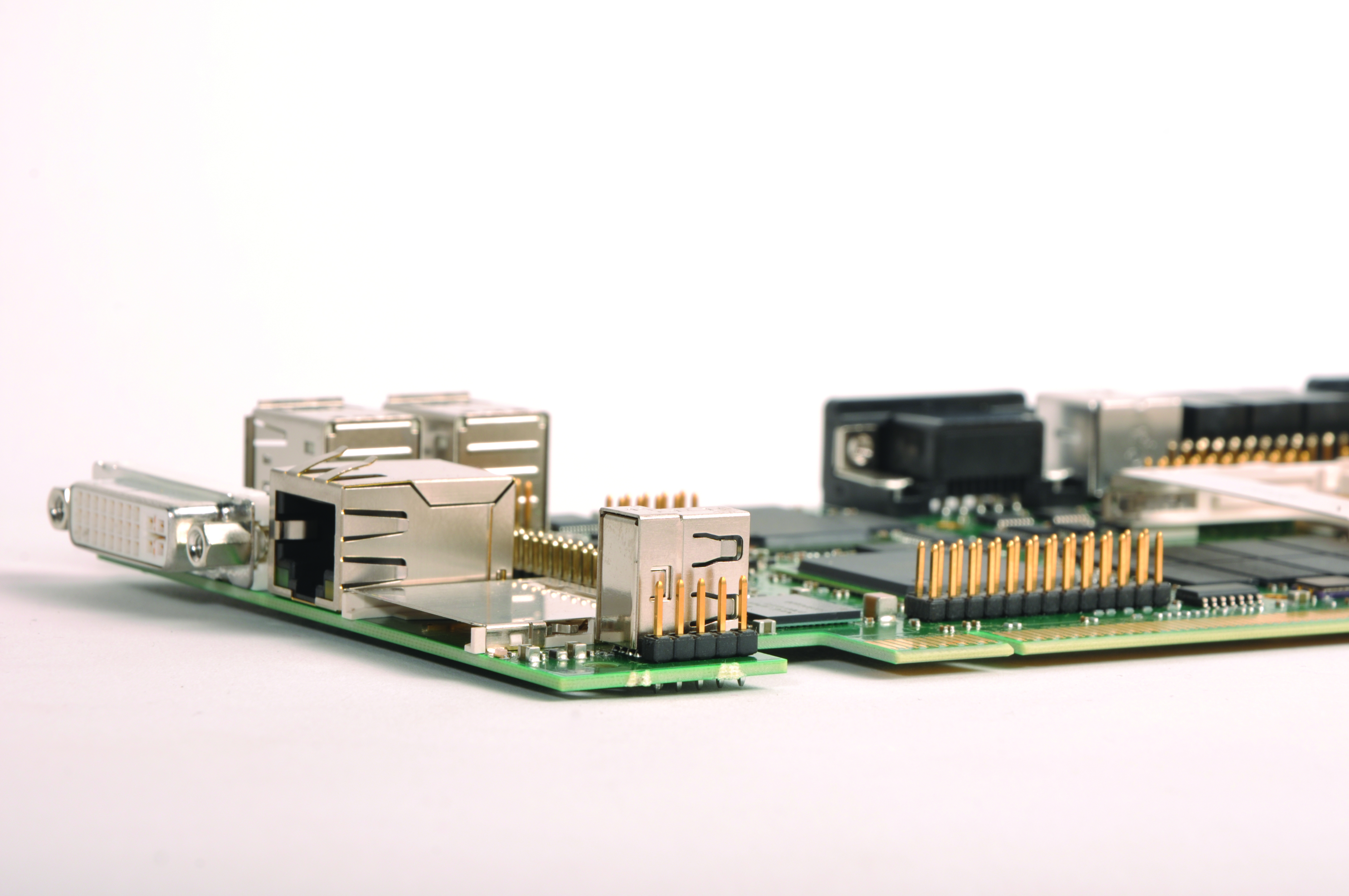
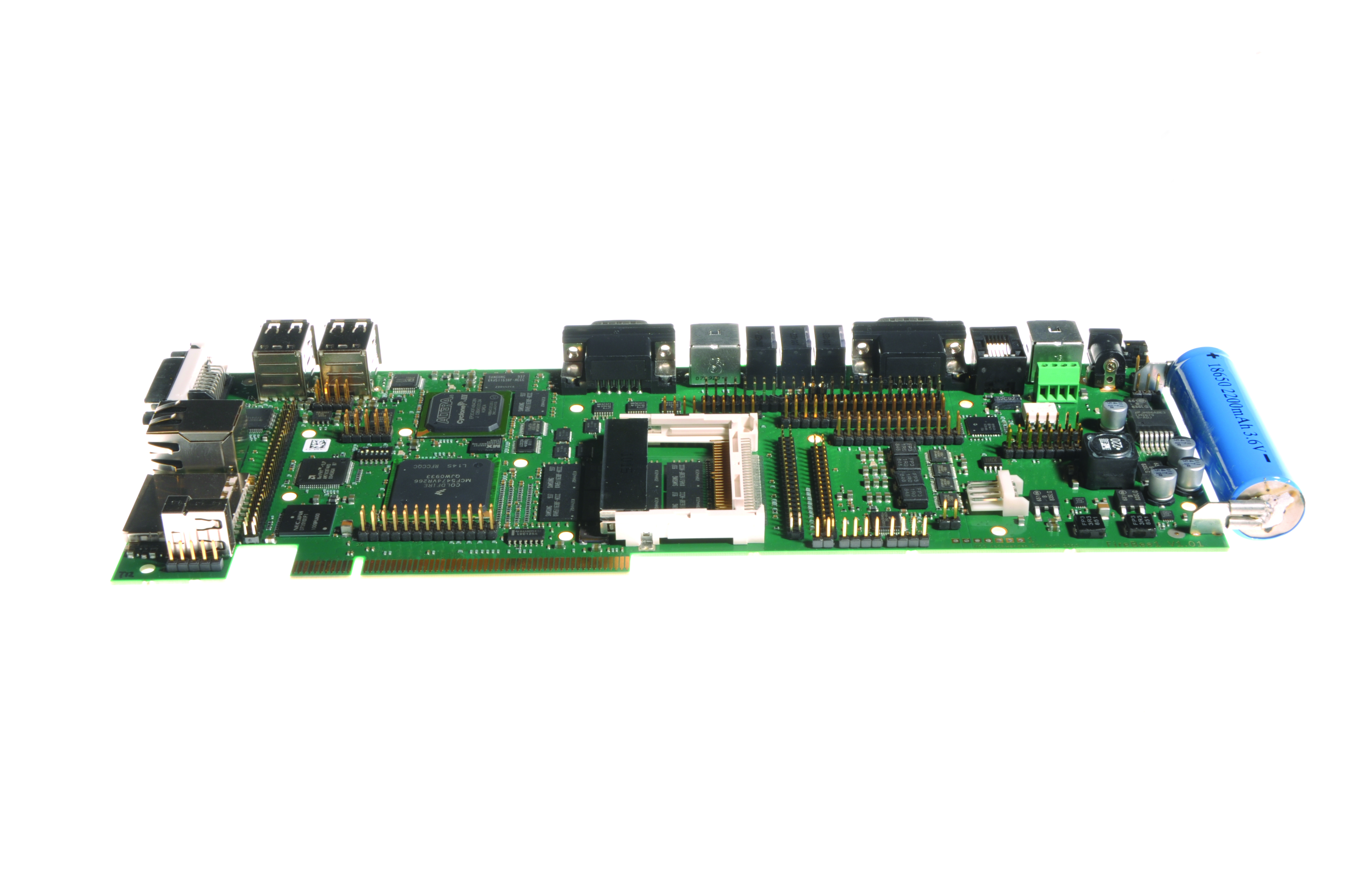
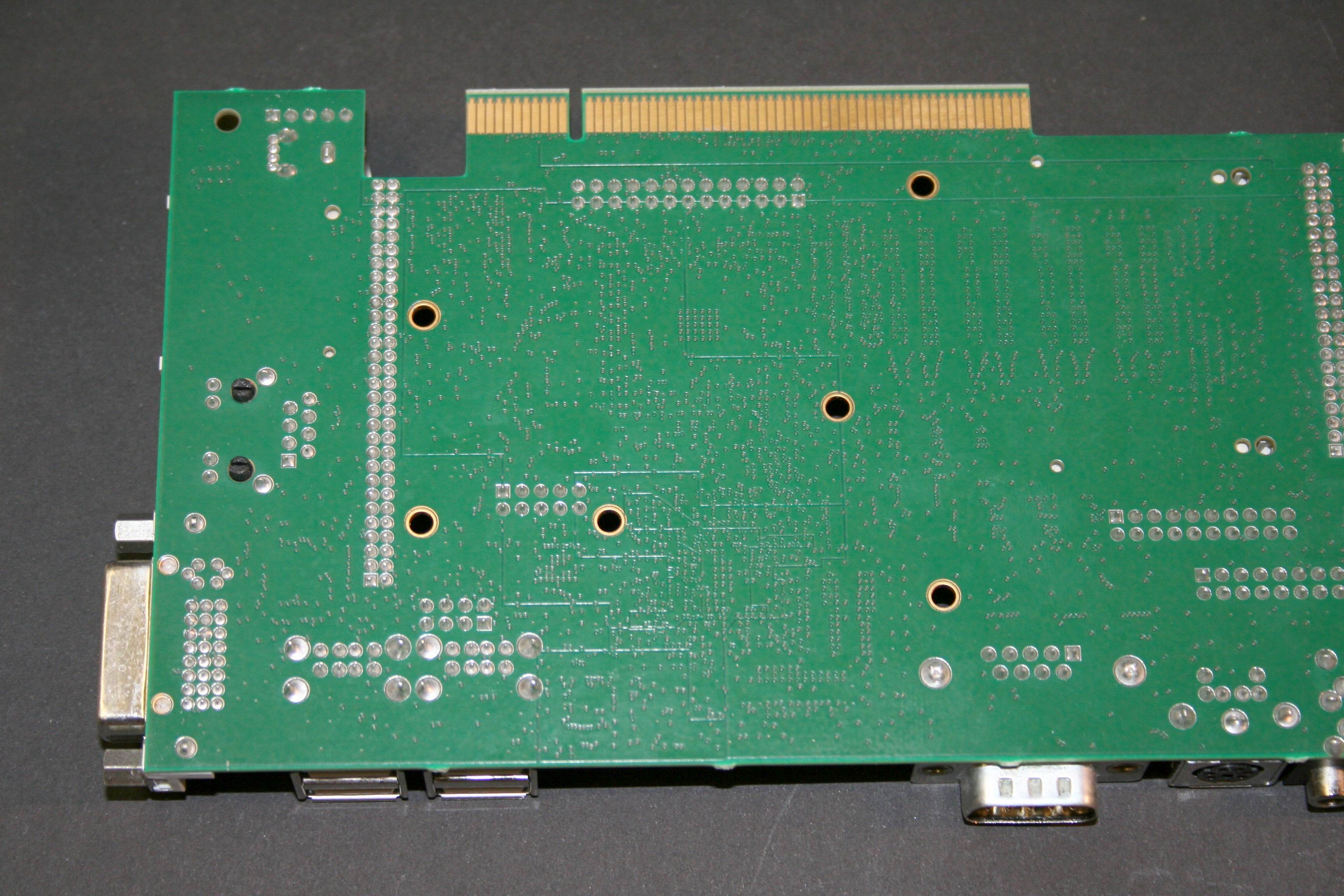
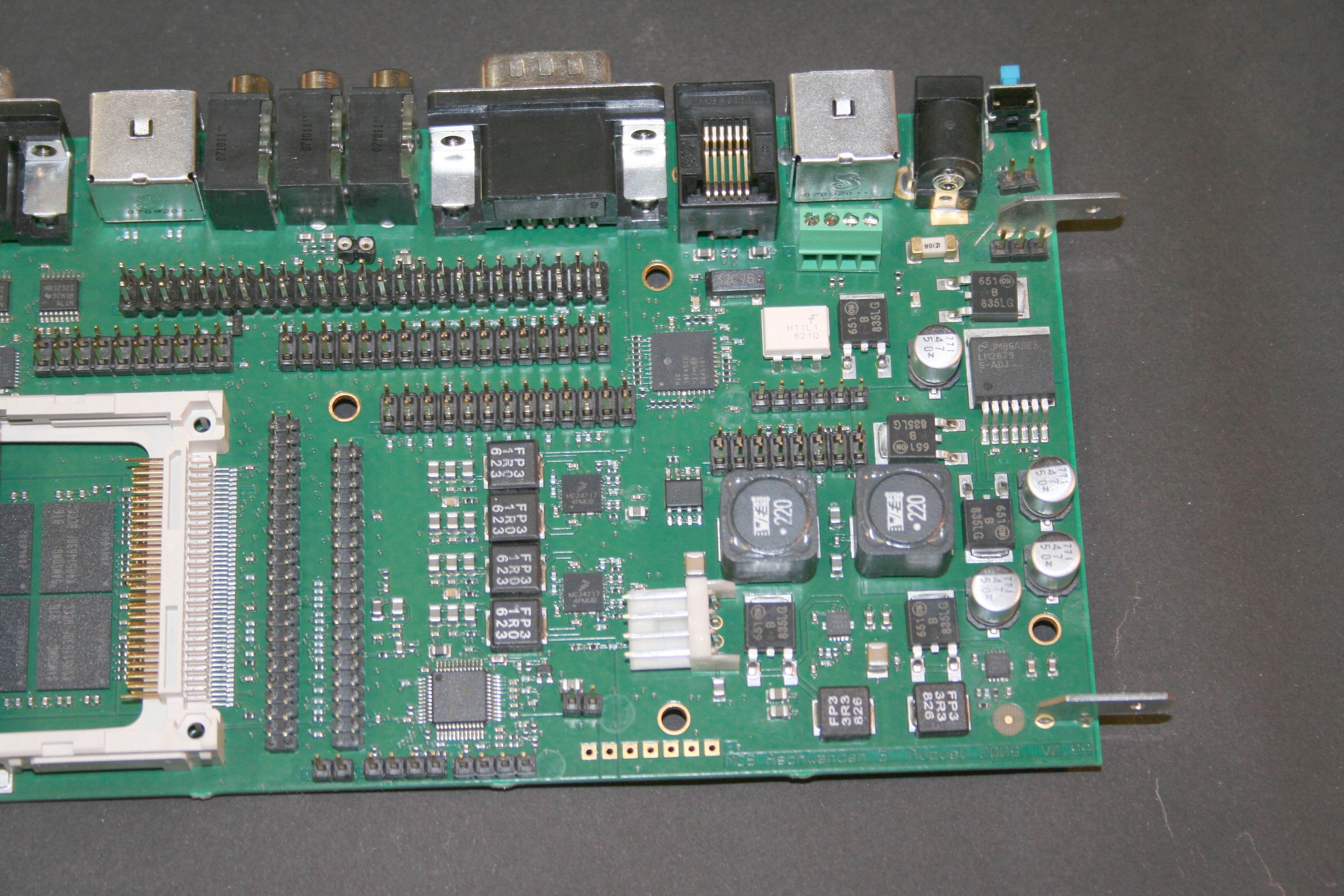
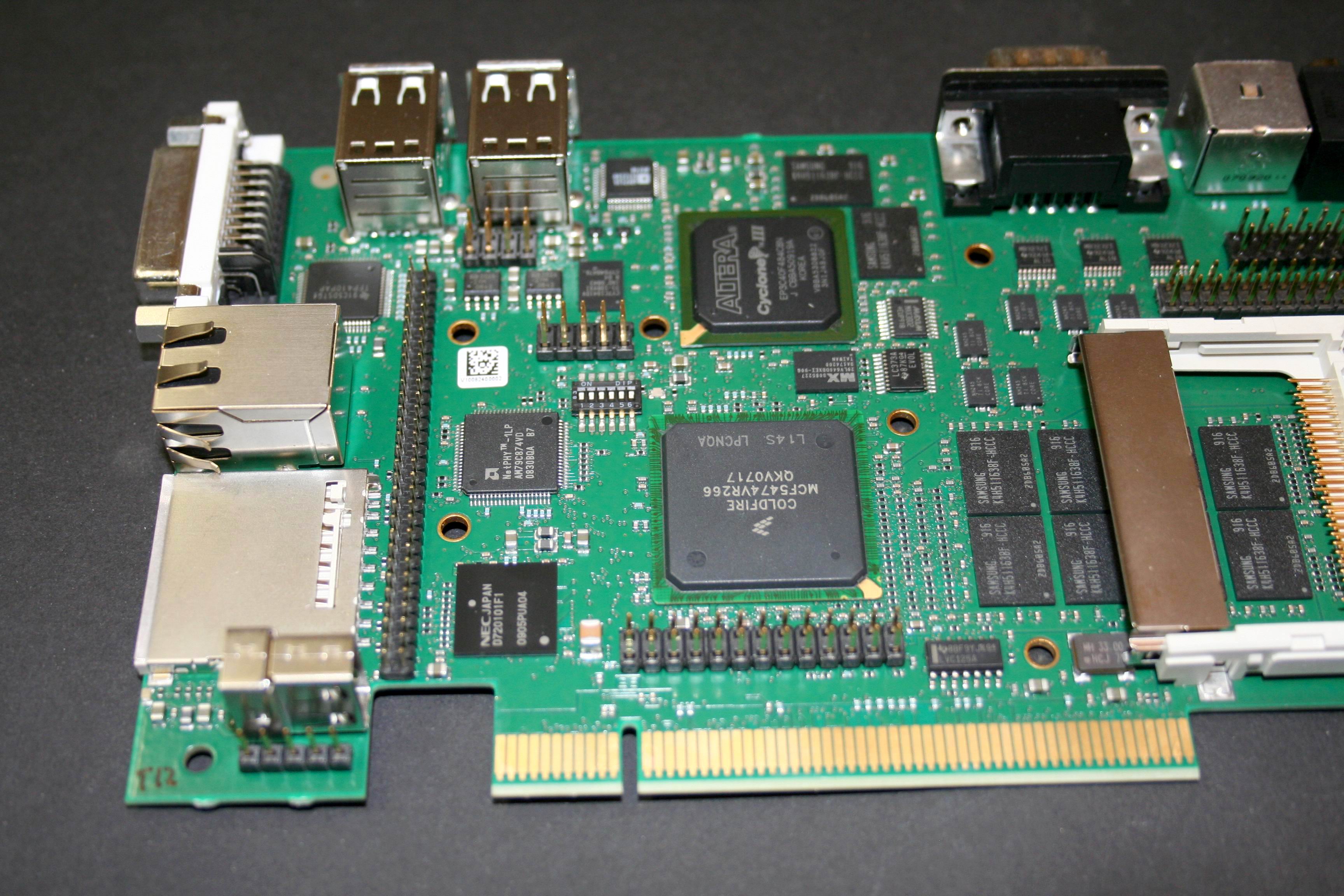
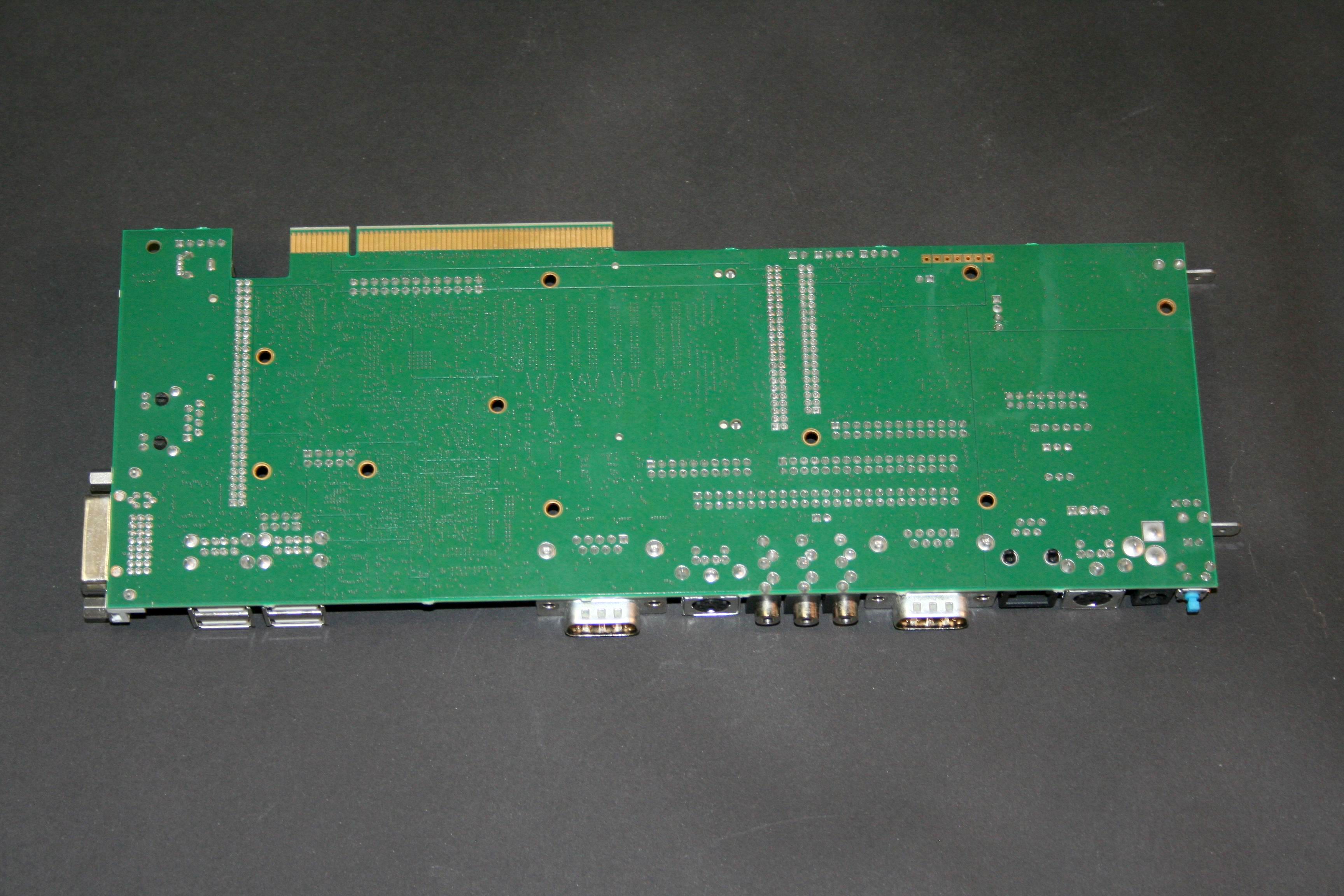
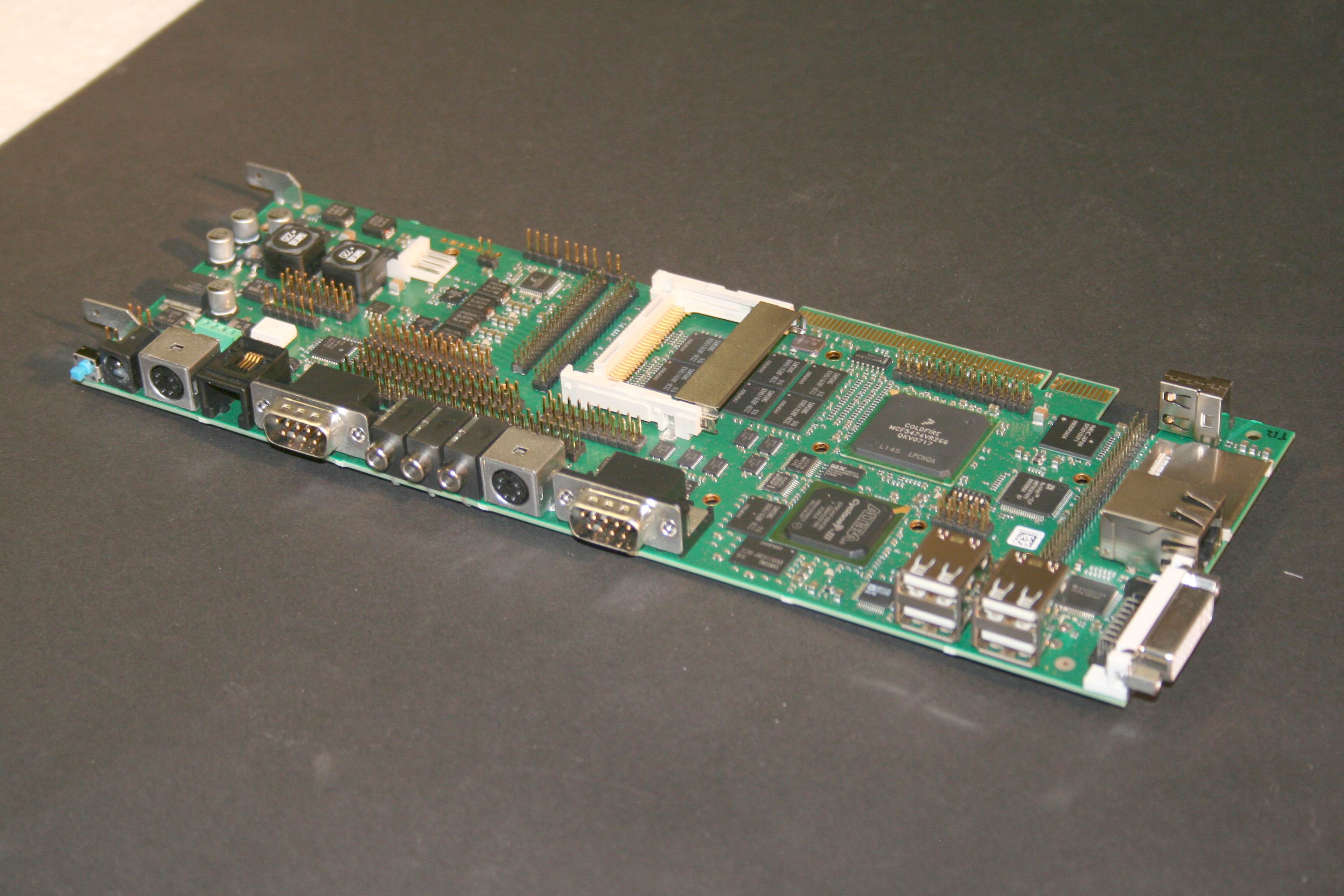

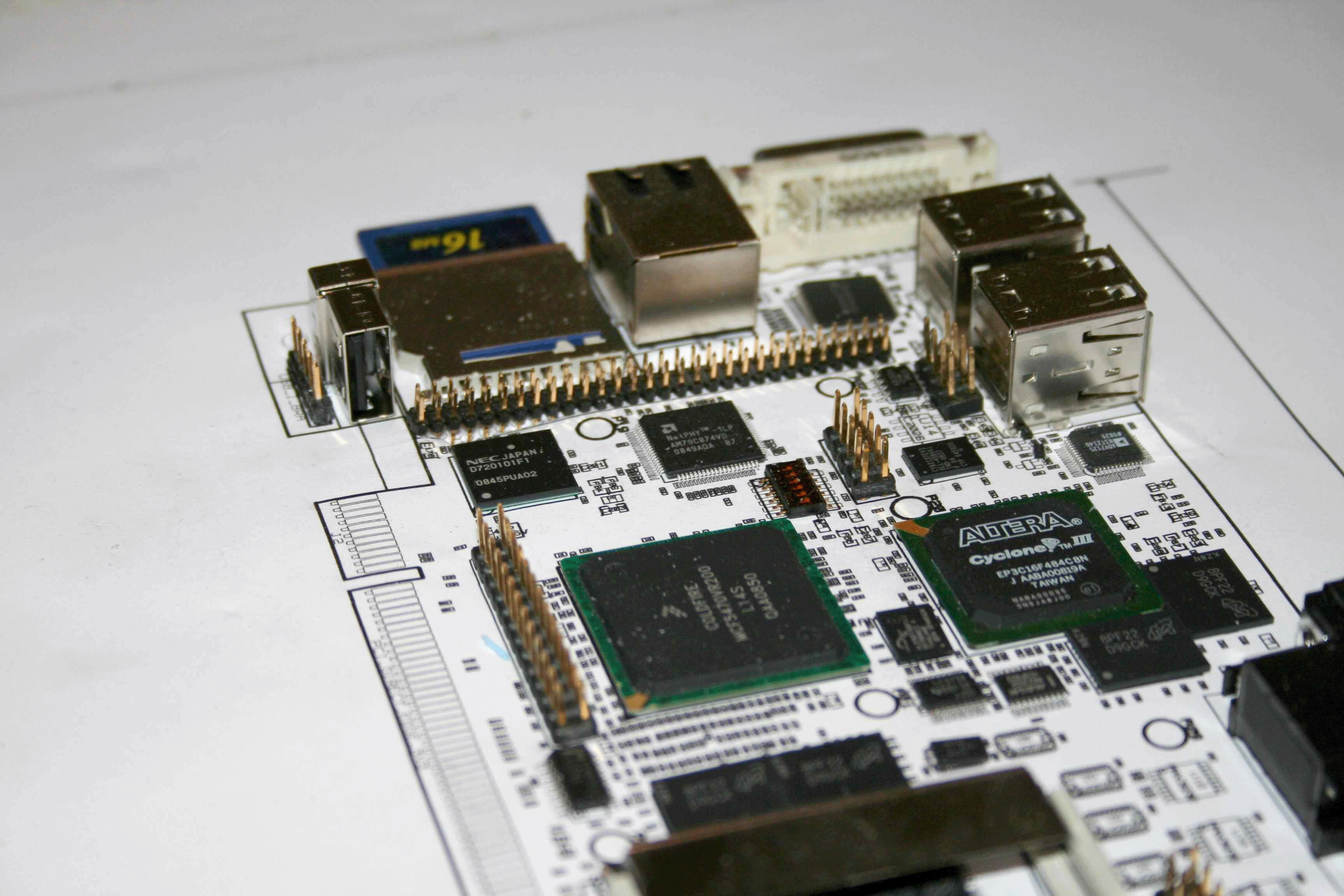

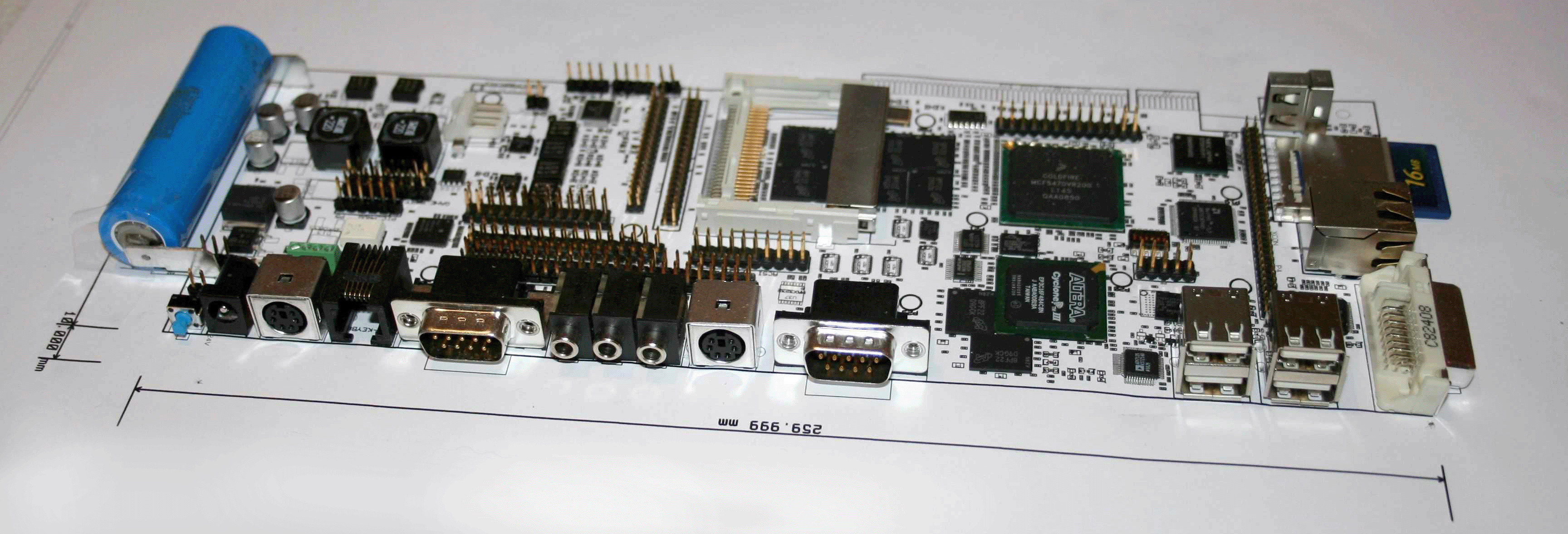
| 2009-05-05 Support of all relevant developement environments assured! |
|
GFA-BASIC Lonny Pursell announced his efforts for supporting the new Coldfire Computer in a first reaction after our public announcement. The maintainer of GFA-Basic prefigured possibility of reworking the GFA-Basic Compiler/Library so it builds CF native apps. Should he succeed then this would allow just a recompile of existing applications, to get even more stuff up and running at improved speeds. Lonney Pursell declared that he´s willing to do a lot of work, how he suspects it, if the machine is released. He explicitely welcomes our decision about which processor we choosed for the future developement of the Atari-ST plattform. "I'd still like to see such a beast of a machine. You would not see me jumping on the support band wagon if it was some other processor though. [...] I see the CF as an old friend who maybe went on a long trip, came back a slightly changed man. A warm familiar face I can easily speak to." he said. Read his entire message at the public MinT Mailinglist. GCC 4.4.0 GCC 4.4.0 has just been released, Vincent Rivière has updated the MiNT patches for it and built the Cygwin binaries. He enabled compiler support for the ColdFire V4e family. So right now, we can run that cross-compiler on Windows systems to write initilialization code for our ColdFire board, and to check the compatibility of other software, even if there is no hardware yet. Since the GCC patches are host-independant, the cross-compiler binaires can be rebuilt for any OS supported by GCC (MacOS X support has already been announced by Markus Fröschle). Your help is welcome ! You can find Vincent's patches and binaries here: m68k-atari-mint tools Vincent has also started to enable ColdFire support in the MiNTLib. He evaluated that is was possible with a reasonable amount of work. When this is done, it will be possible to produce native ColdFire MiNT/TOS software what will run at full speed on our new computer. GCC is the universal C/C++ compiler. Combined with current support inside the FreeMiNT kernel and the MiNTLib, it allows to port GNU/Linux software directly to Atari/MiNT. Moreover, it can be used to write standard TOS software (including GEM) at a very high level of optimization. Pure-C compatible AHCC
Henk Robbers, also part of the Atari Coldfire Project, again declared, that AHCC will be adapted to the ColdFire. So a lightweight C-compiler will most likely be available too. AHCC is verry important for recompiling existing Atari applications - and it´s GEM and single-tasking compatible. Most native Atari software is written using Pure-C and can be recompiled with AHCC. Henk Robbers´ roadmap:
1 Compile and run EmuTOS. As a proof of concept. With this three important developement environments we got the neccessary fundament to compile software native for the ColdFire computer. That would be executable with maximum speed at the ColdFire. For the future we hope thereby for many new developements for the whole range of TOS/GEM
|
| 2009-05-01 News on Italian |
|
Thanks to great support from the community, after our first public announcement, we today could open our news on italian language. From now on we will be reporting about further developments of the project beside english, french and german also in italian. Further languages are welcome!
|
| 2009-04-30 Official ACP email address |
|
We now have an official email address for the project. Please use only this one for any communication with us, including for preorders. acpinfo (at) atari (dot) org
|
| 2009-04-28 Atari Coldfire Project Reloaded |
|
Since the beginning of December 2008 we've been evaluating the possibilities of continuing the Atari Coldfire Project or starting over with it. Our evaluation is now complete and we'd like to let you know that we consider this project basically possible and that from now on we will be working under the name "Atari Coldfire Project". Our primary goal is to build a new Atari TOS clone which is based on a Coldfire processor and to make it available to the public for the lowest possible price. This is a free project that is free of commercial interests of any kind. One of the main goals with our new hardware is to allow further development to be possible in the future in the widest possible scope. "Hardware updates" will become possible by VHDL code for free. The long term goal is absolute compatibility with every Atari TOS machine ever built. In the beginning however, we can assure Hades compatibility. At the moment the following people are involved:
Matthias Alles Further support and advice at special tasks comes from:
Pascal Barlier We are currently in contact with other famous people, this list will soon get bigger! We welcome and request help from every person who can contribute something, no matter how small! Remember too, that since this is a free project, it absolutely depends on community involvement and cannot be accomplished without your help. Because Fredi Aschwanden with the support from Wolfgang Förster directly began to develop the hardware, there is an interim layout of the planned computer available. It got two advantages which could also be interresting for non Atari enthusiasts, we would like to point at. The verry small size of the board and the extremely low power consumption. The actual specifications are:
1. As a independent motherboard. The final price for the board isn't certain yet. For the first 25 preordered boards the fixed cost has been set to Euro557,- (+VAT and shipping). To be able to start with the production of the hardware we need 25 preorders which are fixed through a advanced payment of Euro200,-. Subsequent to that we can begin the prototype production and start with software development. Therefore the first 25 people preordering would then need only to pay the Euro357,- remaining. As much of our work as possible will be published under free licenses. Going forward, we will be continuously reporting further developments at http://acp.atari.org/news.html ACP in April 2009
|
| 2008-12-15 Atari-Coldfire initiative from Switzerland and Austria |
|
According to new impulses from Switzerland and Austria, since the beginning of december 2008 several developers are contacted personally. The aim is to find out which skills and how many support-possibilities in the Atari-Community are in existance. Afterwards can be decided if and how the project can continue, or if it can get started again together.
|
| Atari Coldfire Project Archive | ||
|
You will find here the news related to our first project which took place between 2002 and 2008.
|